 5 hours ago
10
5 hours ago
10
Elon Musk’s SpaceX has revealed plans for a highly anticipated $1.75tn (£1.3tn) flotation next month as he seeks investor backing for his quest to make life “multiplanetary”.
SpaceX is a sprawling business, encompassing the eponymous rocket launch company, the Starlink satellite broadband service, Musk’s xAI artificial intelligence startup and the social media platform X, formerly known as Twitter.
Details about these businesses and Musk’s ambitions for them were laid out in a flotation prospectus. Here are some of the main takeaways from it.
1. SpaceX is loss-making
The entire business lost $4.9bn in 2025 on revenues of $18.7bn. Revenue is growing, however, rising by a third on 2024. SpaceX’s losses have widened since the start of the year, losing $4.3bn in the first quarter, compared with a loss of $528m in the same period last year.
The company is split into three segments: space, which incorporates the rocket launch business whose clients include Nasa; connectivity, which houses Starlink; and AI, the unit behind xAI and the X platform. Connectivity makes the most revenue, at $11.4bn, followed by space with $4.1bn and AI at $3.2bn. The Starlink unit was the only profitable segment in the first three months of this year.
The AI unit is heavily loss making, losing $6.4bn last year, which reflected factors such as higher computing expenses (for instance to build and operate the AI models that power Musk’s Grok tool).
Capital expenditure was $20.7bn, with the xAI unit again showing itself to be a big cost centre. It accounted for $12.7bn of the total, primarily due to the cost of building massive datacentres. SpaceX has built the appropriately named Colossus datacentre.
The xAI unit made losses of $6.4bn last year, reflecting factors such as higher computing expenses such as building and operate the AI models that power the Grok tool. Photograph: Dado Ruvić/Reuters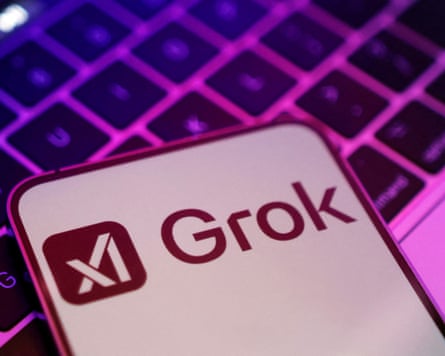
2. Mars ambitions
There are some extraterrestrial aspirations in the document that are not found in the average flotation prospectus. The section marked “future markets” includes the following: space tourism; energy production and manufacturing on the moon and Mars; and asteroid mining.
The prospectus acknowledges these markets “do not exist today”.
A SpaceX Falcon Heavy rocket lifts off carrying a Nasa spacecraft from the Kennedy Space Center in Cape Canaveral, Florida, in 2023. Photograph: Joe Skipper/Reuters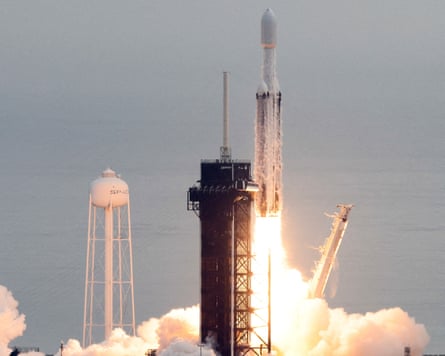
“While we believe these industries will develop over time, the manner in which they emerge, including the timing of commercialisation, the scale and pace of adoption, and the applicable competitive, technical, regulatory, geopolitical, and economic frameworks may differ materially from our current expectations,” the document says, deploying the classic understatement of stock market legalese.
But it is classic Musk to aim for the impossible.
A more immediate ambition is datacentres in space, or “orbital compute” as the document describes it, powered by solar energy. If manufacturing on Mars is a long-term aim, this one is relatively short-term. The prospectus says it expects to launch extraterrestrial datacentres as soon as 2028.
3. Musk will have 85% control of the business
The world’s richest person and chief executive of SpaceX will control just over 85% of the voting power in the business, making it extremely difficult to unseat him from the company.
Musk’s control will be derived from majority ownership of a type of stock known as class B, which carries much more heft than the class A stock that everyone else will own. In shareholder votes, each holder of class B gets 10 votes per share. Musk will be very much in control.
Elon Musk will have 85% control of the business under the IPO plans. Photograph: Brendan Smialowski/AFP/Getty Images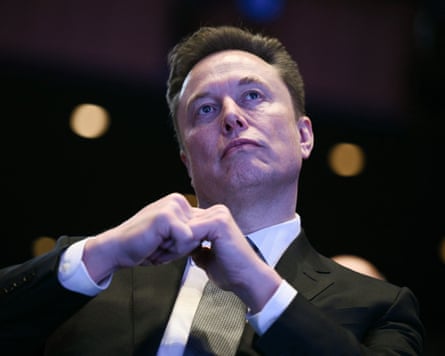
4. Musk is in line to get even richer
Musk, who is already worth about $676bn – more than double his nearest rival, the Google founder Larry Page – stands to make a vast sum from SpaceX although the exact amount is unclear and there is quite the caveat to his maximum earnings.
According to the prospectus, he has been granted 1bn class B shares that vest – meaning, Musk gets full ownership of them – if SpaceX manages to achieve the “establishment of a permanent human colony on Mars with at least one million inhabitants”. As well as colonising Mars, in order for those shares to vest he must always meet a number of market cap targets, referring to the total value of a company’s shares. Those targets stretch as far as getting the market cap to $7.5tn. Which is more than the combined economic output of the UK and Italy.
Musk was also granted another tranche of B shares in March. These 302m shares vest if he hits targets including the completion of space-based datacentres delivering 100 terawatts of compute a year.
Musk’s base salary, unchanged since 2019, is $54,000 a year. He famously bid $54.20 a share for Twitter in 2022, leading to speculation that he was referring to the slang term for cannabis, “420”.