2 months ago
82
2 months ago
82
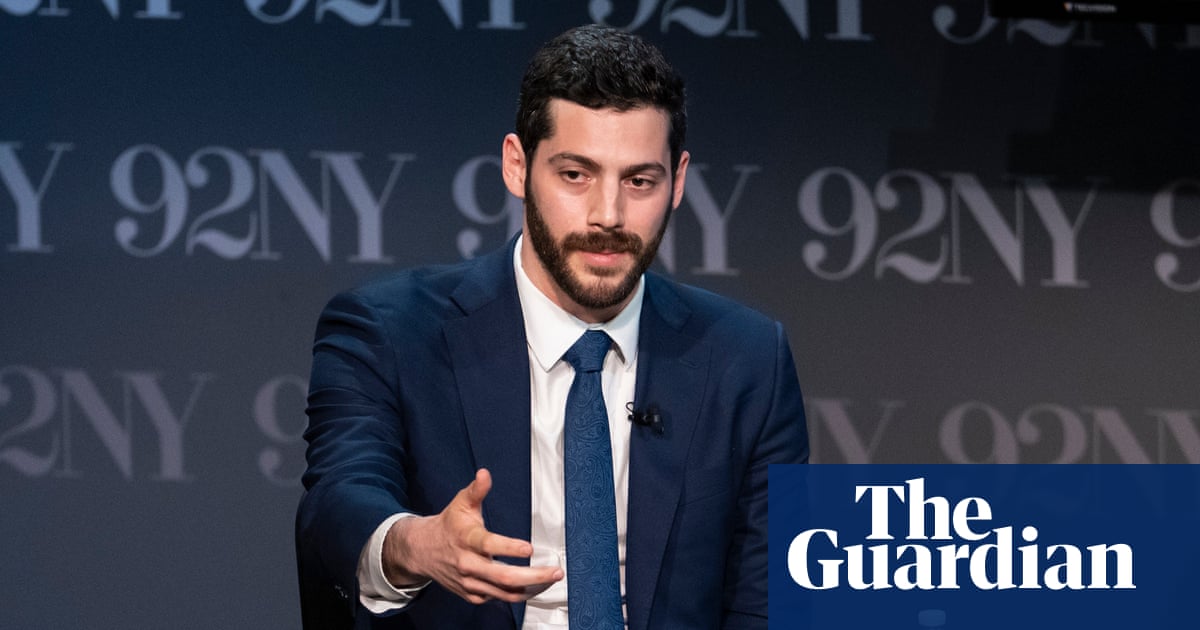
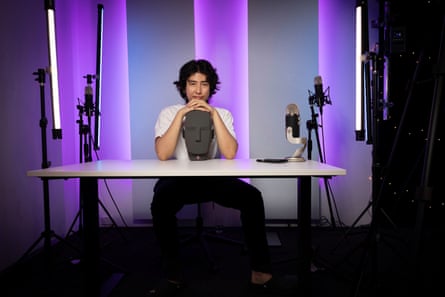
It would be crass for Jonah Singer to reveal what he makes from being a YouTube content creator, but he will show Guardian Australia his new $100,000 mic. The 5128-C is a head and torso simulator (a half-manikin fitted with ear mics, capable of binaural recording); he’s named it Alex, after a Minecraft character. It lives in his beautiful studio (part of his larger studio and office complex) in Sydney’s Erskineville. Yes, the 27-year-old is doing all right.
As “Jojo”, Singer specialises in ASMR: autonomous sensory meridian response. It’s the tingly, relaxed sensation that some people get when exposed to “triggers” such as whispering, rustling and mouth noises.
It’s hard to estimate how many creators exist, but according to YouTube, in 2022 alone, ASMR generated 90bn views. Going by comment sections, the content is particularly popular with people suffering insomnia and anxiety. With the creators talking directly to camera, the effect is of receiving gentle personal attention – without any of the usual fears of intimacy kicking in.
Singer started watching ASMR content at a young age, and making his own as a teen. “I got flak when I started making it … My friends would play my videos in class and that was so embarrassing,” he says. He hid his hobby from his parents – until he started making money. “I was like, ‘Dad, I got $1,000 from YouTube.’ ‘For what?’ ‘OK, hear me out, there’s this thing called ASMR.’ He was like, ‘Are you doing drugs?’”
The earliest ASMR channels appeared on YouTube in 2009. Singer was inspired by Russian-American Maria Viktorovna, who launched Gentlewhispering ASMR in 2011. Since then, creators – or “ASMRtists” – have mined their imaginations for where to take the phenomenon. Role play can be extremely inventive (some content makers are clearly aspiring actors), such as that of American creator Jaden Aliana and her very specific scenarios (see: The sister that landed you in jail comes to visit you); and the sets are sometimes surprisingly extravagant – like the period designs of French creator Diane, AKA Moonlight Cottage. But you’ll also find well-appreciated lo-fi options, such as someone doing a walk-through of their village in South Africa, or filming tribal hair binding in India.
Singer’s ASMR videos are aimed at relaxation, utilising his huge collection of props kept in drawers – pet toys, stress toys, whirly tubes and wooden odds and ends that he uses to make wood soup. By piggy-backing on popular social media search terms, he generates staggering figures – as with his video Do You Have ADHD?, which has had 12.7m views. (Apparently if you see one particular prop five times in the video, you do.)
His work is also characterised by its playfulness. In one Instagram reel, titled I Will Guess Your Name (also 12.7m views), Singer says the viewer owes him $5 if theirs is one of the names he whispers – guaranteeing interaction in the comments. He’s taken cues from the stunt style of YouTube megastar MrBeast, including making a video of himself donating money to smaller creators. He also utilised the platform Cameo to pay celebrities to make ASMR, such as Hank from Breaking Bad.
His forensic understanding of what makes a video take off has made him an ASMR superstar; in fact, he may well be the biggest ASMRtist in the world – at the time of writing he has 5.17 million YouTube subscribers to American creator Gibi’s 5.2 million, but outdoes her by 4 million on TikTok. (The water becomes muddier if you include the South Korean trend of mukbang, the preparation and very audible eating of food, the star of which is Zach Choi, with 33.5 million subscribers on YouTube.)
Singer makes his money from AdSense, merchandise, brand deals and now an agency, White Noise, for other creators. His latest move is podcasting: this month, he launches ASMR Garden, in which he’ll combine his usual content with interviews with non-ASMR guests (Canadian rapper bbno$ is on the lineup).
He avoids the burnout that social media creators experience by not putting out the same kind of content every day, which suits his ADHD brain’s need for novelty. “The creative sandbox is limitless,” he says. “Unless I’m interested in something, I just can’t retain or absorb the information, and I had that trouble in school. I’m an all-in person, which has contributed a lot to our success – by taking these huge risks and putting some skin in the game and creating a company.”
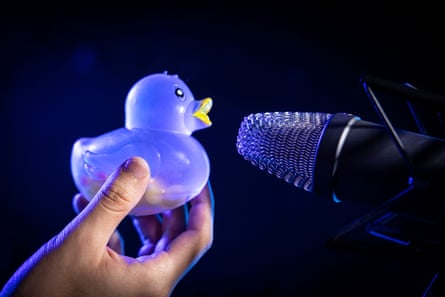
If you’ve ever seen Singer’s videos you might mistake his accent as American. He grew up in Sydney’s eastern suburbs to a Japanese mother and an Australian father (the actor Ritchie Singer) – but was practically raised by American YouTubers. Or, as he says, “YouToobers”.
While his mother hoped he’d become a concert pianist or music teacher – Singer attended the Sydney Conservatorium of Music high school – he moved straight into content creation. First was a YouTube channel about Super Mario, when he was seven. Then, at the age of 12, the channel The Magic Weenies with his friend Ronan Collins (now the creative head of White Noise), which specialised in card trick tutorials. Next, a gaming channel focusing on Minecraft, followed by a somewhat dark era, when he joined the commentary genre, making videos dissing other creators.
“One of the consequences of growing up on the internet is that your digital footprint is there for ever, and so the internet has seen me at my best and frankly at my worst,” he says. “It was toxic for my mind and soul. If you make videos about other people, you’re setting yourself up for failure because what goes around comes around and it’s bad PR for the long term.”
In 2016 he decided to kill off that persona and move into ASMR – a radical 180 that copped him some flak on Twitter and at school. He didn’t tell his girlfriend, Joanne, what he was doing for the first six months. Now she is his business partner. In fact, his five-strong staff are all from his school days. And yet, if Australia’s social media ban had been in place when he was in his teens – and this blows his mind – “I would never have existed.”