 3 hours ago
13
3 hours ago
13
The Bayeux tapestry
The most anticipated exhibition of the year centres on an embroidered epic of war and conquest that miraculously preserves an intimate window on the Norman invasion of Britain in 1066. Yet, you may find yourself simply fascinated by the artistry of the Anglo-Saxon women who used coloured wool to depict billowing sails, charging horses and King Harold’s spectacular moustache. Jonathan Jones
British Museum, London, 10 September to 11 July
Lady in Blue by Tschabalala Self
This joyously comic, exuberant celebration of life on the streets – or in this case, the plinth – is likely to be a sensation. A young woman in a blue dress and blocky shoes strides boldly across the rectangular Fourth Plinth in Trafalgar Square. Her body is big in every sense, her rollicking form a surreal overstatement. An assertive, optimistic work of infectious self-confidence. JJ
Fourth Plinth, Trafalgar Square, London, from 10 September
Sunil Gupta: Life With a Camera, 1970-Now
Life With a Camera is an apt description of the career of Sunil Gupta, whose portraits of anonymous gay men in Delhi, queer couples in the UK, and cruisers in New York combine a deep commitment to the principle that all forms of love and community should be made visible with a classical eye for composition. Ben Eastham
Kettle’s Yard, Cambridge, 19 September to 31 January
Turner prize
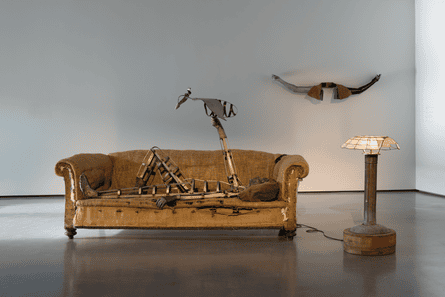
This year’s Turner prize promises powerful art. Kira Freije creates tragicomic tableaux of human figures whose bodies are empty metal frames but whose faces are cast from real people; Simeon Barclay tells stories of working-class northern life through performance and sculpture; Marguerite Humeau makes sculptures out of materials such as wasp venom; and Tanoa Sasraku exhibits textiles and drawings. Should be a good one. JJ
MIMA, Middlesbrough, 26 September to 29 March
Beverly Buchanan: Weathering
When making permanent monuments has come to seem hubristic (who will be left to appreciate them?) and even irresponsible (do we really need more stuff?), Beverly Buchanan’s tumbledown “shack sculptures” celebrate the organic processes of decay and ruin, restoring the proper hierarchy between art and nature. BE
Spike Island, Bristol, 26 September to 31 January
Painting the French Riviera
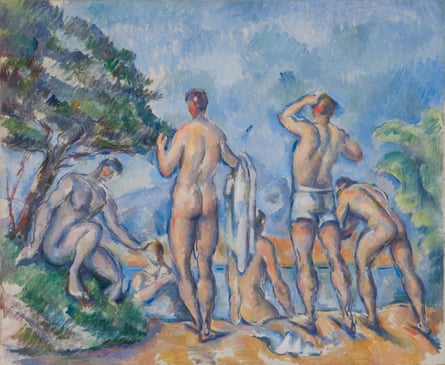
Artists didn’t just paint the Riviera; they helped invent it. The rise of France’s Mediterranean coast as a holiday resort from the 1870s onwards coincided with the new, savage embrace of raw sunlight by Monet and Cézanne. Matisse and the Fauves painted the Riviera in psychedelic colours, but it was Picasso who saw beach life as erotic and shockingly modern. JJ
Royal Academy, London, 2 October to 31 January
Salman Toor: Someone Like You
Rendered in his signature emerald-absinthe tones, Toor’s paintings tell the imagined lives of young, queer south Asian men. Much like near-contemporary Lynette Yiadom-Boakye, he inserts fictionalised subjects into paintings in the traditions of the masters to tell enigmatic, evocative, and gently subversive stories. BE
Courtauld, London, 2 October to 10 January
Wakaliga Uganda
This film studio in Kampala makes action movies on budgets of a few hundred pounds – using props made out of scrap metal and editing rigs built from discarded computer parts – which are shown in makeshift cinemas to live commentaries by charismatic “video jokers”. The challenge? How to reproduce that culture in a gallery without sucking the life out of it. BE
Chisenhale Gallery, London, 2 October to 6 December
Sophie Calle: Something Missing
In the language of wellness culture, Sophie Calle lacks boundaries. She has followed a stranger to Venice to secretly photograph him, rifled through the personal effects of hotel guests, and written a newspaper column exposing the private life of a man she had never met. In the fifth decade of her career, it will be interesting to see how her particular brand of mischief lands in our increasingly puritanical culture. BE
Turner Contemporary, Margate, 3 October to 24 January
Katherine Hubbard: The Great Room
During the pandemic, Katherine Hubbard’s mother started to show the effects of a progressive brain disease. They have been working together ever since, with the artist’s profoundly moving photographs, sculptural installations and writings reflecting on how memory and identity is constructed, breaks down, and might be rebuilt. BE
Studio Voltaire, London, 7 October to 10 January
The 90s: Art and Fashion
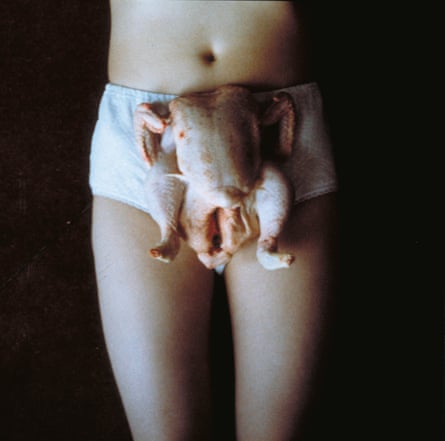
It was the decade when British art started to be taken seriously around the world, while shocking and scandalising Britain itself. It was also the great decade of the Turner prize. Curator Edward Enninful, former editor-in-chief of Vogue, sets YBAs including Damien Hirst and Sarah Lucas alongside fashion icons such as Alexander McQueen and photographer Juergen Teller. JJ
Tate Britain, London, 8 October to 14 February
Robert Ryman: The Real Thing
Ryman’s paintings are “the real thing” in the sense that they rejected illusion: his delicate white-on-white works were the logical conclusion of minimalism’s mania to cut art down to its fundamentals. Exquisite refinement or tiresome navel-gazing? Go make up your own mind. BE
Barbican, London, 8 October to 28 February
Aphrodite: The Making of a Goddess
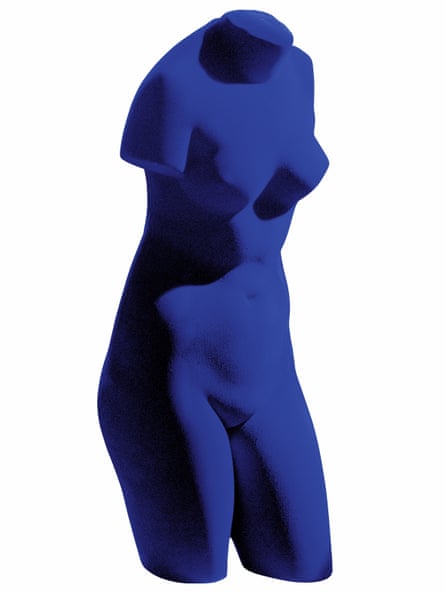
Forget the Bayeux tapestry, Botticelli’s Venus is coming to Britain. Well, not quite The Birth of Venus, but a similar Botticelli nude that shows he did a nice trade in images of the ancient deity of love and desire. This exhibition starts in ancient Greece with the cult of Aphrodite and follows her reincarnation as the Roman Venus into modern times. JJ
Ashmolean Museum, Oxford, 8 October to 11 April
Willem de Kooning at work
The greatest painter of the second half of the 20th century? No one can match his range; from shockingly violent (the notorious Woman series) to heart-stoppingly pretty. The most anticipated show of the season. BE
Rijksmuseum, Amsterdam, 9 October to 17 January
Pope.L: Five Decades
Pope.L’s business card introduced him as “The friendliest black artist in America” and he became famous for crawling across New York to protest against the neglect of its poor. This survey should be a fitting tribute to an artist who was incandescently angry, shockingly funny and never looked away. More like him are needed. BE
Modern Art, London, 13 October to 14 November
Tarek Atoui: Hyundai Commission
The sound of music comes to Tate Modern’s Turbine Hall, with a difference. Beirut-born, Paris-based Atoui is an artist of delicate multisensory, but mostly aural, environments. He turns everyday stuff – including, in the past, camping gear, stones and water – into musical instruments. It should be engaging and poetic, sending strong echoes of Lebanon’s history echoing in this vast space. JJ
Tate Modern, London, 13 October to 11 April
Constantinople to Istanbul: One City, Two Empires

Istanbul really was Constantinople once – the eastern capital of the Roman empire that survived as the centre of Byzantine civilisation. When the Ottomans conquered it in 1453 they respected this, preserving the ancient domed church Haghia Sophia and modelling mosques on it. This survey of art and design from one of the world’s most hypnotic cities, from Byzantine icons to Turkish tamburs, sounds stupendous. JJ
V&A, London, 7 November to 9 May
Van Eyck: The Portraits
This mesmerising painter turned a camera-like eye on the people of the early Northern Renaissance period. It was said he was an alchemist, which feels true when you contemplate the glassy perfection of his portraits. That eerie, magical sense of power must have helped his business no end. He is, quite simply, one of the greatest artists ever to have lived. JJ
National Gallery, London, 21 November to 11 April
Alfred Wallis: An Artists’ Artist
Wallis was the fisherman turned painter whose discovery by Ben Nicholson gave British modernism its own “primitive” connection to the native landscape, freeing it from models pioneered elsewhere. But these luminous pictures of boats sailing across dreamlike seas – loaded with personal and collective memory – are more than a missing link in art history. BE
Pallant House Gallery, Chichester, 21 November to 2 May
Nan Goldin: You Never Did Anything Wrong
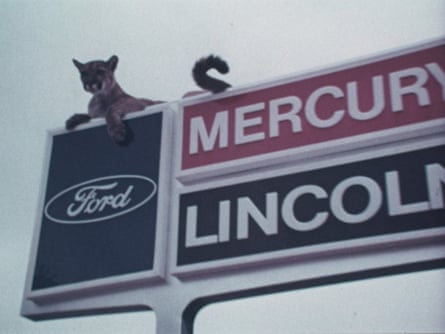
Life itself is Nan Goldin’s art. No one rivals her raw truth-telling camera and the total conviction that, when you look at her photographs and films, you are seeing the way her world is. She’s got the lyrical brutality of Andy Warhol and Lou Reed, and her people are their people, updated. Sex and suffering, beauty and death … it’s all here. JJ
Hayward Gallery, London, 24 November to 7 March
Design and architecture by Catherine Slessor
Es Devlin: Other Worlds
Currently plotting the staging for the Met’s much anticipated Ring Cycle, artist and theatre designer Es Devlin has reframed the visual language of opera, theatre, music and fashion. From Wagner to Stormzy, this retrospective illuminating 30 years of creative practice features immersive installations and a replica of her studio.
Design Museum, London, 2 October to 4 April
Michael Landy: Future Ruins
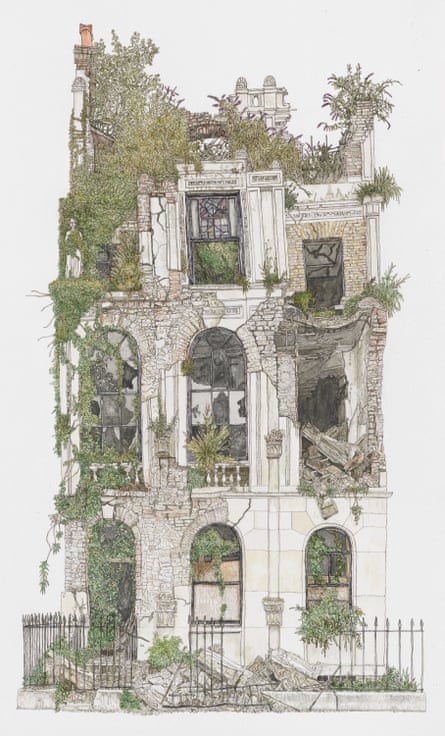
The atmospheric labyrinth that is the Sir John Soane’s Museum hosts Michael Landy’s fantastical drawings of buildings in ruins, inspired by 18th-century draughtsman Joseph Gandy’s romantic vision of a crumbling Bank of England. Landy’s less romantic subjects include Donald Trump’s Mar-a-Lago compound and Mussolini’s fascist monument, the Palazzo della Civiltà in Rome.
Sir John Soane’s Museum, London, 14 October to 17 January
James Stirling
To mark the 30th anniversary of architecture’s Stirling prize, established in honour of the irreverent and iconoclastic James Stirling, this show looks at his career through his links with Liverpool, where he was brought up and studied. Stirling was fascinated by the city’s industrial past, which shaped his quixotic approach to design.
RIBA North, Liverpool, 23 October to 24 January
The Nue Black Aesthetic
Valorising the work of contemporary Black designers across furniture, architecture, fashion and installation, this show looks at how design systems are being radically redefined by the nuances of the Black experience, with designers from diasporic communities balancing shared perspectives with the richly distinctive traditions of their individual heritage.
Design Museum, London, 2 November to 8 August
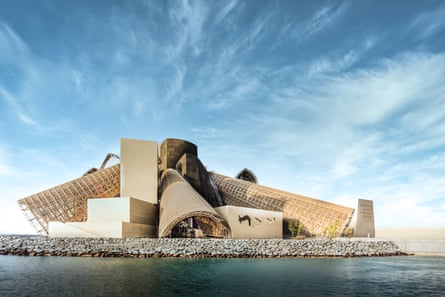
Guggenheim Abu Dhabi