 4 hours ago
13
4 hours ago
13
The population of the world’s heaviest parrot, the kākāpō, has surpassed 300 birds for the first time in 75 years, after a record breeding season triggered by the mass fruiting of a native New Zealand tree.
Ninety chicks were officially added to the population of the critically endangered birds on 1 September, pushing the total to 325 – a record high since recovery efforts began.
“The last time the population is thought to have exceeded 300 birds may have been as long as 75 years ago,” said Deidre Vercoe, the conservation department’s kākāpō recovery operations manager.
“We had a four-year gap between breeding seasons, so it’s fantastic to finally see the population increase after all that time.”
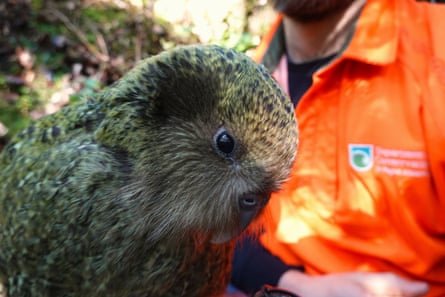
Kākāpō, the world’s only nocturnal and flightless parrot, were once abundant across New Zealand. But their population plummeted after the introduction of predators such as cats and stoats. By the 1900s, they were nearly extinct.
A recovery programme was established in 1995 with a population of just 51 birds and has battled challenges with genetic diversity, infertility and poor chick hatching rates. There are three kākāpō breeding populations, all based on predator-free islands off the South Island.
Kākāpō breed only every two to four years when the native rimu trees produce large numbers of berries, so repopulation is slow. This year, after a four-year wait, a bountiful harvest of rimu berries prompted the birds to breed and produce a record number of chicks.
“In the early years of recovery, it took 16 years to produce that many chicks,” Vercoe said.
Kākāpō are thought to live between 60 and 80 years, can weigh up to 4kg and are famously entertaining. More than 100,000 people tuned in to watch a live stream of a kākāpō sleeping, eating and attending to her nest and chicks during breeding season.
The parrots have unusual mating rituals. Male birds gather in a “lek” to produce a distinctive booming sound, emitted from air sacs in their chests while sitting in a dugout bowl in the ground. The deep boom, which can travel up to 5km, sounds similar to a softly plucked cello string.
After choosing a partner and mating, females typically lay one to four eggs. The females become solely responsible for their eggs and hatched chicks for roughly six months.
At 150 days of age, the chicks are fledged and considered independent enough to be added to the total population. The youngest chick of the 2026 breeding season was female Awarua-A3, who hatched on 30 March.
Modelling indicated the next breeding season could occur as soon as 2028, Vercoe said.
“So, while we’ll take a moment to stop and reflect on this remarkable year, we’re already looking ahead to 2028 and preparing for what could come next.”