 5 hours ago
14
5 hours ago
14
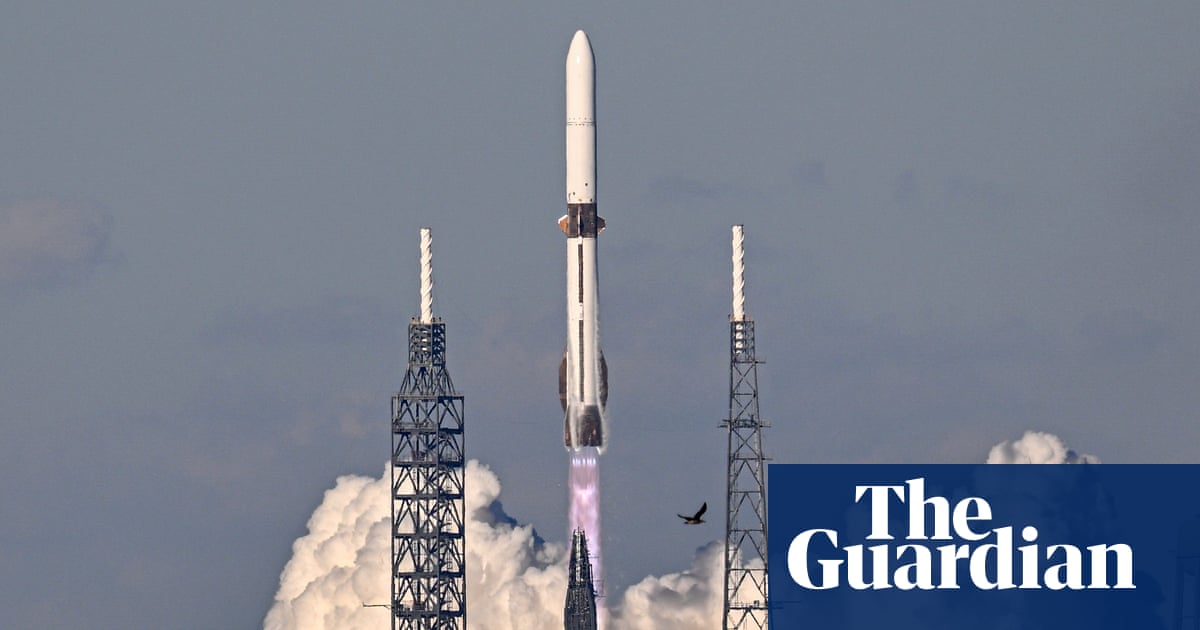
Engineers from Elon Musk’s SpaceX are on their way to a remote Australian island to retrieve part of a Starship that dived into the Indian Ocean.
The spacecraft – now floating off the coast of Christmas Island – was launched in Texas on 24 July, in the 13th test of the technology. After reaching orbit and releasing 20 non-functioning satellites, the upper stage of the rocket re-entered the atmosphere, landing in the ocean.
In recent weeks, the company has been working to retrieve the 52m long piece of spacecraft amid rough seas, before towing it to calmer waters for further study.
“The SpaceX Recovery team successfully guided Starship to a location just off the coast of Christmas Island,” the company posted on social media. “A team of SpaceX engineers is on their way to conduct additional analysis on the vehicle in calmer waters before attempting to return it to Starbase.”
David Watchorn, the chair of the Christmas Island Tourism Association, said most islanders woke on Tuesday to see what appeared to be three big ships. “But when you looked a bit closer, what looked a ship was a black rocket,” he said.
The arrival of the spacecraft had been the talk of the island since, he said. Locals hoped the global attention might encourage more tourists to come and visit the island, about 1,550km off Western Australia, and experience its “rugged, raw” landscapes and unique biodiversity, including red crabs and fluffy flying foxes.
The spectacle came just weeks after a separate incident of space debris, where six “space balls”, likely from a foreign rocket body, washed ashore in north Queensland.
Associate professor Alice Gorman, a space archaeologist at Flinders University, said the “rapid acceleration” in the number of satellites being launched meant more rocket bodies and debris, both in space and falling back to Earth.
“We’ve gone from having about 5,000 active satellites to having 16,000, around about 16,000 active satellites, of which about 10,000 are SpaceX constellations,” she said.
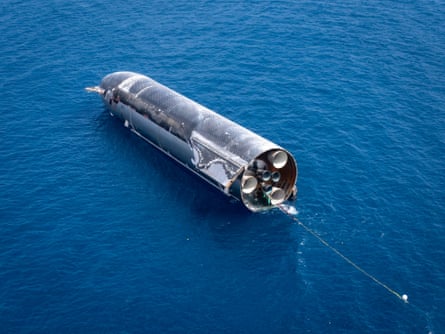
Upper stage rocket bodies could be dangerous, she said, because sometimes they contained toxic materials or leftover fuel, which could explode. The vehicle currently being towed off the coast of Christmas Island looked “pretty intact”, she said, which suggested there was less risk of fuel leaking out.
after newsletter promotion
An exclusion zone had been put in place to stop any recreational vessels getting too close, Watchorn said.
A spokesperson for the Australian Space Agency said “SpaceX has towed the vehicle to Christmas Island after it re-entered and landed in international waters”, and the federal government was engaging with the company on recovery efforts.
Dr Hadrien Devillepoix, the lead scientist at the Desert Fireball Network at Curtin University, said the circumstances demonstrated the potential to retrieve and reuse parts of rockets, by splitting them into different stages.
So far, the main focus of recovery had been on the first stage – the part that fires off from the launch pad, he said, whereas the piece off the coast of Christmas Island was from a later or upper stage. “The idea of being able to reuse all of the rocket stages is quite cool.”
The test spacecraft was designed for satellite delivery, and eventually manned flight. At this stage it was unclear whether any material would be left on the island or completely retrieved by the company. Guardian Australia has contacted SpaceX for comment.