 5 hours ago
5
5 hours ago
5
Racism and sexism have become normalised in Britain, the equalities minister has said, as she warned that young men were being sucked into violent misogyny by the “cesspit” of social media.
Bridget Phillipson said she was increasingly worried about how commonplace misogyny and racism had become, fuelled by online interactions and statements by politicians she said would not have been acceptable a few years ago.
She accused senior MPs from Reform and the Conservatives of having made racist statements in recent years, and accused the police of not taking violence against women and girls seriously enough.
Speaking to the Guardian’s Politics Weekly podcast, she said: “I worry that we are at kind of a ground zero in terms of attitudes around violence against women and girls. Things that not very long ago felt totally unacceptable are becoming normal. I think we’re seeing that in terms of attitudes towards women, and I think we see that in terms of attitudes around racism.”
She accused the shadow justice secretary, Nick Timothy, and Reform’s economic spokesperson, Robert Jenrick, of having made racist statements in recent years.
Earlier this year, Timothy called Muslims praying in Trafalgar Square an “act of domination”, while Jenrick came under fire in October after the Guardian revealed he had complained he “didn’t see another white face” on a trip to an area of Birmingham.
“We’ve had pretty despicable things that the likes of Robert Jenrick have said in the past on his visit to Birmingham,” she said. “We had Nick Timothy, who said some appalling things about Muslim prayer.
“Apparently I’m calling him names when I say that’s racist. I think it is fundamentally racist because I don’t think he would say that about any other group.”
Neither Reform nor the Conservatives responded to requests for comment.
Labour has been accused in recent years of shying away from criticising statements by Reform and Conservative MPs for fear of alienating their own voters. Phillipson’s comments suggest that under Andy Burnham ministers will be freer to take on their opponents more directly, even on sensitive issues such as race and gender equality.
Her comments about online misogyny underline the government’s determination to push through the under-16 social media ban, which was one of Keir Starmer’s last announcements in office and which ministers have promised will be in place by next spring.
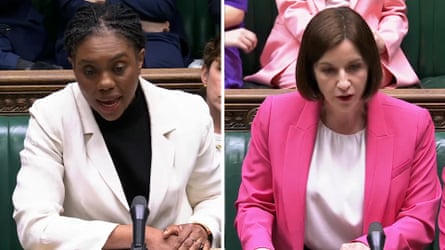
The women and equalities minister also criticised the police for not taking violence against women and girls seriously enough. “We’ve seen some pretty shocking failings in terms of the police response over decades and sadly we’re not seeing the progress that we should in terms of how the police will often respond to this,” she said.
Labour itself is facing accusations of not taking violence against women seriously with its plan to release 5,000 prisoners earlyto free up space in crowded prisons.
Some in the party also think the government is veering into xenophobia with its proposals to toughen the immigration system and even deport children forcibly if their families refuse to move.
Phillipson defended the policies of the home secretary, Shabana Mahmood, saying they were necessary to restore faith in the migration system. “Having public consent for migration and having a system that is fair is absolutely essential,” she said. “If you don’t have that, then everything falls away.”
Phillipson’s criticisms of other parties in part reflect her second role as party chair, which involves coordinating attack lines against Labour’s opposition. But it is also a sign of the personal animosity between her and senior Tory politicians, including the opposition leader, Kemi Badenoch.
Badenoch has accused Phillipson, who raised taxes on private school fees as education secretary, of being a “spiteful class warrior”. The comments caused a row in the Commons chamber this year as the two MPs traded remarks.
Phillipson spoke in depth about that row for the first time since it happened, saying: “When she had her say, I just kind of said that people would find her out for who she really was.”
She added: “I’m from an ordinary working-class family in the north-east. They don’t like people like me making the argument for what I believe. For some of them, I guess they think I should just get back in my box.”
Having been moved by Burnham from her previous role, Phillipson said she was sad to leave her education brief, but said the new prime minister had lifted the mood within the party.
“There is a real sense of energy and hope and purpose,” she said. “My reflection on where we began in July 2024 is that a bit more of that would have probably got us a long way down the line.”
She added that Burnham had brought “a sense of hopefulness and optimism that I think people have felt has been lacking, not just actually since we came into government, but for years before that”.
She denied the party was planning to use the polling bounce it has seen since Burnham entered Downing Street to launch an early election. “We were elected with a five-year mandate in 2024, and I see no reason that we would depart from that,” she said.