3 months ago
81
3 months ago
81
‘Why do you always grip the dashboard like that when I am driving?’
It’s the bleary-eyed 5am run to rowing practice and I have just relented to the eager ‘Can I drive?’ When your teenager takes a reluctant ‘I guess’ as full-throated approval, you still want to show grace. Especially when there are many more mandated hours of supervision en route to a probationary licence.
Instead of the dashboard, I grip my ribs and sit stiff with attention, mute of tongue.
Just then, a huge truck in the next lane honks unnecessarily but I feel the universe has spoken for me.
When considering how many children to have, I forgot to take stock of how much driving there would be to do and teach. Only up to the middle child, many more nerves remain to be jangled. My eyes are darting everywhere but we spend the time driving peaceably enough, listening to the news.
At our destination, my sweet child says, ‘I really appreciate the time you take’, and permitting myself a chuckle, I respond that one day she’ll be paying me back.
She rolls her eyes, knowledgable from the stories I’ve long brought home from the hospital.
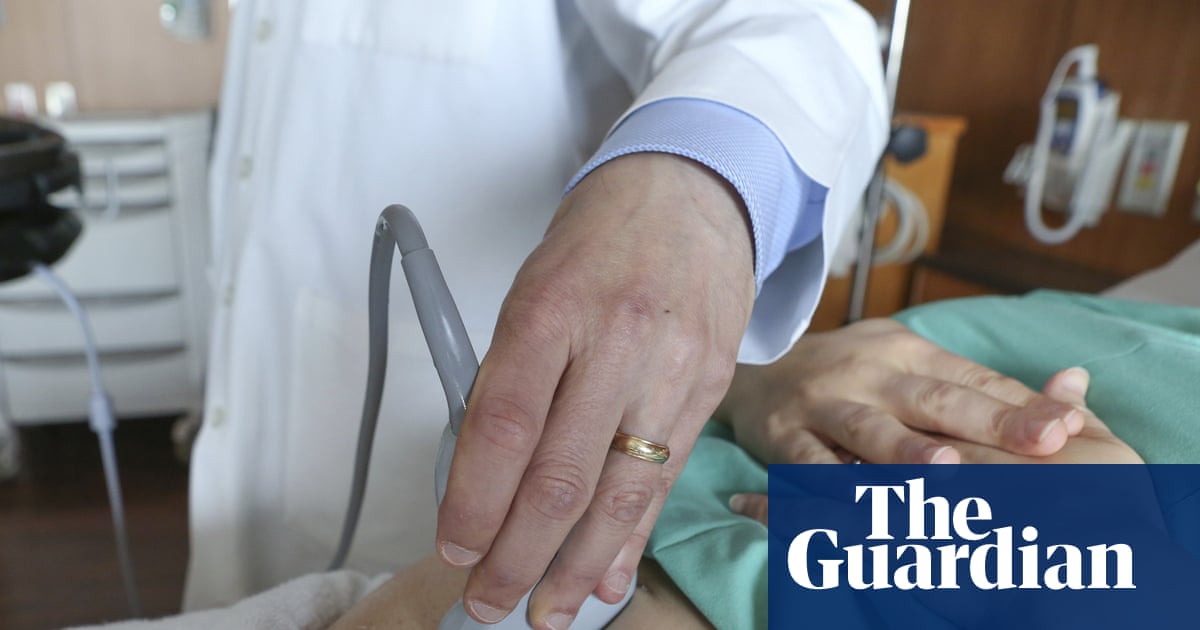
I often think that my geriatric oncology clinic provides a window into the sweep of human conditions. Here, I meet couples in a touchingly long marriage and those who have lost a spouse through estrangement or death. Also, people impaired through cognitive decline, organ failure and that most ubiquitous and insidious of things, loneliness.
We suggest all patients attend their appointment with another adult because there is a lot to take in. I have watched with interest to see who (besides a spouse) shows up with my patients – in my experience, it’s almost always a woman.
They are daughters, daughters-in-law, nieces and granddaughters. Women friends. Women neighbours. Women from church, bingo and bowls. Sometimes, a patient’s health or the weather takes a turn for the worse and we switch to telehealth. Who helps them connect to a video link? See above. Who sits in the corner and takes notes? See above.
Of course, I also meet sons (and the rare son-in-law) in such roles. For five long years, I watched one bring his slowly dementing mother to see me. He would collect her from her facility and return her via a visit to see her great-grandchild. The latter filled her with delight. As she lost her capacity to talk, he matched his pace and advocacy to her needs. When she grew too weak and we said goodbye, I told him I admired his commitment. Countless daughters do the same, but he stands out in my memory.
Anyone who knows will tell you that taking a parent to an appointment isn’t just about the time.
For instance, I want to know about recent medication changes, other specialist appointments and which, if any, aged care services they have gone into yet (a vexed issue).
It’s not uncommon for a son to say, ‘I don’t know, you’ll need to ask my sister.’ A daughter will pull out her diary.
The practical outcome of ‘ask my sister’ is that I get to interrupt her day of respite from care which she is usually spending at work. Then we are both frustrated and she laments that she might as well have come to the appointment.
It’s a common sight to have multiple daughters attend important medical visits or ask to be connected via phone. One asks questions, one takes notes, one provides eyewitness accounts.
‘Dad, remember that fall?’ ‘Mum, let’s be honest about your pain.’ Who wins? The patient.
I am not saying it doesn’t happen but it’s rare to see a band of sons doing this.
Why does this matter?
It matters because even in the modern age, women make up seven out of 10 primary carers. They provide a collective 2.2bn hours of informal care, which adds up $77.9bn each year.
The peak age for a woman to become a carer is 55, a time that also marks the onset of new ‘conditions’: adult children who can’t afford to leave home, ageing parents fighting to remain at home, a resetting of marital expectations and the significant changes of menopause to mention a few.
For my friends and me in this age bracket, every ‘state of the nation’ report starts with whose parents face which ailments and what appointments. Caring for our elders is right but the right thing has a cost: doing the disproportionate share of unpaid care means working less, earning less and worrying more.
As a doctor, I have a front-row seat to the physical, emotional and financial impact on women who find themselves having slipped into the role of carer. We need a rulebook.
I am more conscious of this today because my daughter, who was a (malcontent!) baby just the other day, turns 18 this week.
The gift I would like to give her is the key to an adult life that contains a balance between duty to self and service to others.
But since she is the type that gives without expectation, it feels necessary, though strange, to counsel her to pull back a bit and recognise that the task of caring must be shared by her brothers. Today, this concerns her grandparents. Tomorrow, her parents.
I don’t want my daughter to be the lead planner, helper and carer from birthdays to emergencies.
So, I ask her brothers to do the same housework as she does and invest as much concern and thought into caring for other causes. I hope they will continue to listen until this becomes second nature in their own home lives.
Soon, my daughter will have her driving licence. By the time I am in her passenger seat, I hope society will have reconsidered some more gender stereotypes. I want her to drive me because she is the one who happens to be free, not because it is ‘women’s work.’