 1 month ago
59
1 month ago
59
Interim summary
Here’s a snapshot of the latest Middle East news to bring you up to speed.
-
Donald Trump has announced that a ceasefire between Israel and Lebanon would be extended by three weeks. Trump, speaking to reporters in the Oval Office alongside the participants in the meeting, said he hoped the two countries’ leaders would meet during the additional three-week cessation of hostilities.
-
When he was asked how long he was willing to wait for a long-term peace deal with Iran, he replied: “Don’t rush me”.
-
The US president had earlier ordered the US navy to “shoot and kill” small Iranian boats that deploy mines in the strait of Hormuz and claimed that US minesweepers “are clearing the strait right now” amid the standoff over the key waterway. US special forces earlier boarded a stateless oil tanker in the Indian Ocean which the Pentagon claimed was carrying Iranian crude oil, ratcheting up the standoff with Tehran over the strait.
-
Trump said the US had “hit about 75% of our targets” in Iran and that a deal had not yet been reached because Iran’s leadership was “in turmoil”.
-
Iran’s president, Masoud Pezeshkian, said there were no “hardliners” or “moderates” in Iran, responding to the Trump claim of internal division in Iran’s leadership. Separately, Iran’s foreign minister, Seyed Abbas Araghchi, said Iranian state institutions “continue to act with unity, purpose and discipline”.
-
The US offered up to $10m for information on the leader of a Tehran-backed Shia militia in Iraq. The US state department’s “rewards for justice” program said Hashim Finyan Rahim al-Saraji was leader of the Kata’ib Sayyid al-Shuhada and called it a terrorist group.
-
Israel’s killing of Lebanese journalist Amal Khalil, 43, in a strike has been met with international outrage as Lebanon’s prime minister described the attack as a “war crime”. Colleagues called it a sustained attack by Israeli forces and said rescuers attempting to dig her out of the rubble of a building were also targeted and prevented from providing life-saving assistance.
-
US journalist Shelly Kittleson, who was freed a week after being kidnapped in Baghdad late last month, has taken to social media to thank people for helping secure her release by the Iran-backed Iraqi militia Kataib Hezbollah. “Thank you all so very, very much,” she said.
-
Italian sports officials say Italy is not interested in replacing Iran at the upcoming World Cup after a suggestion to that effect by a Trump administration official.
-
Pope Leo urged the US and Iran to return to talks to end the war and condemned capital punishment, calling for a new “culture of peace” to replace the recourse to violence.
Key events Show key events only Please turn on JavaScript to use this feature
Spain plays down reports of Pentagon Nato punishments

Sam Jones
Spain’s prime minister, Pedro Sánchez, has played down reports that the Pentagon is considering punishing Nato allies deemed insufficiently supportive of the US offensive against Iran by suspending them from the alliance.
A US official told Reuters that an internal memo was circulating at the highest levels of the Pentagon that outlined retaliatory options, including suspending Spain from the alliance and reviewing the US position on the UK’s claim to the Falkland Islands.
The official said the policy options were set out in an email that expressed frustration over some allies’ perceived reluctance or refusal to grant the US access, basing and overflight rights – known as ABO – for its strikes on Iran.
The email described ABO is “just the absolute baseline for Nato”, and said that options included suspending “difficult” countries from important or prestigious positions within the alliance.
Sánchez – who has been the most vociferous European critic of the US and Israel’s war in Iran – has also angered Donald Trump by refusing the US permission to use jointly operated bases in southern Spain to attack Iran. Trump responded by threatening to cut off al trade with Spain.
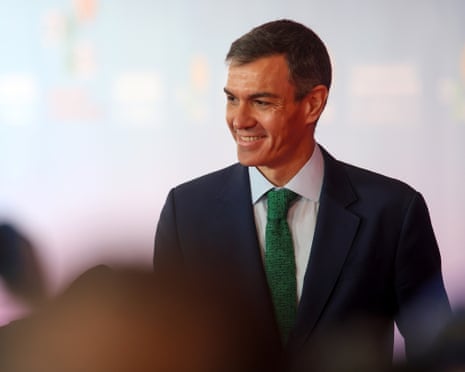
The socialist prime minister previously riled Trump last year by rejecting Nato’s proposal for member states to increase their defence spending to 5% of their GDP, saying the idea would “not only be unreasonable but also counterproductive”.
The UK, meanwhile, gave permission for the US to use British military bases for strikes on Iran, but only if those strikes were defensive – such as attacks on Iranian missiles sites.
Speaking in Cyprus on Friday morning, where he was attending a meeting of EU leaders to discuss topics including Nato’s mutual assistance clause, Sánchez stressed that Spain was a “loyal” Nato member and one that complied with its responsibilities.
“We don’t work on the basis of emails; we work with official documents and statements made by the US government,” he added. “The Spanish government’s position is clear: absolute cooperation with allies, but always within the framework of international law.”
But Sánchez also went on to renew his criticisms of the US war in Iran.
“The crisis that this illegal war has brought to the Middle East shows the failure of brute force – and has prompted demands for international law to be respected and for the multilateral order to be safeguarded and reinforced,” he said.
Asked by Reuters about the memo, the Pentagon press secretary, Kingsley Wilson, said: “As President Trump has said, despite everything that the United States has done for our Nato allies, they were not there for us. The War Department will ensure that the president has credible options to ensure that our allies are no longer a paper tiger and instead do their part. We have no further comment on any internal deliberations to that effect.”
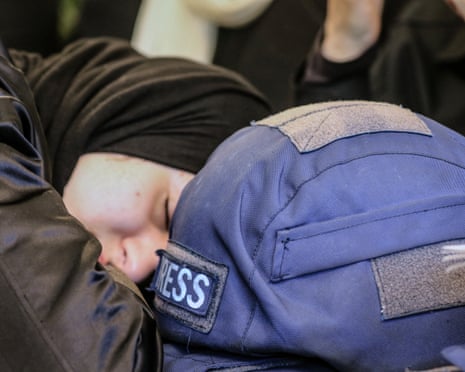
Human Rights Watch has called on Lebanon to join the international criminal court, after Israeli forces killed Lebanese journalist Amal Khalil and wounded her colleague Zainab Faraj in an airstrike earlier this week.
Posting on social media, the group wrote: “The Lebanese government should join the ‘Rome Statute’ of the ‘international criminal court’ to enable accountability for serious international crimes.”
Lebanese president Joseph Aoun condemned the attack. “Israel deliberately targets journalists in order to conceal the truth about its crimes against Lebanon,” Aoun said in a statement denouncing “war crimes”.
Lebanese prime minister Nawaf Salam wrote on X that “targeting journalists and obstructing access for rescue teams constitutes a war crime”.
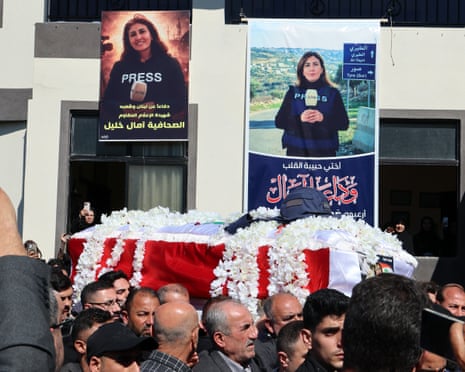
Amal Khalil, 43, who worked for al-Akhbar newspaper, was buried on Thursday. She was killed in what colleagues described as a sustained attack by Israeli forces. There were reports of rescuers attempting to dig her out of the rubble of a building also targeted and prevented from providing life-saving assistance.
Khalil was the ninth journalist killed in Lebanon this year. Last month three journalists were killed in a double-tap attack.
Lebanese MP Najat Saliba has praised the Israel-Lebanon ceasefire extension, and says it will help lots of the people in the area.
This comes as US president Donald Trump has announced that a ceasefire between Israel and Lebanon would be extended by three weeks. Trump, speaking to reporters in the Oval Office alongside the participants in the meeting, said he hoped the two countries’ leaders would meet during the additional three-week cessation of hostilities.
Speaking to Newsday on the BBC World Service, Saliba said: “Everybody is relieved that the ceasefire is going to continue for another three week. This is going to help a lot of people go back to their homes, check out their homes and get going with their lives.”
When asked about how Hezbollah could respond to the ceasefire extension agreement, she said “we don’t expect things to go forward very smoothly”.
But she added the Lebanese government is “very firm about going forward with the discussion in order for us to find a common ground that will relieve the people from all the bombing and killing.”
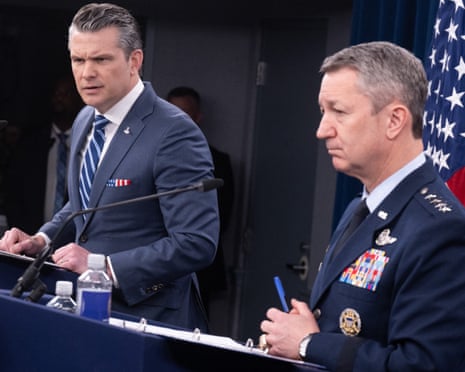
Later, at 8am ET (1pm BST), US defense secretary Pete Hegseth and chair of the Joint Chiefs of Staff Dan Caine will be hosting a press conference on Operation Epic Fury, the bombing of Iran.
We will be reporting live as this happens.
Iran’s deputy president has warned the US of “an eye for an eye” over oil strikes, the Mehr news agency has reported.
According to the outlet, Esmaeil Saqab Esfahani said: “If the enemy makes another mistake, our strategy will be an eye for an eye. If any of our oil wells are hit, one of the oil [facilities] of the countries from whose soil we are attacked will be targeted.”
He added that Tehran’s negotiation team has “grabbed the enemy’s collar at the negotiating table”.
He also said Iranians shouldn’t worry about their energy supply as the “necessary arrangements” have been made.
This comes after US president Donald Trump has repeatedly threatened to strike oil plants in the area, as well as threatening to “obliterate” Iran’s power stations and fresh water plants.
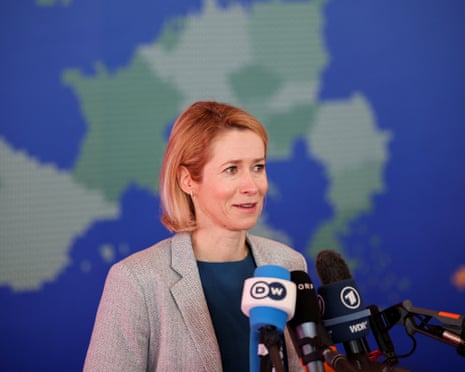
The EU’s foreign chief has said that talks with Iran should include nuclear experts otherwise “we will end up with a more dangerous Iran.”
Speaking on Friday ahead of an informal summit of EU leaders in Cyprus, EU’s foreign chief Kaja Kallas said: “If the talks are only about the nuclear and there are no nuclear experts around the table, then we will end up with an agreement that is weaker than the JCPOA was.”
“And (if) the problems in the region, missile programmes, their support to proxies, also hybrid and cyber activities in Europe are not addressed, we will end up with a more dangerous Iran,” she added.
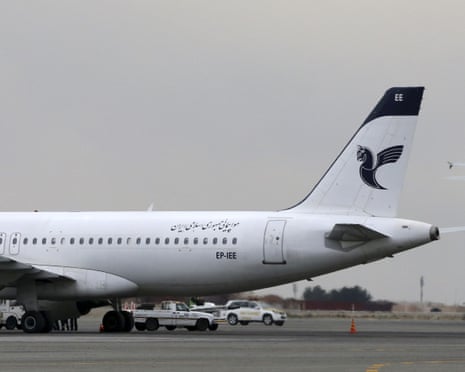
Iran will reportedly be resuming flights between Tehran and the north-eastern city of Mashhad from Saturday, according to Iran’s semi-official Tasnim news agency.
Al Jazeera reports that this comes after Iran has been slowly reopening its aviation sector since 18 April, and has a four-stage plan to return to normal.
On Monday Iran reopened Imam Khomeini and Mehrabad airports in the capital Tehran. “Authorisation for passenger flights at Imam Khomeini International Airport and Mehrabad Airport has been issued” from Monday, the Civil Aviation Organization says in a statement, according to ISNA news agency.
It added that passenger flights from 10 airports across Iran “will also be possible from Saturday.”
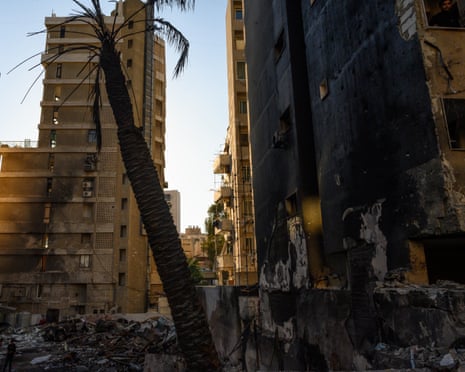
The Israel Defense Forces (IDF) and Hezbollah have accused each other of violating ceasefire agreements.
This comes after the IDF said earlier that it had intercepted several projectiles launched from Lebanon, with sirens sounding in the Shtula area. Then, Hezbollah said on Telegram that it targeted the area in a rocket attack.
Writing on X, it said: “3 Hezbollah terrorists were eliminated after unsuccessfully launching a surface-to-air missile toward an IAF aircraft
“In 2 separate incidents, Hezbollah terrorists launched rockets and an explosive UAV toward IDF soldiers operating south of the Forward Defense Line in southern Lebanon.
“These actions constitute blatant violations of the ceasefire understandings.”
Last night, Hezbollah said it had fired rockets at northern Israel in response to an Israeli “violation of the ceasefire”.
Interim summary
Here’s a snapshot of the latest Middle East news to bring you up to speed.
-
Donald Trump has announced that a ceasefire between Israel and Lebanon would be extended by three weeks. Trump, speaking to reporters in the Oval Office alongside the participants in the meeting, said he hoped the two countries’ leaders would meet during the additional three-week cessation of hostilities.
-
When he was asked how long he was willing to wait for a long-term peace deal with Iran, he replied: “Don’t rush me”.
-
The US president had earlier ordered the US navy to “shoot and kill” small Iranian boats that deploy mines in the strait of Hormuz and claimed that US minesweepers “are clearing the strait right now” amid the standoff over the key waterway. US special forces earlier boarded a stateless oil tanker in the Indian Ocean which the Pentagon claimed was carrying Iranian crude oil, ratcheting up the standoff with Tehran over the strait.
-
Trump said the US had “hit about 75% of our targets” in Iran and that a deal had not yet been reached because Iran’s leadership was “in turmoil”.
-
Iran’s president, Masoud Pezeshkian, said there were no “hardliners” or “moderates” in Iran, responding to the Trump claim of internal division in Iran’s leadership. Separately, Iran’s foreign minister, Seyed Abbas Araghchi, said Iranian state institutions “continue to act with unity, purpose and discipline”.
-
The US offered up to $10m for information on the leader of a Tehran-backed Shia militia in Iraq. The US state department’s “rewards for justice” program said Hashim Finyan Rahim al-Saraji was leader of the Kata’ib Sayyid al-Shuhada and called it a terrorist group.
-
Israel’s killing of Lebanese journalist Amal Khalil, 43, in a strike has been met with international outrage as Lebanon’s prime minister described the attack as a “war crime”. Colleagues called it a sustained attack by Israeli forces and said rescuers attempting to dig her out of the rubble of a building were also targeted and prevented from providing life-saving assistance.
-
US journalist Shelly Kittleson, who was freed a week after being kidnapped in Baghdad late last month, has taken to social media to thank people for helping secure her release by the Iran-backed Iraqi militia Kataib Hezbollah. “Thank you all so very, very much,” she said.
-
Italian sports officials say Italy is not interested in replacing Iran at the upcoming World Cup after a suggestion to that effect by a Trump administration official.
-
Pope Leo urged the US and Iran to return to talks to end the war and condemned capital punishment, calling for a new “culture of peace” to replace the recourse to violence.
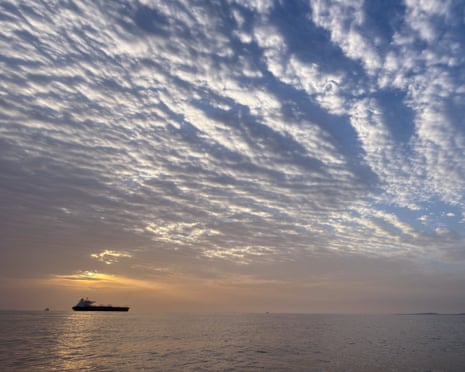
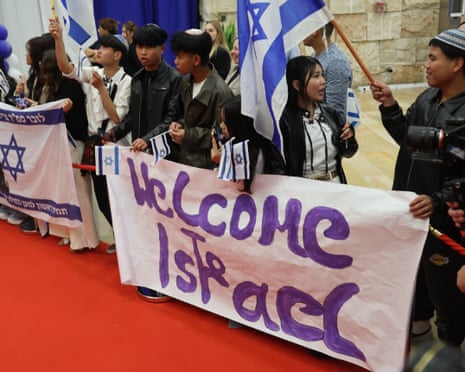
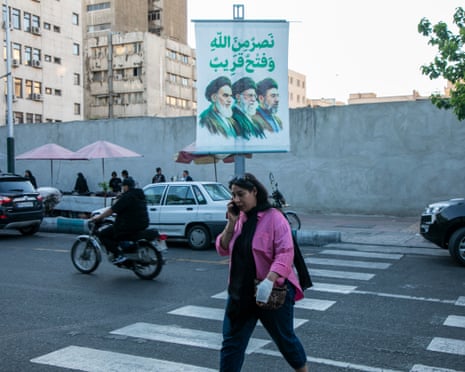
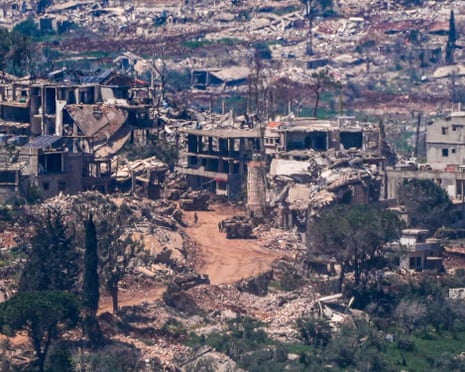
Here are some of the latest images coming in from the Middle East.
A US journalist who was released a week after being kidnapped from a street corner in Baghdad late last month has taken to social media to thank people for her helping secure the release.
Shelly Kittleson posted on X in what were reportedly her first public comments since being released by Iran-backed Iraqi militia Kataib Hezbollah. She said:
I am and will always be incredibly grateful to those who worked for my release when I was held hostage by an armed faction in Iraq earlier this month.
So many people – including but not limited to government officials, press freedom organisations, and my wonderful community of fellow journalists and friends - put an immense amount of effort into ensuring that the level of attention to my case remained high.
Thank you all so very, very much.”
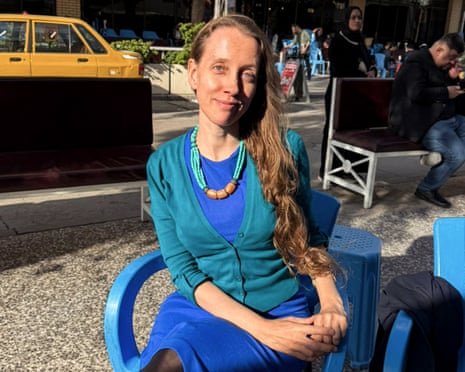
Kittleson, a freelance journalist, had lived abroad for years before the kidnapping, using Rome as her base for a time and building a respected journalism career across the Middle East, particularly in Iraq and Syria. She had entered Iraq again shortly before her abduction.
Analysis: Trump may talk of regime infighting, but Iran seems united

Patrick Wintour
Donald Trump has claimed that the infighting between moderates and hardliners in Iran’s leadership is so intense that Iranians have “no idea who their leader is”, but many experts questioned his analysis, saying – given the mass assassinations of senior commanders – the country had shown remarkable institutional cohesion.
Trump’s allegations of “CRAZY” splits in the Iranian leadership – the second outing for this argument in three days – is remarkable since he has previously said either he has little knowledge of the new Iranian leadership or that there has already been regime change.
Trump’s team, either through Pakistani mediators or more direct contacts, may be picking up that different factions are demanding different preconditions for the talks to restart. Trump at a minimum is implying that military hardliners have taken charge from the civilian diplomatic leadership.
It is hardly a secret that Iran has been riven for decades over how to approach the US and the wisdom of negotiations, but some Iranian academics and observers are accusing Trump of cognitive warfare: attempting to create what Mohamed Amersi, a member of the Global Advisory Council at the Wilson Centre, described as “chronic systemic paralysis in which the country’s decision-making machine becomes deadlocked”.
Read the full analysis here:
US puts $10m bounty on Iran-backed militia leader in Iraq
The US has offered up to $10m for information on the leader of a Tehran-backed Shia militia in Iraq.
The US state department’s “rewards for justice” program alleged Hashim Finyan Rahim al-Saraji was the leader of the Kata’ib Sayyid al-Shuhada (KSS) and called it a terrorist group.
The notice – posted on X – said:
KSS members have killed Iraqi civilians and attacked U.S. diplomatic facilities in Iraq, as well as attacking U.S. military bases and personnel in Iraq and Syria.”
As the Guardian’s Jason Burke has reported, Israel and the US have targeted Iran’s network of militant groups around the Middle East in response to their intensified attacks on Israel, the US and allies over the war against Iran. Iraq has emerged as a key front in this new and often clandestine confrontation.
The militias are recruited among Iraq’s majority Shia community and follow orders from senior officers of Iran’s Islamic Revolutionary Guard Corps.
Asian stocks dip and oil prices rise amid US-Iran standoff
Asian stocks were mostly lower and oil prices extended their gains on Friday as talks on ending the war against Iran remained stalled.
US futures edged lower after Wall Street pulled back from its all-time highs.
Tokyo’s Nikkei 225 gained 0.6%, led by heavy buying of technology stocks. On Thursday, it hit a record intraday high.
Hong Kong’s Hang Seng lost 0.8% while the Shanghai Composite index fell 0.5%.
South Korea’s Kospi shed 0.4%, and in Australia the S+P/ASX 200 dropped 0.6%, the Associated Press reports.
Taiwan’s Taiex jumped 2.5% as chipmaker TSMC – which makes up a key part of the index – gained more than 4%.
The price for a barrel of Brent crude oil to be delivered in June rose 3.1% on Thursday to settle at $105.07, and at one point topped $107. The price for a barrel of Brent to be delivered in July, which is the more popular contract for traders, settled at $99.35 after rising as high as $101.
Early on Friday Brent crude was up 0.4% at $99.70 a barrel, while US benchmark crude was up 0.6% to $96.62 a barrel.
Opening summary
Hello and welcome to our live coverage of events in the Middle East.
Donald Trump has ordered the US military to “shoot and kill” small Iranian boats that deploy mines in the strait of Hormuz and claimed that US minesweepers “are clearing the strait right now” amid the standoff over the key waterway.
Trump made the boats announcement in a social media post on Thursday after US special forces boarded a stateless oil tanker in the Indian Ocean which the Pentagon claimed was carrying Iranian crude oil, ratcheting up the standoff with Tehran over the Hormuz strait.
The US president also announced that a ceasefire between Israel and Lebanon would be extended by three weeks.
Trump, speaking to reporters in the Oval Office alongside the participants in the meeting, said he hoped the two countries’ leaders would meet during the additional three-week cessation of hostilities.
He also told reporters that Iran might have loaded up their weaponry “a little bit” during the two-week ceasefire. He said that the US military could “knock that out” in about one day.
When he was asked how long he was willing to wait for a long-term peace deal with Iran, he replied: “Don’t rush me”.
The Lebanese ambassador to the US, Nada Moawad, who went into the meeting seeking an extension of the truce, thanked Trump for hosting the talks, saing: “I think with your help, with your support, we can make Lebanon great again.”
In other developments:
-
Trump said the US had “hit about 75% of our targets” in Iran and that a deal had not yet been reached because Iran was “in turmoil”. Trump added to reporters in the Oval Office that he would not use a nuclear weapon against Iran as the conflict continues without a clear end in sight.
-
Trump also said the US had “total control over the strait of Hormuz” – a claim that has drawn scepticism in the face of Iran’s seizure of two container ships and a US report warning it could take six months to clear the strait of mines.
-
Israel’s killing of a Lebanese journalist in a strike has been met with international outrage as Lebanon’s prime minister described the attack as a “war crime”. Amal Khalil, 43, was killed in what colleagues described as a sustained attack by Israeli forces, with rescuers attempting to dig her out of the rubble of a building also targeted and prevented from providing life-saving assistance.
-
Iran’s president, Masoud Pezeshkian, said there were no “hardliners” or “moderates” in Iran, responding a Trump claim there was internal division in Iran’s leadership. Separately, Iran’s foreign minister, Seyed Abbas Araghchi, said Iranian state institutions “continue to act with unity, purpose and discipline”.
-
Italian sports officials say Italy is not interested in replacing Iran at the upcoming World Cup after a suggestion to that effect by a Trump administration official. Sports minister Andrea Abodi said “it’s not a good idea” while finance minister Giancarlo Giorgetti called the suggestion “shameful”. The US said it had no objections to Iranian players participating in the Cup but they would not be allowed to bring along people with ties to Iran’s Revolutionary Guards.
-
Pope Leo XIV urged the US and Iran to return to talks to end the war and condemned capital punishment, calling for a new “culture of peace” to replace the recourse to violence.
-
It remained unclear if the US and Iran would hold another round of talks in Pakistan amid efforts from mediators there towards a peace deal.