 10 hours ago
20
10 hours ago
20
The rugged landscape of the New South Wales southern highlands loomed large on Thursday evening. This country had just revived, then killed hope. A young woman was found “alive”, but then it was confirmed she was dead: desperation, confusion, tragedy reigned.
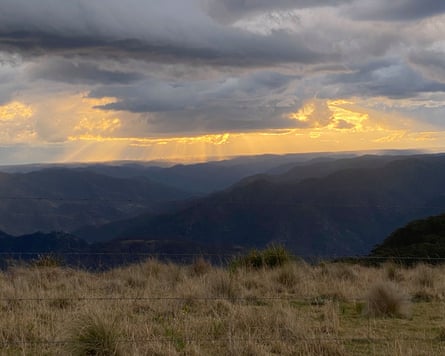
Here, where the bitumen of Wombeyan Caves Road runs into unsealed dirt, rolling hills dotted with cattle give way to expansive mountains. The late-afternoon sun sends long, beaming rays past the edges of clouds, casting a warm glow on distant cliff faces.
A few hours earlier, after eight agonising days of searchers scouring the Nattai national park, 90km south-west of Sydney, for the missing 18-year-old hiker Lily Hooper, fears had abruptly turned to joy. Police told her family she had been found alive.
Footage from Channel Seven showed the relief and elation. Family and friends embraced, in tears. Her father, Jim Hooper, said “they’re going to get her now by the sound of it … she might be going straight to hospital I’d say”.
He showed off the guitar and packet of Tim Tams he’d brought to the site “because it might lure her out of the bush”.
Her smiling mother, Kirrily, said she had washed her hair and “put my good sneakers on” in anticipation of good news.
There was a toast in celebration.
“I was never going to give up,” Jim said. “She’s a beautiful girl and she’s coming home.”
The NSW premier, Chris Minns, interrupted a grilling in an estimates hearing back in Sydney to announce the discovery about midday, sharing a curious detail that Lily had been found “with half a bottle of water”.
Hope was shattered barely 30 minutes later.
Minns, who had believed he was sharing good news, now interrupted proceedings again.
“I’ve got some terrible news,” he said. “I apologise … Lily’s body has been found.” The bottle of water reference may have been rescuer code – not proof of life.
The SES commissioner, Mick Wassing, on Friday would explain “it’s very common that code words are given to search and rescue crews” to avoid details being overheard by others on radios.
“My understanding is that that’s what has occurred in this situation,” Wassing said.
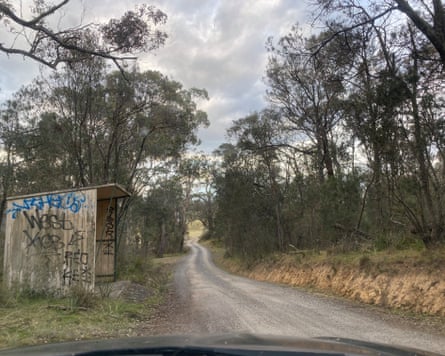
On Thursday in the mountains, TV cameras at the site backed away, showing the family embracing, now in grief.
The police commissioner, Mal Lanyon, later told reporters in Goulburn that the devastating miscommunication was “born out of elation”.
“Tragically, that miscommunication then led to a deflation, and obviously, we know now, an impact on her family,” Lanyon said.
Lily, an experienced hiker, had been found dead off the trail, a “significant distance” from her car.
The assistant commissioner Joseph Cassar told reporters in Moss Vale on Thursday afternoon that the searchers had carried handheld radios and faced communication challenges in the “thick, dense terrain”.
Nightfall
As the sun set over the southern highlands command post, the temperature dipped to a bitter chill. By 5.30pm, the sun was gone and the landscape stripped of its warmth, leaving muted greys and browns.
Police said Lily was last seen wearing a T-shirt and shorts, and it was unknown if she had any equipment with her.
The command post, where the search was coordinated, was now still. About 100 Australian Defence Force personnel had joined the operation in the 24 hours before the teenager was located. Almost 1,000 searchers and volunteers had been involved overall.
Emergency workers and volunteers were packing up and driving out on Thursday evening. A NSW Rural Fire Service vehicle slowly towed a trailer back down the dirt road, leaving the command post and passing police cars.
The mourning quiet was broken intermittently by the evening calls of birds and the low hum of idling engines.
A significant presence remained stationed at the operation base. Unmarked four-wheel drives sat alongside SES vehicles, police search and rescue vans, and a large police incident response unit.
The procedures of death were under way. In the distance, a group of officers wearing white jumpsuits gathered.
Hooper’s car had been parked near the trail head on Wanganderry Road at High Range, Cassar said.
The assistant commissioner said it was not yet clear how she died or if she had sustained injuries.
A report was to be prepared for the coroner, investigating the time, place and circumstances of Hooper’s death, in addition to the communications problems.
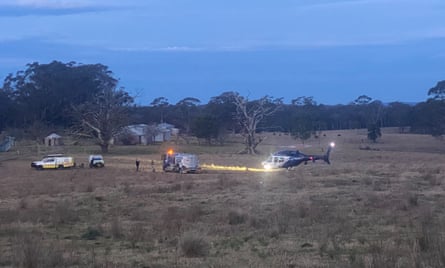
As night closed in, a solitary helicopter sat grounded in a field of tall, brown grass, near the demobilised search party. The last traces of light vanished entirely from the sky.
Then, the whir of a second helicopter overhead broke the silence, touching down at the command post, just as the landscape went dark.
On Friday morning, police announced that Hooper’s body had been winched out of the bush overnight.