 1 month ago
37
1 month ago
37
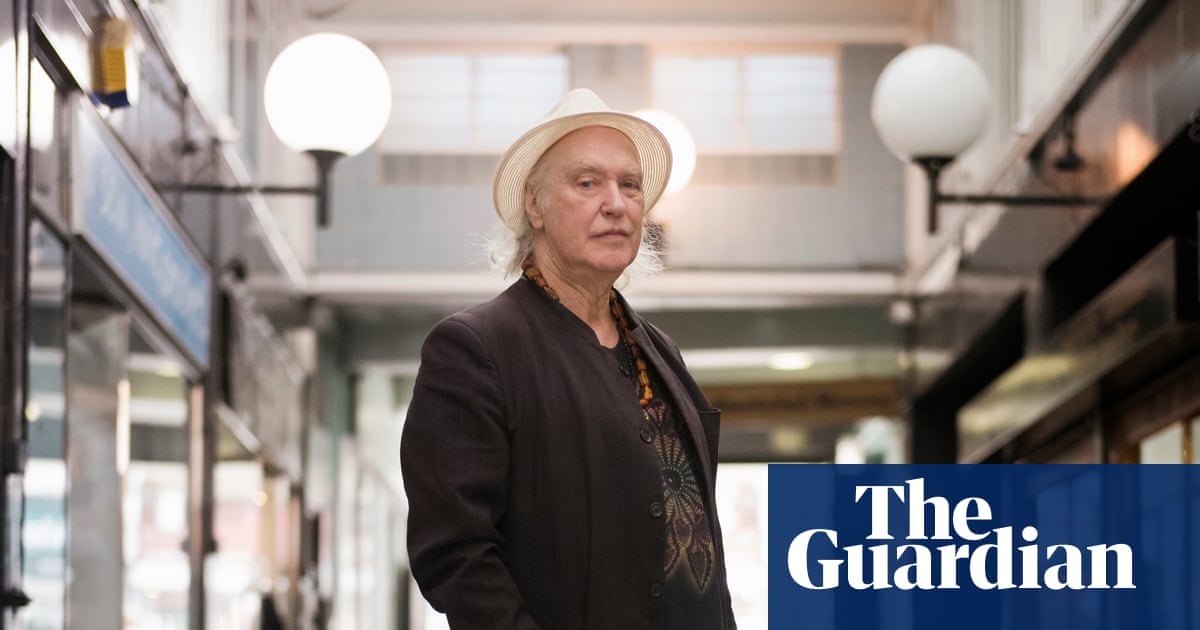
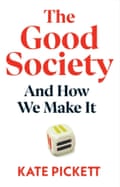
There was a moment when reading Kate Pickett’s new book that I realised I was underlining something on nearly every page. Occasionally it was an exclamation mark, or a star. Other times, she herself was doing something similar. “I’m sorry to say that is not a typo,” she writes, at one point. And then, in a later chapter, “I’m going to have to put this in bold …”
It wasn’t stylistic commentary, although The Good Society is well written. Nearly every scribble was next to a fact. Pickett is a social epidemiologist, and deals in facts: “In the decade from 2011 to just before the pandemic, total spending on preventive services for families declined by 25%”, for instance. Or that half of children born in Liverpool in 2009 and 2010 had been referred to children’s services by the time they were five. Or that in 2023-4, England’s local authorities had only 6% of the childcare places they needed for children with disabilities (that was the bit Pickett wished to point out wasn’t a typo).
Pickett came to international prominence with a book she wrote with Richard Wilkinson in 2009, The Spirit Level. That book used a battery of facts to argue that countries with the greatest overall inequality – even those that seemed to be richest – had the worst levels of health, social cohesion and human capital development. The Spirit Level sold more than 300,000 copies, was translated into 26 languages and was named by the Guardian as one of the 100 most influential books of the 21st century. Pickett and Wilkinson followed it, in 2018, with The Inner Level, which set out to illustrate the many ways in which the chronic stress caused by high inequality negatively affects our psychological wellbeing.
The Good Society is by Pickett alone and is, in some ways, a work of synthesis: the first two-thirds draw together vast amounts of already existing research on the current state of the NHS, of Britain’s care system (from cradle to grave), its education and then its prison system – it is, to put it bluntly, not good news. The final third suggests solutions. And there is nothing small about Pickett’s proposals. We “can’t afford to nibble”, she writes, in characteristically demotic fashion, “at the edges of the climate crisis, or the crisis in care, or the other big problems we’re facing; we need wholesale change”: nothing less than “a new social fabric for a good society”.
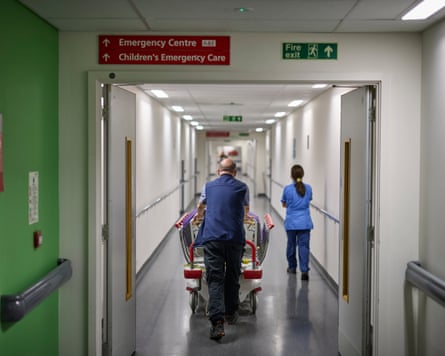
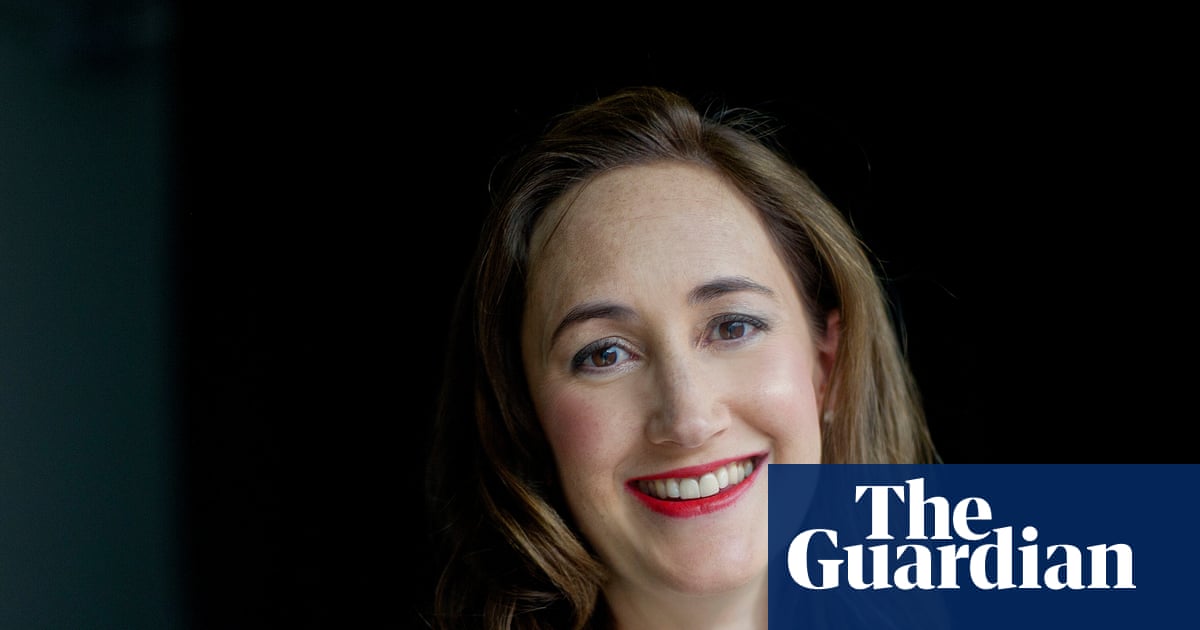
It feels … almost transgressive, to make such a big claim. Risky, even. There is a pause. “I think it feels risky, yes, to say those big things,” Pickett says. “There are quite a lot of loud voices who want to tread on that kind of thinking. So to raise your head above the parapet and say, ‘Let’s talk about a good society’ does feel … quite risky.” Pickett, who in 2022 was made an OBE for her services to societal equality, is a poised woman, very still, except for hands that move constantly, expressively, as she talks. At first, she says, this was going to be quite a tight project, asking why government doesn’t listen to evidence. One of the striking things about her many facts is how often they are from well-resourced, “excellent” government-commissioned reports, full of “excellent” recommendations – repeatedly scuppered by yet another election, and put on a shelf to gather dust. But under encouragement from her editor, it began to grow. “I did need to be encouraged to find confidence in myself, to express that bigger vision. I worried a lot that it felt a bit … well, ‘Who am I to say these things? Who am I to say how the world should look and what the good society is?’ It took me a while to have the confidence to say: ‘This is what I think it should look like, what about you?’”
To be fair, this lack of confidence is not just personal. “We’ve been so locked into the neoliberal capitalism that’s been dominant for so long that it feels like the way things must be, are the way the world is. And it’s just too difficult, too utopian to think about something else.” Couple this with the sheer size of the problems facing our world, “this juggernaut of potential crisis that just keeps on rolling”, and what we often have, at best, is a kind of small pragmatism. “I think we feel stuck. Sometimes when I talk to people about what I’m trying to do, people say, well, it’s too hard. And it’s too difficult.” It is so long “since we had great visions declared for us of what a good society could be” that we have somehow mislaid that type of agency. “We have fallen out of the habit”, as she puts it in her book, “of thinking that we can choose to do what it takes to create the best society possible”.
This is not the same as the agency we are sold every day, which is individual: that we alone can choose to be more healthy, can choose not to commit crime, can choose, through hard work and supposedly innate merit, to flourish; to win at the game of life. The flipside of which, of course, is that if we fail, it is our own fault. “We call it lifestyle drift in public health,” says Pickett. “Blaming the individual.” The challenge is to identify and create the context that best supports those aims. “Yes, in the end, it is going to have to be me who doesn’t buy that pack of cigarettes. And it’s going to have to be me who chooses not to commit that crime and to lead a life that’s not one of criminality. But what is the context that supports that? Often the context is about a safe and secure early childhood, as well as sufficient livelihoods.” Get in early, and you have a chance of heading off the worst effects. In the end it is also, almost always, cheaper.
One of the most effective aspects of Pickett’s method is the way in which she zooms out. So the UK may be home to some of the richest people on the planet – but that fact about the children of Liverpool, for instance, is followed a paragraph later by the illuminating information that of all the 40 countries in the OECD and the EU, Britain had the greatest rise in child poverty in the decade before 2023, at 20%; close to a third of British children now live in poverty. We may know, in general, or from what we see around us, that child poverty is rising, but this method puts that knowledge into stark relief. (At one point in our conversation I ask Pickett what she found most surprising, as she worked on the book. There is a long silence, then “I’m not sure I found much of it surprising, but I found quite a lot of things shocking. The scale: quite how many people need the kinds of social care that they can’t get. Quite how many people return to prison within six months of leaving it.” (It’s 63%.)
But looking at other countries also throws up alternatives. Many areas in Brazil, for example, have a system of participatory budgeting, where citizens set their spending priorities and have the power to direct spending. The Netherlands is shifting toward a four-day working week. In Costa Rica the law that protects its natural ecosystems is privileged above other laws, while “reading about Finland’s assessment of schools”, writes Pickett, in which “wellbeing and mental health come first … and the curriculum is designed with the primary purpose of engaging children’s curiosity in the world around them, rather than trying to fill them with a set body of knowledge” made her “want to weep with frustration”. And then there’s Bhutan’s famed decision to measure gross national happiness rather than GDP (in the UK, on the other hand, Pickett points out, paying for private therapy for someone with serious depression adds to GDP).
Pickett has a clear blueprint for the UK. The evidence is now incontrovertible, she argues, that the chronic stress caused by inequality places an untenable burden on society. There is also the ever-increasing evidence that adverse childhood experiences, or ACEs (which include everything from violence to mental illness, imprisonment to homelessness) predict worse outcomes for everything from education to health to life expectancy. She believes that a universal basic income would be a good start, in order to establish basic dignity and autonomy, not to mention a buffer if AI takes your job. At one point Pickett quotes, approvingly, a study that claims “money is the ultimate personal medicine” – in that instance because even short-term changes in financial circumstances have measurable consequences for mental health. Elsewhere she points out that every £1,000 increase in household income translates to a rise of 3.6 months, or a quarter of a year, of life expectancy, regardless of which rung you happen to be on on the social ladder. She also suggests participatory budgeting, progressive taxation, citizen assemblies and the strengthening of trade unions in the UK, alongside a National Institute for Social Change – similar to the National Institute for Health and Care Excellence – for “ongoing proper assessment of the effectiveness of proposed social policies, their cost effectiveness”, so that the “then government could act on those things”. A National Care Service, built on similar lines to the NHS; a National Education Service, and/or a National Children’s Service would also be a good start, she says.
You could think of all society as a child, I suggest, in that the better you look after its very youngest people, the more likely the thriving of the adult population. “You’d get a lot of things right in society if you did it from that point of view!” says Pickett. It’s the “flipside of the ‘nanny state’ argument. [People say] ‘We don’t want a nanny state” – well, why wouldn’t we? Actually, if nanny looks after you and nurtures you and makes it possible for you to live a good life, I think that’s what we should be aiming for. Bring on nanny!”

The thing is, how is this to happen? The Spirit Level was published more than 15 years ago, and we are more unequal, not less. Why did it not achieve more traction? Pickett agrees that far more could have been done, but insists that “things have changed in terms of the conversation. So when we published The Spirit Level, nobody was talking about inequality. It just wasn’t on the political agenda at all.” Inequality is certainly now a major part of the conversation. What would she do about this if she was Rachel Reeves or Keir Starmer? “I think I would try to be evidence-based because the evidence is really powerful,” she says. “And when you’ve got powerful evidence that links the way society is structured to outcomes, that means there are powerful stories in there as well. And I think you need to bring those together. So if you want to be a political leader who gets the public on side for a better vision of society, for a good society, you are going to have to use the stories and the statistics to tell a compelling narrative that people do then think they want to commit to, because they feel it’s possible.”
How does she think they’re doing? The answer is immediate. “I’m disappointed that having come in with such a large majority and a wave of support, that they haven’t been more visionary and bold, and that it has taken them too long to do certain things. I’m one of many people who campaigned for the ending of the two-child limit, and that took a long time. I celebrate the fact that it’s happened now, but if you think about the numbers of families who went into poverty during that time, that is something that could have happened much, much earlier. Given their mandate for change, I think they could and should have been bolder and faster.” She notes that there has been a “whole spate of commissioning new reviews”, which is fine unless they sit on the shelf, gathering dust, like so many other government reviews.
A striking insight that comes up in Pickett’s chapter on prisons is just how much of what we assume to be immutable is actually ideology. She cites a study that compared “changes in prison populations in the US over two decades, from 1980 to 1996, and found absolutely no effect (really – a proper zero in their table, not just a small number) of changing crime levels on changing rates of imprisonment.” Whereas when, in 2005, the Netherlands decided to run the system on a rehabilitation rather than a punishment model, the prison population fell by 40% in 12 years. They literally chose a different way to look at the problem – ie, she argues, the ground is probably far readier for new ideas, and different ways of seeing, than governments repeatedly seem to assume. “I think that’s what I’m disappointed by. I think if you demonstrate bold leadership, you can carry people with you. You can convince.” And right now, “people are very aware of the difficulties and the problems they’re having in their lives or that they see in their families and friends. People are quite thirsty. They’re thirsty for hope.”