 1 hour ago
10
1 hour ago
10
In 1993, a sci-fi blockbuster about an animal theme park that resurrected the dinosaurs sparked more than a flurry of interest in those long-extinct beasts. It left audiences jonesing for the next best thing: a close encounter with a bearded dragon or a ball python. Jeremy McBride, the Emmy-winning film-maker was one of them. “I wanted a pet iguana,” he said. In the wake of the Spielberg classic, reptiles have become fixtures of the modern imagination, adorning zoo exhibits, living room terrariums and every corner of pop culture while underpinning a multibillion-dollar pet trade.
But just as in Jurassic Park, the urgent danger isn’t the prehistoric creatures with the teeth and venom. It’s the people willing to steal, smuggle and kill for them. People like the Pablo Escobar of animal trafficking. “Our next documentary is going to be called Who Backstabbed Who,” jokes Eric Goode, an Emmy-nominated director. “You never know when that knife is going to go in your back because everyone’s trying to make a deal with the feds, with another reptile dealer. Even the good guys were supposedly doing bad things. It’s messy.”
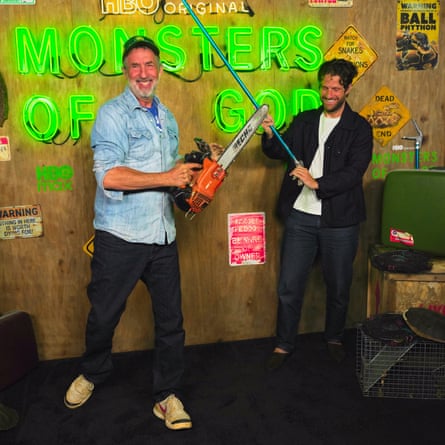
Goode’s latest collaboration with McBride, Monsters of God, premiered on HBO this week, and it has all the ingredients to become another monoculture moment in the mold of Tiger King. Where Goode’s pandemic smash was a rabbit hole into the kooky subculture of private zoo owners, this five-part series, executive produced by McBride, explores the sprawling shadow enterprise of traffickers who ransack the globe for the rarest reptiles and sell them for staggering profits. What began as a criminal ecosystem connecting smugglers, individual collectors and major institutions such as the National Zoo soon expanded to include bad actors in other illicit industries who seized on the opportunity to use reptiles as camouflage for their own operations.
Based on the 2008 true-crime book The Lizard King, Monsters of God traces the trade’s humble origins to the 1960s, when a cheese salesman named Hank Molt began publishing a reptile price list and mailing it to zoos as they began to recognize the enormous commercial potential in dedicated collections. Molt became an inspiration for reptile enthusiasts who envied his rare finds and the globe-trotting adventures that produced them, while the US Fish and Wildlife Service – dismissed as the “duck cops” – rightly feared his booming business wreaking havoc on native ecosystems and moved swiftly to rein him in.
In 1977, Molt was federally indicted on more than 200 smuggling counts and served just 90 days in jail. But that leniency wasn’t enough to contain the reputational damage his case inflicted, particularly among institutions such as the Smithsonian’s National Zoo and its many patrons in Congress. After Molt’s prosecution, the reptile trade’s power structure was revealed: at the center of this tight-knit monopoly, there could be only one “lizard guy” in one town (usually in Florida) – making reptile smugglers comparatively easier to investigate than, say, the mob. After Molt it was his apprentice Tommy Crutchfield, an ostentatious Floridian who poured nearly every dollar he made in trading reptiles back into the hunt for new ones and, fittingly, inspired the title for this series.
After Molt dimed out Crutchfield in retaliation for stealing his business, igniting a decades-long feud between the two reptile obsessives, the crown passed on to Ray Van Nostrand, a Miami hustler who chased bulk profits from common species over rare specimens. Then he crossed paths with Mario Tabraue, a prolific cocaine and wildlife smuggler viewers might remember from Tiger King as the likely inspiration for the cult gangster flick Scarface. Together, they popularized a new method of concealment: packaging rare and venomous reptiles with drugs to disguise shipments and deter inspectors. But the “Pablo Escobar of animal trafficking” title was ultimately reserved for Malaysia’s Anson Wong, the reptile nerd kingpin whose suspected ties to Asia’s ruling families and underworld gangs made him law enforcement’s white whale.
Monsters of God catches up with these men in their winter years, resulting in wistful reflections on their notorious pasts. Van Nostrand, who died during filming just short of his 80th birthday, was battling dementia and visibly struggles to access his memories in interviews.
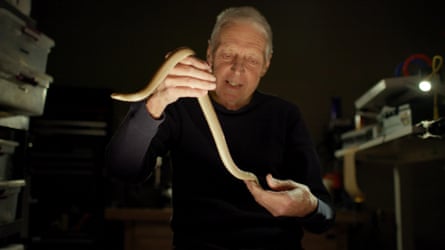
But Goode and McBride found that they could bring back some of his old spark by pairing him with his son Michael, the Tony Soprano-like successor who expanded the family business while his father was imprisoned, only to wind up imprisoned for turtle trafficking himself. They also shot Van Nostrand at the family’s warehouse facility, ostensibly legitimate again, where he was surrounded by the reptiles that built, lost and rebuilt the family fortune. “We had a whole version of that story with him not in it in a contemporary way,” McBride says. “But we had one editor whose dad was going through dementia at the time who pushed us to show more of that. It’s not every day that you get to interview someone who doesn’t necessarily know what they’re talking about and show that in a way that’s compassionate.”
Each hour-long episode raises the stakes, with reptile-loving axeman Slash literally underscoring the twists, turns and spitting-viper cutaways. “He’s such a sweet, normal guy, cares about the issue and wanted to contribute his time,” McBride says. “We’d send him music, and he’d play over it during a lot of particular scenes. We’re gonna put out the vinyl soon.”
All the while, you can’t help wondering whether McBride and Goode, doing his Michael Moore thing while calling the shots behind the camera, are sticking their own necks out a bit too far. “What we’re really good at is getting people locked up behind bars,” Goode says, not entirely joking. “There was one guy who was under investigation and went to prison while we were filming him. I’ve decided I’m really good at putting people in prison inadvertently.”
Crucially, no animals were harmed in the production of Monsters of God – something, alas, that can’t be said for a black market that treated dead reptiles as little more than the cost of doing business. The film’s tales of “spoiled inventory” are every bit as shocking and heartbreaking as you’d expect. A longtime conservationist, Goode is relentless about getting viewers to see these creatures as he does, pressing his lens so close to vertical pupils, beaky maws and scaly brows that you can’t help harboring concern for his camera crew.
Tabraue, the cocaine cowboy who ultimately served 12 years of a 100-year sentence for his 1989 conviction on narcotics and racketeering charges, had a near-death experience during one shoot after he was bitten by a Gila monster – the only venomous lizard native to the US, McBride hastens to note. “Fun fact: a compound in their venom led to the development of GLP-1 drugs,” he says. “So the very thing that can kill you is now saving people’s lives around the world.”
In Monsters of God, the people are the ones framed as beasts – fueled by lust for power, wealth and the narcotic thrill of the chase. The longer you watch, the harder it becomes to distinguish the good guys from the bad. The federal agents who pursued these reptile smugglers are pitched into moral ambiguity the moment they step onto the beat. Some are willing to look the other way for the sake of a conviction; others come to believe their proximity to the trade entitles them to a piece of it.
“It’s like the Harvey Keitel movie Bad Lieutenant,” says Goode.
“Well,” McBride adds, “it’s even more pathological.”
As the crime thriller unravels, the docuseries also shows how smuggling has ravaged reptile populations, pushing some species to the brink of extinction. But one of the documentary’s bigger ideas – how reptile imports have thrown native US ecosystems out of whack – was ultimately left on the cutting-room floor. “We filmed Burmese pythons in the South Florida Everglades,” Goode says. “We filmed iguanas dropping out of trees. The invasive species angle is a big deal, and it really does have an impact all around the world.”
But Monsters of God doesn’t do much to help viewers who might have gone into it already feeling ambivalent about zoos. On the one hand, their money-making reptile exhibitions helped create the conditions for the wildlife smuggling business. On the other, where else would people encounter these creatures closely enough to understand why they are worth protecting? “The paradoxical effect of smuggling is that zoos are functionally seed banks for preventing animals from going extinct,” McBride says. “It’s no longer animals coming in. It’s animals going out.”
Goode sees that contradiction as part of a larger reckoning. “It’s a bit like saying: how should I feel about America?” he says. “Zoos, like our culture, have a lot of skeletons. They were part of the civic planning of a city and built to be entertaining. But zoos also have a long history of evolving, just like we do in our country.”
In the end, Monsters of God is not a spectacle for the sake of it. It’s the Jurassic Park cautionary tale come to life: fascination curdling into obsession.
“We’re really interested in making entertaining content,” McBride says. “But we also want to try and tuck in a purposeful message. More than ever nonfiction stories matter a lot. People want to learn something, and we want to help educate them and not just have them watch a freak show all the time.”
-
Monsters of God is available on HBO Max