
 3 months ago
89
3 months ago
89
It is peak harvesting season for avocados in the lush southern highlands of Tanzania but growers are racing against time to find buyers for the precious green fruits before they become overripe.
Donald Trump’s disastrous Middle East war is being felt in the world’s energy markets but oil and gas are not the only products that transit through the maritime choke point of the strait of Hormuz. The conflict is also hitting supply chains elsewhere.
Shipping routes for Tanzanian avocados towards lucrative markets in the Gulf and beyond are blocked, and air freight capacity is down significantly.
The Tanzania Horticultural Association recently warned its members: “Shipping lines have currently suspended acceptance of bookings for consignments across all routes and market destinations including Europe, Middle East, India, and China.”
Transform Trade, a campaign group that works with small-scale farmers, has been gathering evidence of the war’s impact. It says many smallholders are having to accept prices as low as 50% of the usual rate or struggling to sell at all.
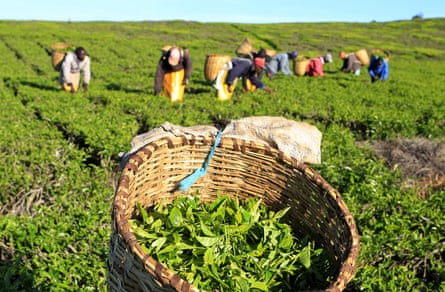
In Mombasa, Kenya, meanwhile, warehouses are filling up with mountains of tea that in normal times would be on the way to the Gulf or key markets such as Pakistan for processing, blending and packing. Here, too, growers are being forced to accept rock-bottom prices or are failing to find markets at all.
Alice Oyaro, Transform Trade’s chief executive, said: “Alongside the devastating impact on civilians directly affected by the war, there are serious global consequences that risk being overlooked. The story we’re unlikely to hear, is about the small-scale producers responsible for most of the world’s jobs and almost all of its food.”
Because they happen to be ripening just about now in east Africa, avocados and tea are urgent examples of the way the immediate knock-on effects of the conflict are crashing into ordinary citizens’ livelihoods, thousands of miles away.
As the war rolls into its fourth week with no sign of de-escalation, stories such as these, which stray well beyond the headline-grabbing crisis in the energy sector, will proliferate.
Getting food products to export markets is a pressing problem for some producers now, but millions of growers everywhere will be affected by soaring fertiliser costs.
The world may be heading towards not only an energy shock, but a food crisis, too – with its worst ramifications in the global south.
As UN Trade and Development (Unctad), the UN’s trade thinktank, said last week, the price of fossil fuels and fertiliser are intimately linked: oil and gas processes provide inputs to its manufacture, and because it must then be transported.
Natural gas is used in the Gulf region to create urea, used in the nitrogen fertiliser that is critical to boosting agricultural yields. Hormuz is a key choke point for exporting it.
Similarly, there have been reports of significant disruption to the supply of sulphur, a byproduct of oil and gas refining and another critical fertiliser ingredient, among other products.
The countries most immediately affected will be those that usually source much of their fertiliser from producers in the Gulf, via Hormuz. China and Russia, two of the world’s other largest producers, are also delaying exports amid the worsening global supply crunch.
Unctad said the latest data (from 2024) showed that Sudan gets more than half of its fertiliser via Hormuz; Sri Lanka more than a third; Tanzania 31%.
Over time, however, the bottlenecks, and supply outages where infrastructure has been hit, are likely to drive up fertiliser costs worldwide. So farmers, from subsistence smallholders to agrifood giants, will face a double whammy of higher energy bills and more costly fertiliser.
The impact will be felt everywhere but most acutely where times are already hard. As Unctad put it: “Higher energy, fertiliser and transport costs – including freight rates, bunker [ie ship] fuel prices and insurance premiums – may increase food costs and intensify cost of living pressures, particularly for the most vulnerable.”
This latest crisis – after the Ukraine war energy shock and the global health emergency of Covid – is also hitting “at a time when many developing economies struggle to service their debt”.
Rising global interest rates, in response to soaring inflation expectations, could exacerbate that struggle – making it hard for governments to take action to cushion the blow for vulnerable consumers.
Indeed, devastating analysis from the UN World Food Programme (WFP), also published last week, suggested almost 45 million more people could fall into acute hunger, if the conflict proves prolonged and oil prices remain above $100 a barrel.
Countries in sub-Saharan Africa and Asia would be worst affected, it warned, highlighting local reports suggesting staple food costs have already increased by 20% in Somalia.
“If this conflict continues, it will send shock waves across the globe, and families who already cannot afford their next meal will be hit the hardest,” said the WFP’s deputy executive director, Carl Skau.
Even if Trump’s latest gambit of giving Iran a 48-hour deadline to reopen Hormuz is successful, the destruction of energy infrastructure and the backlog of ships waiting to transit mean the impact would still be felt for many months.
The heaviest price for this thoughtless conflict is being paid by civilians in Iran and the wider Middle East, but the small-scale farmers of Tanzania and Kenya can already testify to its impact on livelihoods thousands of miles away. As fuel and fertiliser costs rise, Trump’s war appears increasingly likely to have the unconscionable side-effect of amplifying global hunger.