 3 hours ago
11
3 hours ago
11
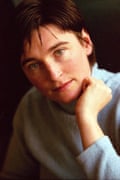
In 1994, Christine Borland, who has died aged 61 of cancer, opened her first solo exhibition at Tramway in Glasgow. Its starting point was a mail-order catalogue through which human skeletons could be legally purchased for medical teaching.
The discovery that a person’s remains could be bought anonymously through the post gave rise to one of the defining questions of her career. Working with forensic experts, police and medical professionals, Borland attempted to reconstruct the life behind one such skeleton, producing a bronze facial reconstruction alongside the original bones.
The work, From Life, did not solve a mystery so much as expose one, asking how identity is lost, who is remembered and what obligations remain towards the dead. When it was nominated for the Turner prize in 1997, Borland was recognised as one of the most original voices in British contemporary art.
She occupied a singular place within the generation that transformed British art during the 1990s. While many of the Young British Artists became associated with provocation, spectacle or autobiography, she pursued another path altogether.
Her work emerged through sustained collaborations with technical experts – including museum curators and archivists – treating science not as subject matter but as a partner in artistic inquiry. Long before interdisciplinary practice became commonplace, she demonstrated how artists could work alongside researchers to explore questions that neither discipline could answer alone.
Her installations, sculptures and films returned repeatedly to the histories embedded within bodies, specimens and collections. Rather than celebrating scientific certainty, they revealed the ambiguities, ethical responsibilities and acts of interpretation that underpin medical knowledge itself.
Among her most affecting works was Phantom Twins (1997), inspired by 19th-century obstetric teaching models used to train midwives. Borland recreated these instructional objects as leather dolls containing foetal skeletons, transforming instruments of medical education into sculptures that were at once memorials, anatomical studies and reflections on care, loss and the body’s vulnerability.
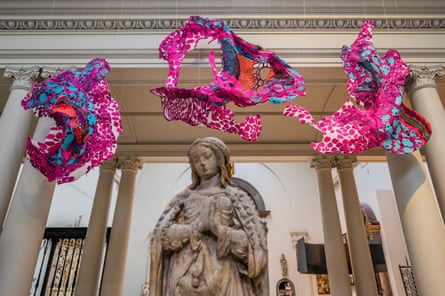
In The Dead Teach the Living (1997), she questioned the supposed objectivity of forensic reconstruction by exposing the assumptions that shape representations of race and identity. L’Homme Double (1997) invited six sculptors to reconstruct the face of the notorious Nazi medical experimenter Josef Mengele from identical forensic evidence. Each produced a different likeness, demonstrating that interpretation enters even the most rigorous scientific procedures. With Giant and Fairy Tales (1998), she revisited the lives of two 19th-century people exhibited during their lifetimes as curiosities before their remains entered medical collections, restoring individuality to people history had reduced to specimens.
Throughout her work, materials carried meanings of their own. Glass, bronze, porcelain, leather, plaster and bone were chosen not simply for their appearance but for the histories they embodied. Craig Richardson, a scholar of Scottish art, remarked that Borland’s “precise aesthetic serves knowledge”, a perceptive description of an art in which emotional force emerged not through spectacle but through careful attention.
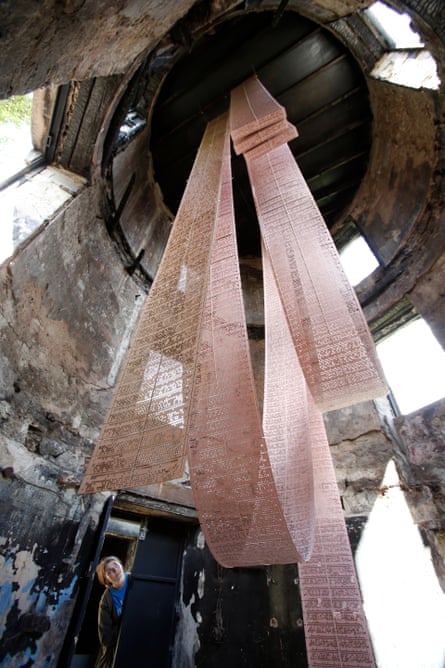
Born in Darvel, Ayrshire, Christine was the daughter of Chrissie and John Borland, who worked in lace factories. She grew up exploring the countryside, developing an early fascination with plants, ecology and the interconnectedness of living things. After studying environmental art at Glasgow School of Art (1983-87) she took a master of fine arts degree (1988) at the University of Ulster in Belfast. Living in the city during the Troubles left a lasting impression. Her installation A Lifetime of Love (1993), first shown at Aperto ’93, a show within the Venice Biennale, consisted of worn blankets collected during those years, transforming ordinary objects associated with comfort into quiet witnesses to conflict, memory and care.
Returning to Glasgow, Borland served on the artist-run committee of Transmission Gallery (1989-91), helping to foster the city as an international centre for contemporary art.
Recognition followed steadily, and she also taught at Duncan of Jordanstone College of Art & Design, Dundee, and Glasgow School of Art in the early 1990s, moving on to academic research in Glasgow (2000-11). In 2012 she was appointed professor of fine art at Northumbria University, Newcastle upon Tyne.
As the medical humanities emerged as a field bringing together medicine, history, ethics and the arts, Borland’s work became an important point of reference, showing how art could deepen understanding of care, mortality and human dignity, not by illustrating it, but by asking different questions of it.
Those who worked with Borland remembered not only her scholarship but her generosity. Patient, curious and quietly humorous, she listened as carefully as she observed.
After being diagnosed with cancer in 2024, Borland continued to work with the same intellectual openness on how we confront mortality, how care is practised and how individual lives retain their dignity even in the face of illness, death or institutional systems that risk reducing people to objects. She changed the way contemporary art could engage with medicine, and in doing so created one of the most distinctive bodies of work in contemporary British art.
In 2012 she married the artist Ross Sinclair, who had been her partner since 1994. He survives her, along with their three daughters, Grace, Agnes and Jean.