 2 months ago
35
2 months ago
35
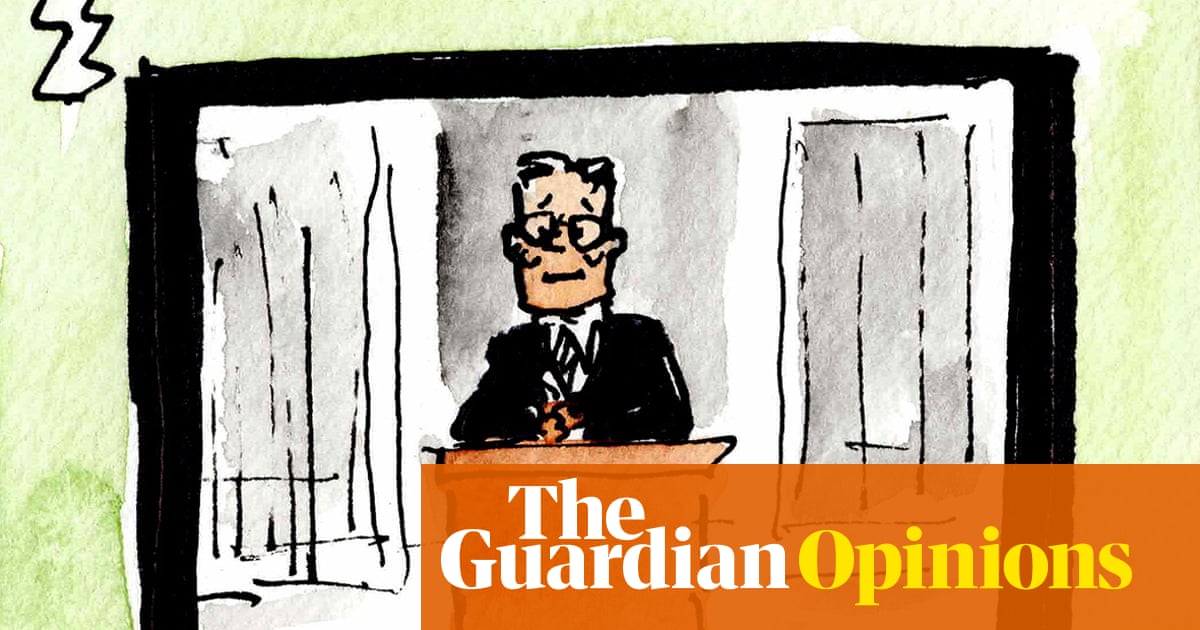
The former Australian prime minister, John Howard, this week described Victoria Cross recipient and accused war criminal Ben Roberts-Smith as the “modern personification of the Anzac tradition”.
The broad-shouldered, blue-eyed Roberts-Smith was the hero of the battle of Tizak in Afghanistan, for which his actions earned Australia’s highest military honour.
Roberts-Smith now sits on remand in Sydney’s Silverwater prison, charged with five counts of committing “war crime – murder”. The charges relate to the deaths of five Afghan men between April 2009 and October 2012.
He has yet to enter a plea and will likely face a bail hearing this month, with a trial to follow much later. He has always denied the allegations.
A civil court has already found, in 2023, that on the “balance of probabilities” Roberts-Smith had committed war crimes in Afghanistan, in a defamation case, brought by Roberts-Smith himself, that upheld the revelations of two investigative journalists from the Nine newspapers.
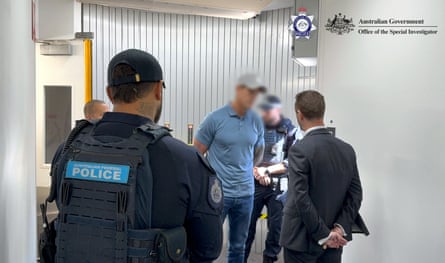
Still the arrest of a national war hero has cut deeply to core of the Australian psyche, in a country whose identity is often entwined with the exploits of young men on foreign fields.
Reactions from politicians, community leaders and the broader public have been deeply divided, often down long-established cultural and political fault lines.
Kerry Stokes, a billionaire former head of media company SevenWest, had bankrolled Roberts-Smith’s unsuccessful defamation case. Stokes has not publicly commented on the former soldier’s arrest. Australia’s richest person, Gina Rinehart, said she “didn’t understand” the rationale for charging Roberts-Smith and others who remain under investigation.
“Like many Australians, I hope that compassion and the Aussie spirit is extended to Ben and his family and his duty to our country in the hardship of war is never forgotten,” Rinehart said.
Pauline Hanson, whose rightwing One Nation party is surging in the polls, said she would not “abandon” Roberts-Smith.
“I remain steadfast in my support of Ben Roberts-Smith despite news of his arrest today,” the Queensland senator said.
Two former conservative prime ministers – Howard and Tony Abbott – each released more measured statements. Abbott said his “instinctive sympathy” remains with special forces soldiers from the Afghanistan campaign who “fought bravely and well for a just cause” and described the rules of engagement as “highly restrictive”.
“It’s wrong to judge the actions of men in mortal combat by the standards of ordinary civilian life,” Abbott said.
Howard said the arrest would “tug at the heartstrings” of many, but that one of Australia’s core values remained the rule of law.
Anzac tradition a ‘civil religion’
Ken Inglis, the late historian, described the Anzac legend as a “civil religion” in Australia, such is its connection to the national story. The term – an abbreviation of the Australian and New Zealand Army Corps formed in 1914 – has become a shorthand for Australian forces in foreign conflict.
Prof Marilyn Lake, a historian from the University of Melbourne, says she created significant controversy when she co-authored a 2010 book that challenged some of that myth making, “What’s Wrong with Anzac?”
“I had people frequently accusing me of being a traitor,” says Lake.
“My feeling is that some of the heat has gone out of that particular worship of Anzac since then.
“But more generally society and politics seem more polarised. Those who want to defend old Australian traditions, what better symbol than the Anzac tradition?
“In some ways it’s a form of identity politics, the identification with old Australia. In that sense the Anzac tradition works really well as a touchstone.”
Dr Sebastian Svegaard, from the Digital Media Research Centre at the Queensland University of Technology, says the case has the potential, at least initially, to heighten existing cultural divisions.
“When it goes to a sense of identity or core beliefs people can get very emotional,” Svegaard said.
“From the point of view of someone who does believe Roberts-Smith is a hero, it might appear as if they’re suddenly being told to change their opinion of not just him, but also of themselves or those beliefs.
“That goes deeper than this being about whether a person has done something wrong.”
Support for Roberts-Smith has been particularly vocal from rightwing, nationalist and anti-immigration groups, including some far right figures such as Joel Davis, a former high-ranking member of the National Socialist Network.
Not all conservatives have been so steadfast. Andrew Hastie, a prominent Liberal who has campaigned for lower immigration, was among the cohort of former SAS soldiers to testify about Roberts-Smith during the defamation hearing.
He released a statement this week saying Roberts-Smith was entitled to the presumption of innocence but that “none of us are above the law”.
Conservative commentator Andrew Bolt – one of the most influential voices in the Australian right – asked those “angrily defending Ben Roberts-Smith” to consider the allegations, specifically, whether they think Australian soldiers should be allowed to shoot unarmed prisoners.
“Are you fine if our soldiers shoot prisoners in the back? Machine gun a one-legged man who’d surrendered? Murder a handcuffed man already injured after being thrown off a cliff?”
The answer, at least from some, appears to be: yes.
On Thursday the Australian flag society – a Christian nationalist group that has long campaigned for Roberts-Smith to be absolved – posted an image to its social media page depicting an Australian soldier, in the shadow of the national flag, kicking an Afghan man off a cliff.
The group asked its supporters if they felt the image was “acceptable as part of our campaign to save Ben Roberts-Smith from legal jeopardy”. Some commenters said they found the image in bad taste. Several others approved.
“I don’t care what he did to save Australian lives,” said one response.
“War is war, kill or be killed,” said another.