 5 hours ago
17
5 hours ago
17
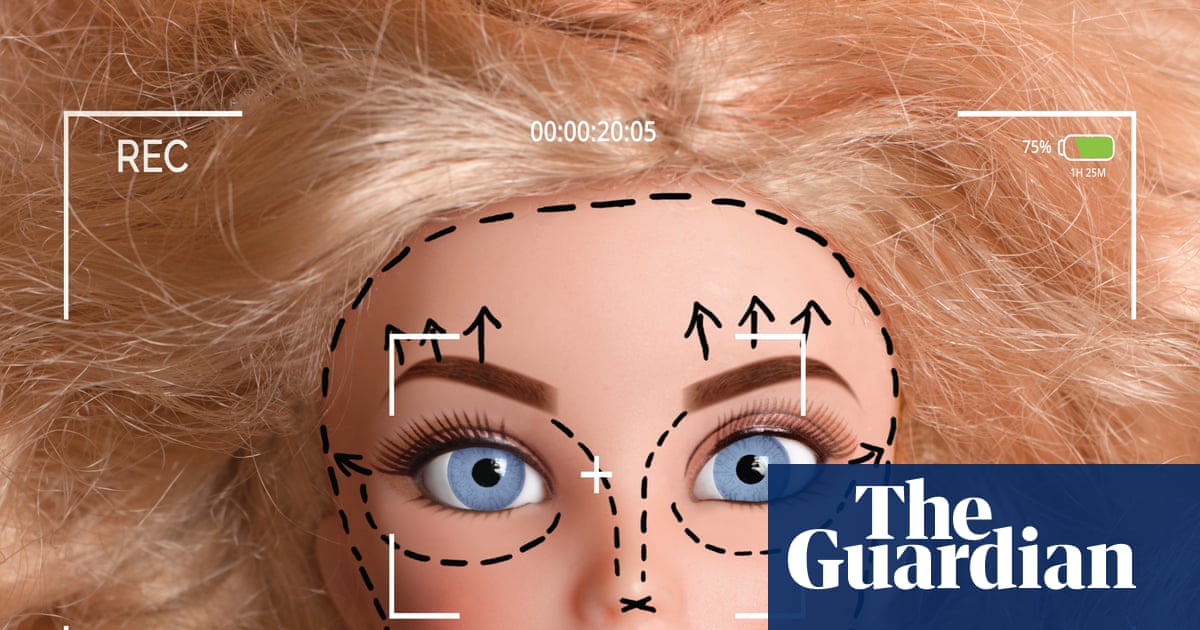
The disquiet and distrust surrounding artificial intelligence among artists and creatives remain real and consequential, and the language used by leading arts commentators is often apocalyptic: AI will decimate the arts, it is evil, it is the devil. Like many emerging technologies, AI has been driven by the corporations at the forefront of its creation. Introduced to the public at a rapid rate and continuously evolving, machine learning has become closely entwined with fear, antipathy and foreboding. At the same time, its powers and possibilities are expanding exponentially, becoming embedded in almost every aspect of human activity.
The upcoming RBO/SHIFT festival at the Royal Opera House aims to interrogate all sides of this fast-evolving landscape to enable artists, performers, creatives and audiences to think deeply and widely about where we are now, and where we may be tomorrow. Machine learning represents a seismic shift, both in society and in the arts, and we need storytellers, artists, teachers and thinkers in this space to help determine the direction of that shift and help us navigate this unfamiliar territory.
Opera is a particularly good place from which to examine technology. It synthesises multiple art forms – music, visual arts, architecture, poetry, dance, theatre and film – making it both niche and remarkably broad. Opera has also always engaged with technology. From its emergence around 1600, opera makers embraced the latest inventions: pyrotechnics, automata, flying machinery and trapdoors. Later came electric lighting, film, digital media and advanced acoustics. At the same time, opera preserves historic crafts: scenic painting, embroidery, dyeing, the conservation of period instruments and the rediscovery of forgotten repertoires. It is an art form that looks simultaneously backwards and forwards.
The question most frequently asked about AI is whether it will replace people, and concern centres particularly around ownership, consent and the use of performers’ likenesses. Those concerns are legitimate and deserve serious attention. Yet in opera it remains surprisingly difficult to identify artistic roles that might be replaced by AI. That does not mean change will not come, but the reality is more complex than the rhetoric.

Having spent the past year discussing AI with makers, coders, researchers, composers and performers, I am not sure it is possible for this technology to decimate the arts. The most written-about aspect of machine learning – generative AI creating images, words and music – is, in many ways, the least interesting. There have been operas created with and by AI for decades by researchers and musicians, yet these have had little impact on the creation of new work more broadly.
The prospect of a machine producing a “new” Molière play, or, potentially, a “new” Mozart opera, captures headlines, but creative applications of AI are already moving beyond imitation. For me, the more interesting questions concern collaboration, interaction and entirely new forms of artistic practice. Interactions with machines can expand our understanding of our own capacities. Photography transformed the way painters looked at the world. The pianola works of Conlon Nancarrow influenced composers including György Ligeti and Gérard Grisey. New technologies do not simply replace existing art forms; they often alter the conditions in which artists think and create.
Many of the most useful applications of AI may prove to be practical rather than artistic. Machine learning systems are being used for workforce planning, scheduling, booking management and operational data analysis. Within opera production itself, AI can be used to analyse the loading of scenery and improve safety applications. Such applications rarely make newspaper headlines, but they may ultimately have greater long-term impact than AI-generated images.
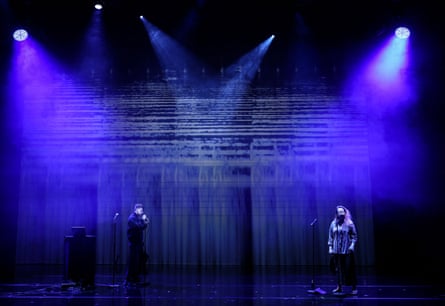
AI may also become a useful tool in reducing waste. Opera makers spend much of their lives imagining things that do not yet exist, and there is inevitably a degree of creative experimentation along the way. AI-enhanced pre-visualisation can reduce much of this process in both set-building and costume making. Already, AI tools can place costume drawings on to three-dimensional bodies and allow designers to examine them from every angle, while innovations in VR-driven set visualisation are becoming increasingly sophisticated.
The ethical questions remain substantial. Does it matter if the voices of singers, the words of writers or the work of artists are appropriated and misused? It does. If there is direct profit from direct appropriation, legislation, controls and protections are essential. At the same time, creativity itself has always depended on access to culture, knowledge and previous work.
The ethical, environmental and social implications of machine learning raise questions every institution must address, just as representation, access and the impact of international touring are central challenges for any opera or ballet company.
AI appears to have emerged suddenly, but in reality it is part of a continual expansion of technology that has unfolded over centuries. It is also a space in which differing artistic and imaginative voices are essential. RBO/SHIFT asks two questions: what can AI do for creatives, and what can creatives do for the world in the age of AI? As our interaction with machines becomes ever more prevalent, it may be that, rather than decimating the arts, AI will lead us to value them even more highly, protect and preserve them. In the opera house, stratospheric singing, virtuoso instrumental playing, stunning scenery, incredible costuming, bold theatrical invention and the buzzing communal energy of a live audience are not things challenged by AI.
We can look forwards and backwards at the same time.
RBO/SHIFT is in the Linbury theatre at the Royal Ballet and Opera, London, from 4-7 June.