 3 months ago
67
3 months ago
67
Native British wildlife will feature on the next set of £5, £10, £20 and £50 notes, the Bank of England has announced, but it has yet to be decided which creatures will make the cut.
While politicians from Nigel Farage to Ed Davey have sought to confect outrage about ditching Winston Churchill and Jane Austen for badgers or blackbirds, public consultations by the Bank show that people favour the switch to wildlife. Regularly changing images on the notes is a measure to foil counterfeiters.
A panel of experts including wildlife broadcasters and academics will draw up a shortlist which the public will vote on later this summer.
Early favourites include uncontroversial and much-loved garden animals, such as the hedgehog and the robin, and attractive predators such as the barn owl. In Scotland, notes issued by the Royal Bank of Scotland feature mackerel, otters, red squirrels and osprey.
Tony Juniper, the chair of Natural England, has suggested championing extinct species which have been successfully returned to England, such as the white-tailed eagle, the large blue butterfly and the lady’s slipper orchid.
The animal welfare charity RSPCA has called for unfashionable wildlife, such as the feral pigeon, fox, herring gull and brown rat, to be represented.
In that spirit of representing the underdog, the Guardian has convened its own expert panel to recommend wild candidates for the notes.
£5
Red fox (Vulpes vulpes)
Nominated by Chris Packham
Foxes are bold, successful and one of the most frequently encountered wild animals in cities, towns and countryside. They are our most successful predator. For centuries they’ve withstood all the utter nonsense we chuck at them, and keep chucking at them.
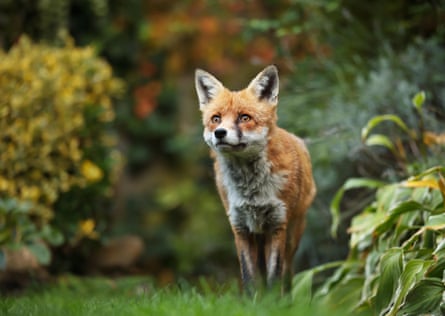
The red fox remains a divisive animal. They are much loved – “fox of the day”, where I post people’s pictures of foxes, is one of the most popular things I do on social media – and yet foxhunting continues despite the law against it, and that needs to be addressed.
Putting animals on banknotes needs to promote conversations and get us thinking about the way we value and treat wildlife. It is an opportunity to throw some light on the species that are struggling rather than celebrating our favourite hedgehogs, barn owls and red squirrels. The red fox is the perfect candidate.
-
Chris Packham is a naturalist, broadcaster, campaigner and author
£10
Common toad (Bufo bufo)
Nominated by Lucy Lapwing
Toads are everything we are told we shouldn’t like as wildlife: they are warty, lumpy and slow; they live in wet places; and they eat supposedly gross things, such as slugs and worms. But actually they are so ugly that they come full circle; they are stunning. They do bling. If you look past the brown and the frown, you see this burning ember of an eye which looks like liquid molten gold. It’s gorgeous.
There is also something very relatable about the not-giving-a-fuck attitude of a toad. They have one of the worst flight responses in nature because they are so confident of their bufotoxin, a poisonous defence mechanism which is in their skin and unique to a toad.
We only have a small handful of amphibians in the UK and toads need our help. “The gardener’s friend” lives in towns as well as the countryside but its population has declined by up to 70%. They need lots of people to love them and help them cross the road safely by joining a toad patrol and carrying them in buckets. Currency all over the world tends to feature the toad-like faces of male politicians so why not have the real thing? A toad is a perfect tenner – 10 £1 coins in your hand is about the weight of a hefty female toad.
-
Naturalist Lucy Lapwing is the author of Love is a Toad: Exploring Our Relationship With Nature
£20
Beaver (Castor fiber)
Nominated by Isabella Tree
Other than humans and elephants, beavers are the most significant keystone species on the planet. They change landscapes and provide the most extraordinary public benefits: preventing flooding, cleaning rivers, helping store water in drought and also bringing back wildlife. Five hundred years ago, beavers created watery kingdoms heaving with life, and now they’ve been reintroduced to England they are restoring that magical biodiversity.
Beavers are also adorable. The beavers at rewilded Knepp have created an amazing hub of life. It’s so endearing when we see them on trail-cams grooming each other and being so busy and conscientious, building incredible dams and lodges. One chewed down a webcam post and put it in their beaver dam.
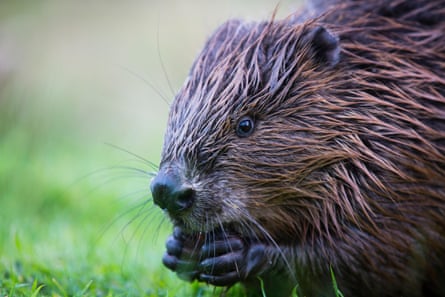
Now beavers are back, we’re realising it’s easier to live with them than we thought. But it’s really important there is a management plan so farmers can be helped if beavers interfere with ditches and drainage, or flood crops. “Beaver deceivers” can be put in behind dams to lower the water level, and, if needs be, beavers are easily translocated.
Beavers provide all these ecosystem services and they also give us joy – it’s thrilling to have these native creatures back and they’d be a hugely popular symbol of nature restoration on our bank notes.
-
Isabella Tree is the author of Wilding and runs the Knepp rewilding project with her husband, Charlie Burrell
£50
Swift (Apus apus)
Nominated by Hannah Bourne-Taylor
Swifts spark joy. They are heralds of summer, our most accessible urban birds and their “screaming parties” are a heart-lifting spectacle of nature that is freely available to everyone. They also desperately need to be cherished and celebrated, otherwise we will become the first nation to lose our swifts.
I can’t think of a bird who better represents the avian category, given that swifts spend more time airborne than any other bird. They are globetrotters who sleep in the sky, migrating across continents and returning to Britain every summer to breed. The walls in our houses are the only ground they ever intentionally touch when they nest in roofs and eaves.
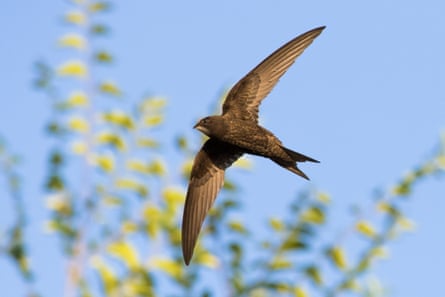
Swifts’ existence is intertwined with ours because they are completely dependent upon our buildings to successfully breed. Our home is their home.
They’ve been celebrated by everyone from Van Gogh to Shakespeare to King Charles to the RSPB. Last year the swift won the charity’s first ever Bird of the Year with 81% of the public vote.
The swift’s silhouette is instantly recognisable so they lend themselves perfectly to a banknote. Irreplaceable and precious, I think they would increase the value of the money they’re printed on!
-
Hannah Bourne-Taylor, the author of Nature Needs You, is campaigning for swift bricks to be put in every new home in Britain