 4 hours ago
11
4 hours ago
11
In the aftermath of the Covid pandemic Miriam Stoate, a regenerative farmer from rural Leicestershire, noticed that too many people in her small village in England’s East Midlands were struggling to get around.
Although there were plenty of cars parked in Tilton, too often she found some of the village’s residents did not have access to one when they really needed it.
“Whether because of ill health, meaning they could no longer drive, or because at times there was a need for more than one vehicle per household, there was a problem,” said Stoate.
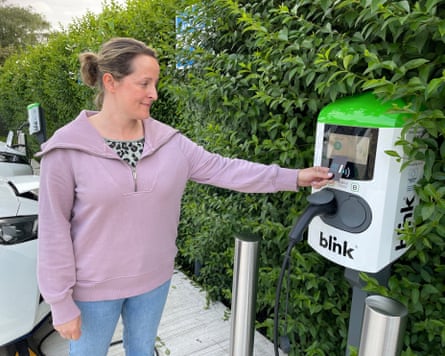
When the local community energy organisation Green Fox got in touch, Stoate and a group of volunteers decided to try something different. With funding from Motability and Harborough district council, they launched Tilton’s electric car club in 2023. For a monthly fee it gives residents access to two electric vehicles (EVs) that can be hired by the hour or by the day. It also provides local volunteer drivers so residents who can no longer drive can still use the service.
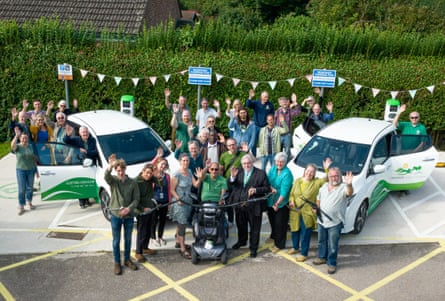
“It’s been great,” said Stoate. “You can see the difference it has made to the community, not just in getting people better access to viable transport, but also helping people get to know each other more … People who would not necessarily have met previously are now friends.”
The initiative in Tilton offers one small solution in a wider struggle, as the UK grapples with the challenges of creating a sustainable and affordable transport system fit for the 21st century.
While public transport provision in parts of the UK may be significantly better than in other countries, particularly the US, emissions remain stubborn. Transport is the UK’s largest source of carbon emissions, with surface transport responsible for about 25% of the annual total. Efforts to rein in emissions have failed to keep pace with other sectors, and faster progress is essential if the UK is to meet its carbon goals.
Experts say some elements of the transition to a sustainable transport sector are moving in the right direction. The crisis in the Middle East has helped accelerate the UK’s take-up of electric vehicles, with figures showing EV sales jumped 59% in April and now account for around a quarter of all car sales.
But they say more will need to be done to create sustainable and affordable ways to move around – and meet the UK’s climate targets.
Anna Krajinska, the UK director of the Transport and Environment group, says that, although EV sales are growing, there is a concerted attempt by industry lobbyists to water down the zero-emission vehicle (ZEV) mandate, which forces car manufacturers to sell an increasing percentage of zero-emission vehicles each year.
“We have already seen some weakening of the mandate with more plug-in vehicles being allowed, which have five times the emissions of electric vehicles,” she said.
Krajinska says it is crucial that that there is no more slippage on the EV mandate, which stipulates that all new cars sold by 2035 are EVs and that a similar decarbonisation plan be created for trucks and lorries.
“Unless we stick to the EV mandate, it will slow down the availability of affordable EVs and mean people will be locked into fossil-fuel vehicles and the volatile markets they depend on for years to come.”
Much of the focus of UK government policy has been on moving from carbon-intensive vehicles to EVs, improving public transport, and encouraging walking and cycling.
But Chris Hayes, chief economist at the Common Wealth thinktank, says trains and bus services in the UK have suffered from decades of underinvestment as the transport network was broken up and money was diverted to shareholders – resulting in poorer services and higher fares.
“British rail passengers spend roughly three times as much per kilometre as in other countries, while half of the industry’s income comes from direct and indirect public subsidy.”
Hayes said the government had made some progress bringing elements of the rail system back into public ownership but that more needed to be done. “We need an integrated rail and bus service that is affordable and works for people and communities, rather than one in which the public shoulders the risk while shareholders reap the reward,” he said.
Doug Parr, Greenpeace UK’s policy director, said there was “a long road ahead” before public transport in the UK was appealing and affordable, but “the destination is well worth the effort”.
“Shifting journeys from cars to buses and trains won’t just reduce congestion, pollution and climate emissions, it may also help us cut our oil demand – a useful side-effect given the price and supply crunch that’s about to hit us thanks to the Iran war.”
However, Parr said this would require “major government investment, an overhaul of the entire train fare system and a lowering of the bus fare cap”.
“This should go in tandem with other measures to promote active travel and discourage polluting transport, such as higher taxes on SUVs, more bike lanes and 20mph zones.”
But some experts believe that, while moving to EVs and improving public transport and active travel are essential starting points, on their own they will not be enough.
Greg Marsden, a professor of transport governance at the University of Leeds, says that, even if the UK meets all its current targets, it is on course to overshoot the government’s own carbon budget for transport by 15%.
“Ambition is evaporating by the year,” he said. “Plans to reduce overall traffic have disappeared and the government is now working on the assumption that the number of cars on UK roads will increase by 10 million by 2050.”
Marsden is calling for a new transport taskforce to look at more innovative ways to reduce car reliance and carbon emissions.
“At the moment we are facing a situation where we are not only going to miss our targets for carbon reduction, we are also going to create more congestion, more parking on the streets. We need a more ambitious plan for what our cities are going to be like in the next 20 or 30 years.”
He said the taskforce should consider a range of options, including:
-
Greater access to shared electric vehicles across rural and urban areas.
-
Lighter, cheaper shared EVs for the vast majority of journeys under 30 miles.
-
Fleets of shared EVs at major train stations to connect train and road systems.
“We spend an awful lot of money on cars … but that money could be spent in different ways and still give access to all the mobility that we need,” he said. “At the same time, it could reduce congestion and emissions, and improve the quality of people’s lives.”
Marsden, who is heading up a project in Leeds working with the council and local residents on how to reduce car use, said it was crucial to work with communities rather than impose solutions from above. “This will only work if we listen to and work with communities to come up with workable solutions.”
A Department for Transport spokesperson said: “Car-sharing schemes help people travel more easily, cut congestion and reduce emissions – and we’re already encouraging councils to support them through statutory guidance.
“Our new transport strategy goes even further, committing to publish new guidance to help local authorities boost these services in their areas.”
Back in Tilton, Stoate acknowledges there have been challenges with their car-sharing scheme – from getting affordable insurance to initially convincing some older residents that electric cars were safe.
She said support from the transport sharing charity CoMoUK had been invaluable and that people from other villages had since been in touch to see if they could set up something similar.
“It’s about learning from each other … we now have a viable transport option that everyone can use without buying more and more cars – and it has helped to build our community, too.”