 8 hours ago
16
8 hours ago
16
Pubs, restaurants and supermarkets are having to buy lettuce and broccoli from Spain at what should be the height of UK growing season, as drought and extreme heat hit crops.
The wholesale price of tomatoes is up by more than 60%, iceberg lettuce by 90% and potatoes by more than 40% as a number of farmers struggle to grow in consistently high temperatures. Even those with irrigation systems and reservoirs on their farms say water is running low.
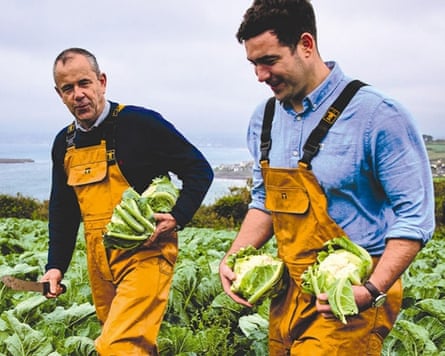
Broccoli growers say their yield has halved. “We are having to put two heads of broccoli together to make the weight the pack is sold in,” said David Simmons from Riviera Produce. He grows a variety of vegetables on his family’s farm in Cornwall and is also on the board of the Brassica Growers’ Association, a trade body.
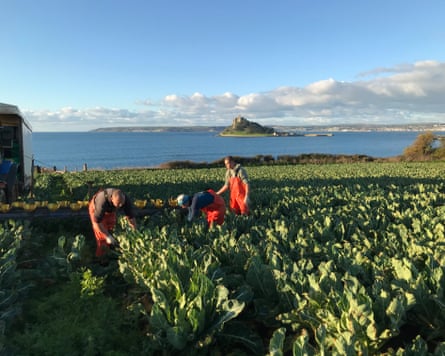
“The UK is very short [of broccoli] at the moment, so it’s being imported from Spain and Holland to try to cover the orders,” Simmons said. “Cauliflowers could go short in the next couple of weeks, we can see that being the next issue.”
The English pea harvest is down by a third, according to Stephen Francis from Fen Peas, a group of 60 Lincolnshire farmers. Growers in Scotland, which accounts for about a fifth of UK pea production, are thought to be expecting an average harvest.
Growers are looking at different varieties, such as those used in southern Europe and better suited to higher temperatures, said Francis, although farmers will also need help to invest in more water storage to help them cope in future.
Meanwhile, the bosses of Britain’s biggest supermarkets have written to Andy Burnham to say wildfires and extreme weather pose a threat to Britain’s food security. More than 100 organisations – including Tesco, Sainsbury’s, Waitrose and Aldi, as well as food manufacturers and wholesalers – called on the government to make the food system a national priority and reduce reliance on food imports.
A year of exceptionally hot and dry weather has also led to the earliest UK cereals harvest in at least 20 years, according to the Agriculture and Horticulture Development Board.
Across Europe, crops ranging from wheat and potatoes to tomatoes and olives are being hit by drought, fires and extreme heat.
Tim O’Malley, the chair of Nationwide Produce, a wholesaler that supplies restaurants and catering companies, said: “It is worse than the public realise. We are running out of water.”
He added that field crops such as leafy green vegetables, broccoli and iceberg lettuce were the worst affected. From May, June and throughout the summer these are usually sourced from the UK. But “last week we did something very unusual and went back to Spain”, O’Malley said. “They have got hot weather but they are more used to farming in these conditions.”
Production of tomatoes, most of which are imported from the Netherlands and Belgium to the UK at this time of year, is also starting to be hit by sustained high temperatures, which is resulting in smaller and damaged fruit.
Rodger Hobson, a carrot grower in Yorkshire, said this year had been the “worst we’ve ever known”.
“It’s heartbreaking and wallet-breaking,” he said, adding that crops were “wilting on their feet”.
after newsletter promotion
Hobson usually produces about 30,000 tonnes of carrots annually, equivalent to approximately 4% of the UK crop. Britain produces almost all (97%) of the carrots it consumes, despite being only grown in few regions that have the sandy soils the root vegetable requires.
“Any [temperature] over 25C and it goes into shutdown, anything over 30C and it pretty much starts to die. All we can do is keep pouring water on,” Hobson said.
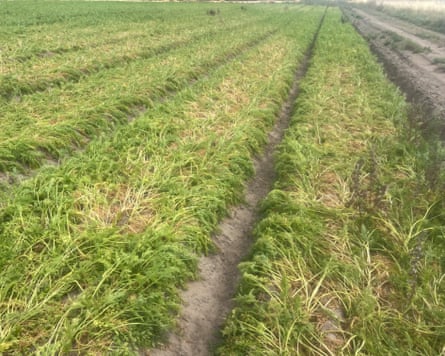
The main carrot crop, which would usually harvested from September onwards, will suffer this year unless there is significant rainfall soon. The situation means domestically produced carrots could run out a couple of months early in the spring, requiring imports to be found to make up for the shortfall.
New potatoes grown in the UK are already on supermarket shelves, while main-crop potatoes will be harvested in September or October.
“We are not expecting as much as we have had in recent years,” said Scott Walker, the chief executive of the industry body GB Potatoes. “Given Europe is having the same heatwave, that will also have a impact on the amount of crop there.”
He added that consumers might have to get used to “more variation in sizes of potatoes” sold in supermarkets later this year.
Growers are calling on the government to do more to help them build reservoirs, so they can store winter and spring rain for watering their crops in summer. Farmers, many of whom operate on very tight margins, if they manage to make a profit at all, say building water storage is costly and such projects often require planning permission, which can take a long time to be granted.