 5 hours ago
15
5 hours ago
15
“Cristiano Ronaldo’s record-equalling sixth World Cup got off to a disappointing start,” began the Reuters match report of Portugal’s 1-1 draw against the Democratic Republic of the Congo last week. And yes, OK: everyone knows how this game works and why everyone plays it. On one hand, perhaps the greatest sporting day in the history of the world’s 15th most populous country. On the other, 41-year-old man does not score. It’s no contest, really. Get those sweet keywords front and left. Harvest that delicious search traffic. Perhaps you even noticed how I just did exactly the same thing.
And yet something does feel qualitatively different this summer: a tectonic shift driven partly by events on the pitch and partly at the behest of the industry itself. This is a World Cup swimming in star names, and never have those star names been so unapologetically, unquestioningly invoked. France do not beat Iraq; instead Kylian Mbappé throws down the gauntlet to Erling Haaland, Harry Kane and the rest. According to Google, Miroslav Klose’s goals record has been searched more at this tournament than in the year he set it. At times the group phase has felt like an inconvenient distraction from the real business of the Golden Boot race. (Can Lionel Messi lift the one trophy he hasn’t won yet?)
It was once the case that individual achievement facilitated team glory. Now the reverse appears to be true. Messi doesn’t win the World Cup for Argentina; they win it for him. A Portugal triumph would be an extraordinary achievement for a country of 10 million people: the ultimate vindication of a footballing culture, a talent-scouting and youth-development system, a coaching tradition stretching back to the tactical periodisation movement pioneered four decades ago. All of which would ultimately be subsumed by the (admittedly impressive) achievement of how a ludicrously successful and lavishly adored man became even more successful and adored.
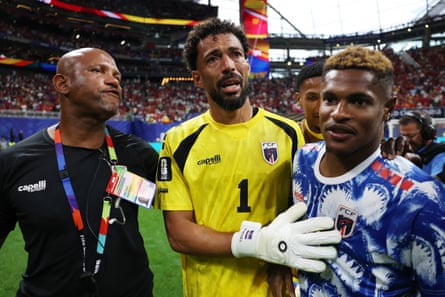
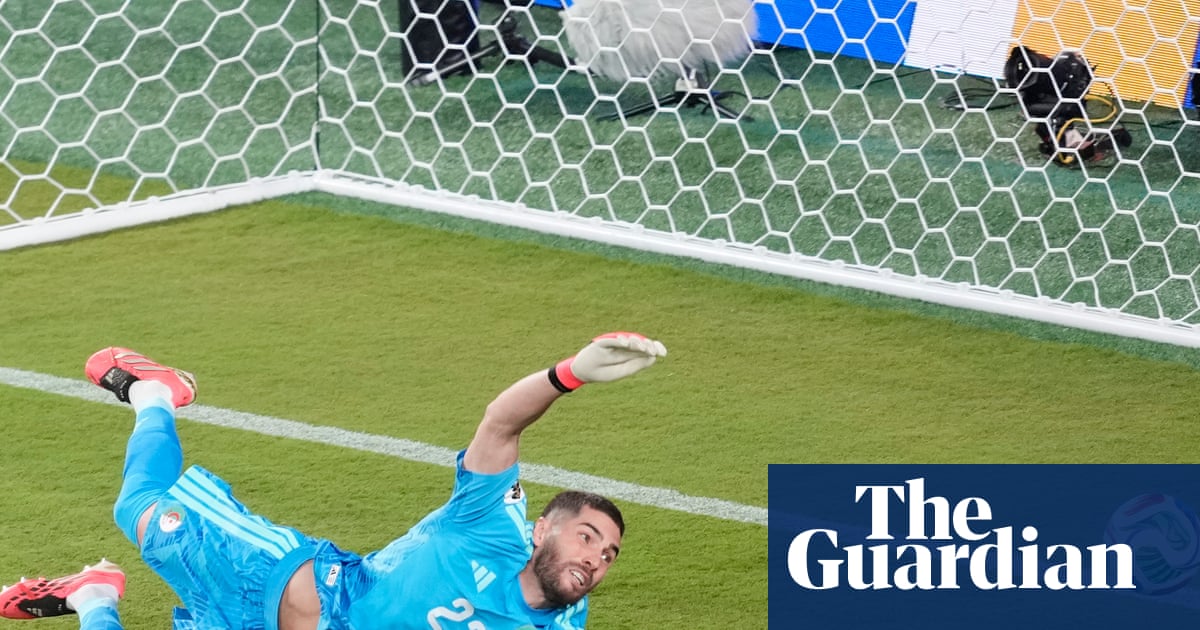
But of course, the veneration of the individual goes well beyond the headline players. Unsung heroes such as Vozinha and Eloy Room have been anointed as the sole architects of their team’s achievements. David Beckham has been more visible at this tournament than some of the World Cups he played in. Zlatan Ibrahimovic on Fox Sports (two World Cups, zero goals) has been the king of the vertical video snippet. Even those who don’t want to be singled out end up singled out: witness Marcelo Bielsa’s viral official portrait, in which he stares solemnly downwards like a folk singer about to drop an album of painfully confessional acoustic ballads.
None of this is accidental. Nor, as you might suspect, is it entirely driven by the rise of algorithm-generated media, or “giving the kids what they want”. The peculiar dynamics of modern international football, with its more random spread of talent and relative lack of training time, explain only so much. In large part it is the product of lots of little decisions, accumulating to a hyperfixation on individuals in what is putatively a team game. The rise of the cinema-style television camera, blurring out everything in the background and focusing the gaze on a single object, is perhaps the perfect emblem of where the game is heading.
The last 32 will bring the introduction of more isolated player cameras. Directors take every opportunity to cut away from the action to show us celebrities, individual fans, another lingering shot of Gianni Infantino deep in conversation, perhaps having the laws of the game explained to him again. And on a broader level, a game increasingly disrupted by stoppages – video assistant referees, substitutions, hydration breaks – is thus more likely to be defined by single acts of explosive brilliance.
Perhaps this is simply a hallmark of our increasingly narcissistic age. The athlete as influencer. The fan as participant. The president of Fifa as the director/writer/producer/star of his own movie: like Citizen Kane if you stripped out all the dialogue, played Macarena over the top, extended it to four hours and set it half a mile from the surface of the sun. And of course you realise that for Infantino this must be how he conceives football in its most perfectly realised form: football for the Truth Social age, football x IShowSpeed, the latest season of Keeping Up With The Footballs.
And if this is what floats your boat then fair enough. The customer is always right, and all that. But what happens to the product itself when we are encouraged to consume it entirely through the prism of the individual? What are the stories that go untold, the angles that remain underexplored?
Perhaps the irony of the modern, superstar-heavy narrative is the way it embellishes rather than diminishes the importance of the collective. Only when surrounded by a team more than the sum of its parts could Ronaldo triumph in 2016, Mbappé in 2018, Messi in 2022, Haaland with Manchester City in 2023. One of the upshots of Diego Maradona cultural worship is that the 1986 Argentina team he played with – Jorge Burruchaga, Sergio Batista, Oscar Ruggeri – have become some of the most underrated players in World Cup history.
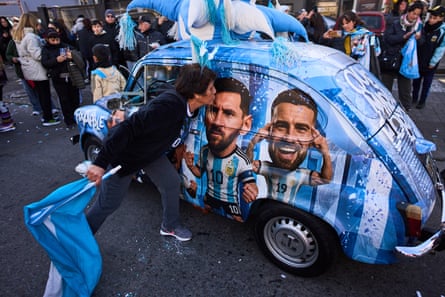
And so it is possible to see football’s cult of the individual not simply as an aesthetic choice but as a kind of wilful stupidisation. Player X does Player X things: easy. Explaining football through the complexity of 22 players interacting with each other on a pitch, the tactics and relationships, the collective history and identity and trauma, the way coaches render abstract thought into physical action: hard. But also, part of why the simplest sport is also the most beautiful.
The more you look, the more you find. The more you find, the more you learn. The more you learn, the more you understand. The more you understand, the more you love. But then, what if you don’t want to look at all?