 3 months ago
71
3 months ago
71
Milano Cortina has been the first Games where I’ve been around town, not just being whisked from the sliding centre to the athletes’ village. It has given me the chance to really be present and feel the excitement and anticipation that sport brings, not to mention the importance it has in giving us something else to focus on in difficult times.
As a TV pundit, it was hard to keep my emotions in check watching Great Britain’s skeleton success because I knew what it meant to Matt Weston and Tabby Stoecker to become Olympic champions – Matt twice, of course. Their achievements are not only historic but the day-to-day impact will be so meaningful to both of them. I remember seeing kids’ drawings of me and people dressing up as “Lizzy” and now I’m seeing it from a different perspective. I’m incredibly proud of them.
Winning gold with your teammate, as Matt and Tabby were able to experience in the new mixed event, is something special. In the individual events, you wait in the changing room and storm out when it is your turn. But this time the athletes lined up like aeroplanes on a runway, supporting their teammates before following them down the ice. I would have liked to have had Matt Weston as my teammate.
There is a sense that some athletes have been in the right place at the right time in 2026. Austria’s Janine Flock won skeleton gold for the first time at the age of 36. She led the standings going into the final heat when I defended my title in 2018 but ended fourth. Elana Meyers Taylor of Team USA won her first gold in the monobob aged 41. Her teammate Kaillie Humphries, 40, took bronze. It’s a joy to see women in their prime in their 40s.
Even through all of my physical issues after Pyeongchang 2018, I was very pleased to be able to retire on my own terms. Dave Ryding, now 39, was representing Team GB at his second Games at Sochi 2014 and, as a first-time Olympian, I looked up to him as a more mature athlete. Dave was always so smiley and generous. I appreciated that. He has said he would ski until his legs fell off. “I think they pretty much have,” he said this week after finishing 17th in the slalom in his final Games.
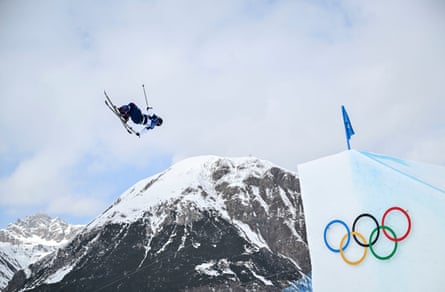
The level at which athletes are willing to go out and give their best continues to astound me. Whether it is the bravery of Lindsey Vonn, who we’ve seen lying in bed with a contraption on her leg after crashing out in the downhill, or the determination in the eyes of Kirsty Muir at the top of the freeski ramps as she considered what was needed to reach the podium. Fourth place can be the greatest fire to light ambition for the future.
The Olympics always looks glamorous. People will message you: “Are you having the best time? It looks so fun!” But I think there is this very human reality. I was really drawn to the image of Atle Lie McGrath lying in the woods – the isolation, the reflection – after straddling a gate in his second run of the slalom and missing out on gold, all while mourning the death of his grandfather. People are captivated by the human side of elite athletes: they feel joy in your success but also empathy in those moments of failure.
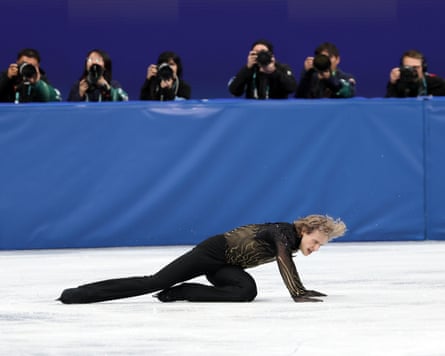
I really felt for the figure skater Ilia Malinin, who has spoken of the “endless insurmountable pressure” of being at the top, after his falls in the free skate cost him a medal having been the overwhelming favourite for gold. The Games can ask so much of you. There can be this loss of who you might have been had you won or what life might have been like in this moment. It’s like sliding doors, a moment of change.
Charlotte Bankes, one of Britain’s great medal hopes, showed the power of human endeavour after the disappointment of her individual snowboard cross campaign, where she exited the competition at the quarter-final stage. In a matter of days, she changed that moment of frustration into the triumph of winning gold in the mixed team event with Huw Nightingale.
From a British perspective, the three golds going in to the final weekend, including a first on the snow, are brilliant. But the fact of the matter is that UK Sport had hoped for up to eight GB medals at these Games. Even as we talk about the ups and downs of the human Olympic experience, there is still a cold reality of the outcome relating to funding.
However, the fourth places of Muir, of Jen Dodds and Bruce Mouat in the mixed curling and of Freya Tarbit and Marcus Wyatt in the mixed team skeleton demonstrate the potential for the next four-year cycle. As for now, I have been captivated by all the highs and lows thus far from Milano Cortina 2026. The full range of human emotions on show at the Olympics is what makes it so wonderful to watch.