 5 hours ago
8
5 hours ago
8
The UK National Crime Agency has recommended parents should not put photos of their children on public display online as part of landmark guidance to tackle the rise of AI-generated sexual abuse material.
Advice issued by the NCA and the child safety watchdog the Internet Watch Foundation suggests parents and guardians make their social media accounts private or share pictures of their children through a “close friends” group.
The NCA and IWF stressed they were not telling parents how to behave online, but said they should be aware of the problem and how to tackle it.
The guidance also recommends auditing social media accounts for old pictures that could be used by predators and revisiting photo consent agreements – for instance with schools or sports clubs – that could have been signed a few years ago before breakthroughs in AI made image manipulation possible.
“We encourage parents and carers to take a few simple steps today,” said Tim Wright, a senior manager at the NCA.
The guidance sets out a trio of actions: checking privacy settings on social media accounts; reviewing who can see images of their children; and having open discussions about giving permission for people and organisations to publish images of kids online.
The NCA said most parents and carers would not be aware that advances in the technology had given criminals publicly available tools to create child sexual abuse material (CSAM) without needing to contact – or “groom” – victims directly.
“The average parent or carer does not post a picture of a child online thinking that it might be scraped to be turned into CSAM,” said Lorna Sinclair, a child sexual abuse education manager at the NCA. “There are lots of parents and carers who do not know that this problem exists.”
The amount of AI-generated child sexual abuse material found online rose by 14% last year, according to the IWF, which identified 8,029 AI-made images and videos of realistic CSAM in 2025.
The IWF, which monitors CSAM incidents and runs a reporting hotline, has been contacted by under-18s who have been blackmailed by extortionists after their images were nudified by AI. A confidential service for removing explicit images of under-18s taken without their consent, called Report Remove, has also reported examples of image manipulation involving normal, fully-clothed selfies being converted into extreme pornography via AI.
In another case heard by the Childline service, a 15-year-old girl said a stranger had made a “really convincing” fake nude of her that used her face and bedroom, having apparently taken the source material from her Instagram account.
Publication of the guidance also follows cases where UK school websites were targeted by blackmailers who scraped pictures of children, used AI tools to convert them into child sexual abuse material, and then threatened to publish the results. A UK advisory body on tackling online harms, the early warning working group (EWWG), whose members include the NCA and IWF, has recommended schools remove identifiable pictures of pupils’ faces from their websites and social media accounts.

Dan Sexton, the IWF’s chief technology officer, said he was “very uncomfortable” about telling parents not to put pictures of children on public display but felt there was no other option. “I don’t know what else to say to parents,” he said. “I would be very cautious [about putting pictures of children online] because there is no protection.”
The NCA and IWF guidance states: “If you’d like to share photos of your child online, we suggest creating a ‘close friends’ group or limiting visibility so only selected people can see them.”
The children’s charity the NSPCC also recommends that under-18s keep their social media accounts on a private setting.
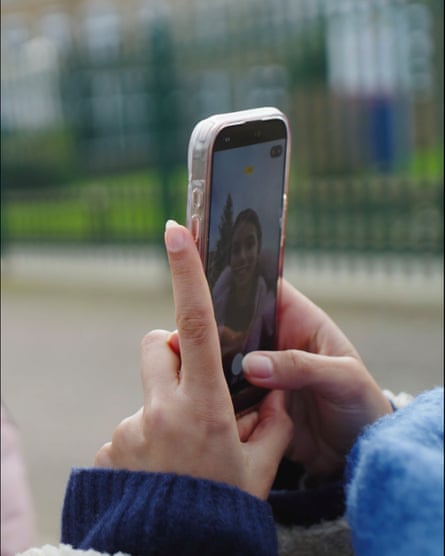
Videos released as part of the guidance show fictional scenarios of parents taking photos of their children in everyday circumstances, such as playing sport or standing at the school gates, and being reminded about the risks of sharing photos online. The NCA and IWF say they want to encourage parents and children to say “no” to sharing photos online if they are uncomfortable about it.
The guidance on carrying out a social media audit includes users checking their own social media accounts to gauge whether their child’s “face, body or school uniform” can be seen, whether they are comfortable with the image still being online, and whether it can be deleted or made private. It also recommends checking whether friends or family have uploaded images of a parent’s child, including historic posts and discussing “clearly and calmly” what action could be taken with those posts.
The guidance also recommends reviewing consent forms signed by parents at school, nursery or clubs giving permission to use their child’s image, and considering whether they want to withdraw that consent.
The IWF’s head of marketing, Tom Dyson, said: “If you want a photograph of your children to be taken off a website or social media you are perfectly able to do that.”