 4 hours ago
15
4 hours ago
15
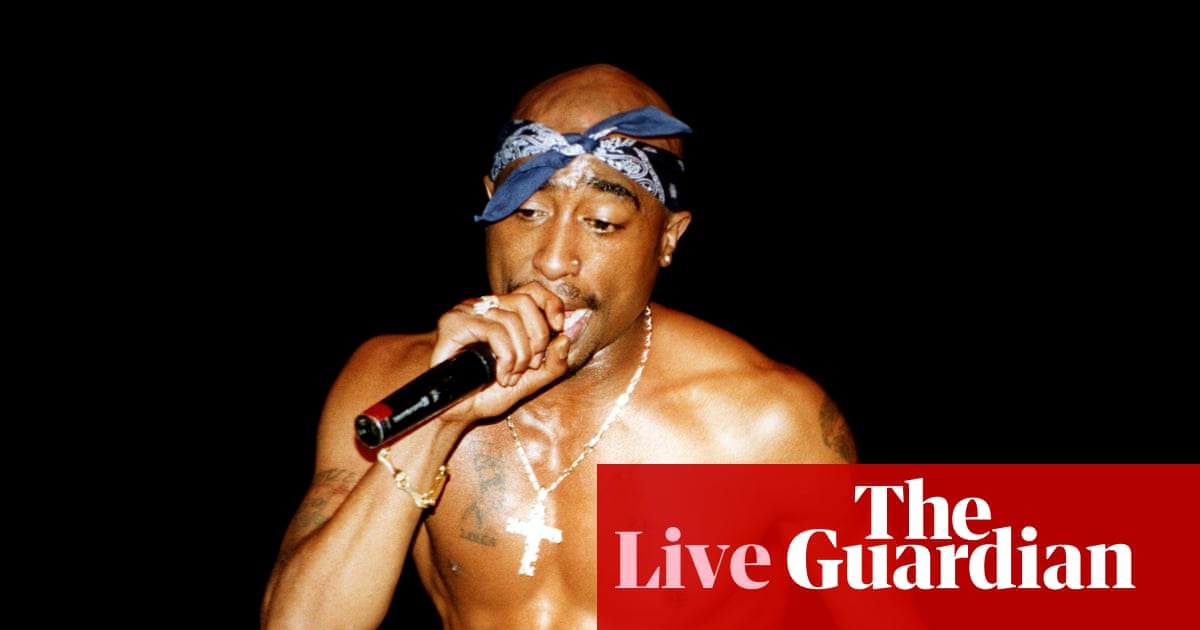
For nearly 30 years, the unsolved murder of 25-year-old rapper Tupac Shakur has sparked lawsuits, theories and conspiracies.
Now, decades after his death in a September 1996 drive-by shooting in Las Vegas, local prosecutors are finally offering a detailed official account of Shakur’s killing, accusing Duane “Keffe D” Davis, a 63-year-old former South Side Compton Crips gang leader, of being the “on-the-ground, on-site commander of the effort to kill Tupac”.
Davis, who described himself as playing a main role in Shakur’s killing in his 2019 memoir, has pleaded not guilty, and his lawyers are trying to convince the jury that the claims he made in his book and in other interviews were lies Davis told for clout.
For Shakur’s relatives, the long-delayed chance at accountability in court is bringing both relief and renewed pain. On Tuesday, the second day of the trial, prosecutors focused on the most basic elements of Shakur’s killing and their case against Davis. Witnesses authenticated surveillance footage of a fight in the MGM Grand Hotel involving Davis’s nephew, Orlando “Baby Lane” Anderson, which allegedly inspired the shooting, and reviewed the bullet casings police found on the street and the autopsy photos of Shakur’s body.
Jurors looked intently at the photos of Shakur’s body, which was bloated and had multiple chest wounds. The nearly full courtroom was silent.
The display of graphic photos of the body of the beloved hip-hop artist and activist prompted some of his family members to leave the courtroom, and some to look away. Others chose to witness the painful evidence. Seeing the photos of Shakur’s body made Zayd Akinyela, Shakur’s cousin, feel “very angry, very angry, to say the least, very sad”, he said, in explaining why he had chosen to stay in the courtroom.
“I feel like the details, especially for people that are close to him, honestly for me helps, helps the grief process. I think we’ve been waiting 30 years to grieve properly,” Akinyela told the Associated Press outside the courtroom. “A lot of people don’t get to grieve until they understand what happened to their loved one and how it happened.” He added: “That’s why I wanted to stay and just see for my own personal closure.”
He said he hadn’t known how many times his cousin was shot and couldn’t help but think of the ways the night could have played out differently.
The investigation of Shakur’s 1996 killing continues to be affected by the refusal of some witnesses and participants to testify to law enforcement officials about who was involved in his murder.
“You better treat me as a hostile witness,” James McDonald, a former associate of Marion “Suge” Knight, the Death Row Records co-founder who was in the car with Shakur when he was shot, told attorneys on the trial’s second day.
“Me or anybody else bringing up the dead is wrong,” McDonald said. He emphasized that he was only appearing in court because he had been subpoenaed.
“I’m aware of a lot of things, things that was going on. People ain’t talked about it in 30 years. Today ain’t one of them,” McDonald testified.
“I don’t want to send him to prison, even though we don’t like each other,” McDonald said at one point, apparently pointing to Davis, who was sitting in the courtroom directly behind his attorney. “I don’t want to send you to prison,” McDonald repeated.
The courtroom livestream showed no reaction from a grim-faced Davis.
During his cross-examination, McDonald berated Davis’s defense attorney Michael Sanft, telling him: “You asking something that’s going to hurt this dude,” and, later appearing to address Davis: “Talk to your lawyer, man, this dude is tripping.”
“I changed my life. I’m raising my grandkids, teaching them never to be like their Pawpaw, and here I am, explaining to people what I used to be, and I’m not proud of that, I’m not proud of that at all,” McDonald said. “You’re asking me questions that can hurt him, and like I told them, I’m trying to avoid to answer the questions.”