 2 hours ago
3
2 hours ago
3
The city of Dessau, where the Bauhaus design school flourished a century ago, catapulted Germany into the modern era and revolutionised global design.
It is also where the Nazis drove the avant garde movement out of town and attempted to crush its utopian principles. A hundred years later, another high-stakes culture war over its legacy is looming.
The EU’s biggest democracy will face one of the riskiest tests of the postwar period when Dessau’s home state of Saxony-Anhalt goes to the polls on 6 September. In what would be a first since Adolf Hitler’s time, a far-right party could win an absolute majority and take power in one of the 16 Länder.
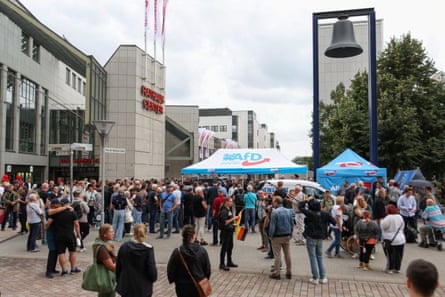
The Alternative für Deutschland (AfD) is running first in national polls and is poised to capture about 40% in Saxony-Anhalt. It has widened its double-digit lead among the state’s 1.8 million voters by homing in on the cost of living, fears around immigration, and the whipsaw effects of deindustrialisation and depopulation.
But the party’s programme also lays out a vision for Germany with Saxony-Anhalt as a foothold, in a plan oddly fixated on Bauhaus. “The state government is running an image campaign called ‘think modern’ that seeks to derive the identity of Saxony-Anhalt from Bauhaus,” reads one passage.
The AfD said it is countering with “a ‘think German’ campaign” that promises a “new, patriotic cultural policy” and an end to funding for “anti-German art and culture”.
Bauhaus’s blend of form and function in architecture, art and industrial design shaped everything from Ikea style for the masses to the user-friendly elegance of Apple products.
It was also a buzzing hive of sexual liberation, new roles for women and international collaboration before the Nazis drove its “degenerates” into exile.
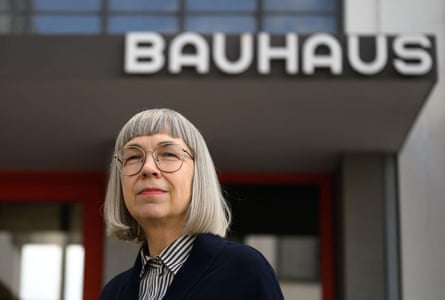
In her modest, sleek-lined office at the Bauhaus Dessau Foundation, director Barbara Steiner said that much like a century ago, the AfD’s anti-Bauhaus crusade was a Trojan horse aiming for the heart of Germany’s open, liberal society.
“There would be a lot of people leaving the state”, if the AfD took control, said the Austrian-born Steiner. She argued the region was underestimated by its purported champions and their “absurd” war on a warped vision of Bauhaus.
“People are always talking about the economic downturn and how everything’s going down the drain, but the people here are brilliant,” she said. “I’m afraid what is now so tenderly sprouting will be snuffed out by this rigidity and isolation.”
While her own institution would probably face funding cuts, her bigger worries concern the chilling effects on public debate, cooperation and innovation. “They want cultural hegemony. That’s the really threatening thing.”
Today Dessau-Roßlau, as the city has been known since a municipal consolidation in 2007, can seem like an open-air museum of the past 100 years’ tumult. Its historic, deserted market square is bookended by soaring spires. But taller still are the prefab communist-era housing blocks hulking over gutted brick warehouses. And on nearly every lamp-post, an AfD poster hangs with the promise “Our Year”.
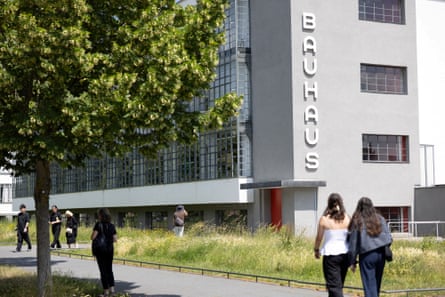
The sprawling Bauhaus campus and a glass-and-steel museum which opened in 2019 attract tens of thousands of visitors each year. But city authorities say tourism will never lift the economy out of the doldrums.
Unemployment sits at 10%, against 8% across the state and 6% at the national level. Household income in Saxony-Anhalt falls near the bottom of the German table.
With an average age above 50, Dessau-Roßlau is one of the country’s most geriatric cities. Its population has shrunk to 75,000 from 130,000 in 1990, the year Germany reunified, driven by an exodus led by highly educated young women.
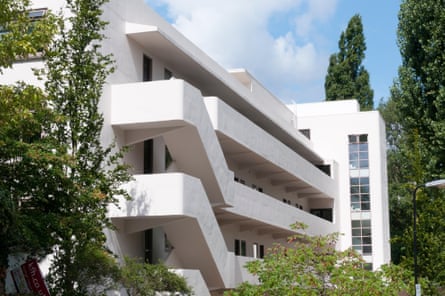
Photograph: UrbanImages/Alamy
The 13-year-old AfD has said it wants to repopulate Saxony-Anhalt using lavish family subsidies with unclear financing, while freeing up lost potential by “liberating” Germans from shame over the Holocaust.
Authorities classify the national party as suspected extremist and the Saxony-Anhalt chapter as confirmed extremist, meaning it poses a threat to democracy.
Its flag-bearer is Ulrich Siegmund, a telegenic regional MP with reported ties to known neo-Nazis. Siegmund attended an infamous meeting in November 2023 to discuss a “remigration” plan for mass deportations.
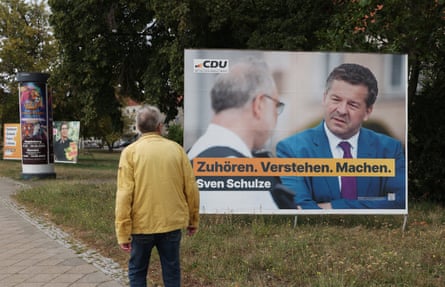
At a candidates’ debate on Dessau’s outskirts, the mainstream parties pleaded with voters to consider the consequences of backing the AfD. Making his pitch, state premier, Sven Schulze, of the Christian Democratic Union, the party of Germany’s chancellor, Friedrich Merz, did not make a single reference to the historically unpopular leader.
Schulze, the only candidate with a chance of standing in the way of the AfD, has often seemed to be campaigning against his own party, most recently attacking a signature national pension reform plan.
He accused the AfD of selling snake oil on growth, jobs and borders. “Even if the day after tomorrow all women decide they’re only there for baby-making, as some (parties) seem to want, that won’t solve the problem,” he said. “It’s important to be honest: we will also need people from abroad in the coming years, particularly in the care sector and in hospitals.”
Tobias Rausch, in the state parliament for the AfD since 2016, brushed off questions about the legality of its calls for mass expulsions of asylum seekers. “We want to rescue the country from politicians from the old parties and finally make policies for the people,” he said. “We don’t just want to change things in Saxony-Anhalt but also at the national level.”
Armin Willingmann, a veteran Social Democrat struggling to keep Germany’s oldest party in the regional parliament, appealed to a sense of pride in regional accomplishments, including Bauhaus. “This is a place of exceptional cultural significance – our global culture,” he said. “We really must be careful not to shut the door, not to adopt Herr Rausch’s quite crude policy of isolationism.”
Undecided voters said they appreciated local patriotism but that the politicians seemed to be talking past economic realities.
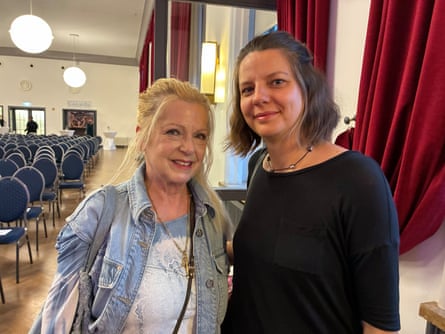
“If the economy is blossoming here, why is there no money to be found anywhere?” said Ruth Schulze, in her 60s and no relation to the CDU candidate. “I was born and bred in Dessau and don’t want to speak ill of it – but the lack of money really is the number one issue,” said Schulze, who runs an advertising agency she said was struggling with overhead costs.
Teacher Maria Karius, 40, said the far right had come to be seen as a normal part of the political landscape as frustration with the mainstream parties festered.
Despite a 15-% drop in the Dessau crime rate last year, she said there was a perception that public spaces weren’t safe. “Nothing changes – it’s always the same. That’s fertile ground for the AfD.”
While the debate’s tone often sounded resigned, back in town there were still some echoes of Bauhaus’s revolutionary esprit.
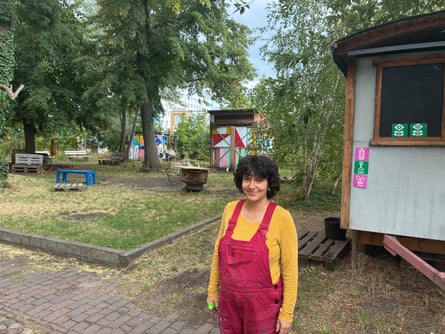
Rima Al Ahmad, who came to Dessau from the bigger city of Halle a decade ago to study design, works in a shared community space for artists and creators called Vor Ort, which translates as on site or local. It was conceived of as a “cultural anchor” for German and international students drawn to courses rooted in Bauhaus traditions.
“It can be hard to find your place here if you come from outside,” she said.
On a tour of its printmaking workshop, recording studio and lush community garden, Al Ahmad, 32, born to a Syrian father and a German mother, described the project as a kind of resistance against her state’s increasingly “notorious” image.
“I was born in Saxony-Anhalt and for me, Saxony-Anhalt is home,” she said. “It has beautiful places and great, just normal people, regardless of the far right.”
Asked what the Bauhaus pioneers would think of Vor Ort, she smiled: “I think they’d like that the experimental spirit is being carried forward here.”