 1 hour ago
7
1 hour ago
7
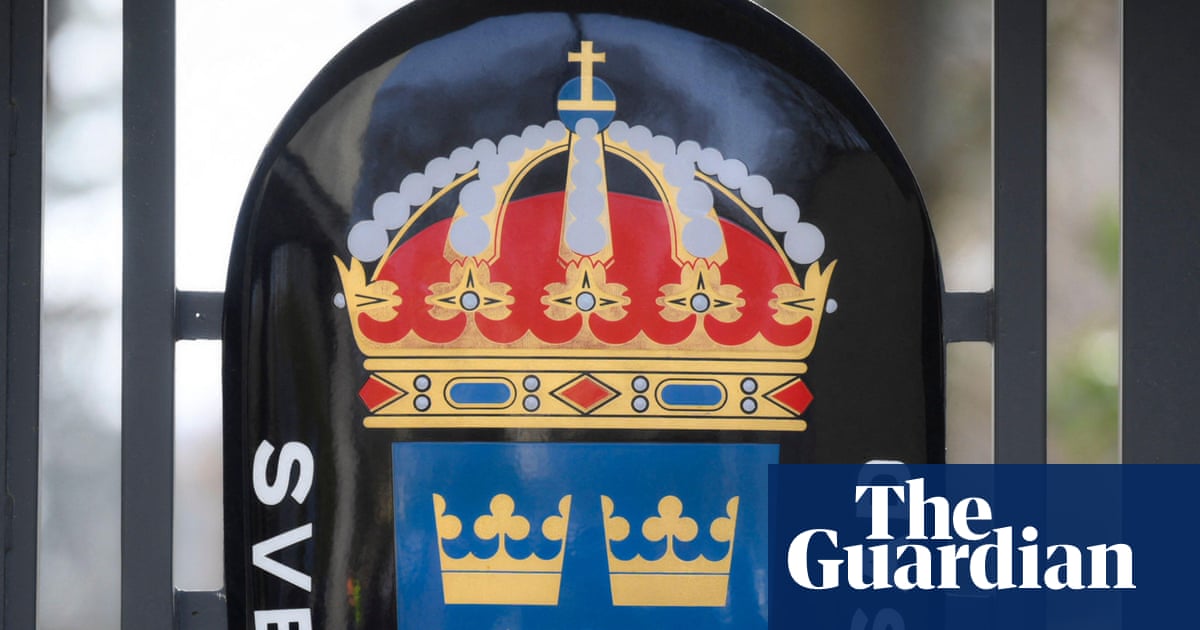
Sweden has confirmed 458 British citizens have been deported or forcibly removed by police since Brexit.
It is the first time the scale of the deportations of citizens who failed to secure residency in Sweden post-Brexit has been made public and comes amid mounting criticism of a cruel and hardline approach to Britons who had chosen to make the country their home before Brexit.
Some have been told to go after more than 25 years in the country and even vulnerable elderly people with dementia have been affected. One man was deported even though he had lived in the country since he was 10 years old.
Susanna Fonsell, a unit manager and legal expert at the Swedish Migration Agency, told Sverige Radio: “A rejected application does not necessarily result in deportation… and according to the agency statistics, the agency’s rejections of an application for resident status has been accomplished by a deportation decision in only approximately 400 cases,” she told Sweden Radio.
The Migrationsverket, the Swedish government agency responsible for migration, confirmed to the Guardian that 458 British citizens had been deported since Brexit. “According to the agency’s statistics, the Swedish Migration Agency’s rejection of an application for residence status has been accompanied by a deportation decision in only 458 cases,” a spokesperson said.
David Milstead, who heads up the 9,000-strong activist group Brits in Sweden, said it was important for Sweden to release full and transparent figures in relation to removals and deportations and their circumstances.
“We need to understand exactly what the 458 represents. Does it capture people who gave up and left when they realised their withdrawal agreement application was unlikely to succeed? Does it include people who were refused withdrawal agreement status, subsequently obtained a permit under national law and were only later ordered to leave?
“It certainly does not capture people who are currently managing to remain in Sweden on temporary permits, with little certainty about their long-term future.”
He said the figures illustrated a “broader problem” in that the data was issued piecemeal and sometimes in an opaque manner. “We still do not have basic published figures showing how many people submitted a missed-deadline application and the fraction of these which succeeded,” he said.
The last available data shows that there were 14,233 applications for post Brexit residency, which included family members joining British citizens after the deadline by 2024. Of those, just under 4,000 were rejected, a refusal rate three times higher than any other member state and considerably higher than the EU average of between 3% and 4%, according to Foreign, Commonwealth and Development Office (FCDO) analysis.
Deportations are still happening. This week, the Swedish wife of a former business director from Cambridge told how her husband was detained in Stockholm on Tuesday ahead of a forced removal.
She said they had been fighting to overturn the decision by the migration authorities for five years and felt that they had been “hunted”.
Earlier this week, the Guardian revealed a 34-year-old British man, John Sellers, who had lived in Sweden since he was 10, had been deported, separating him from his wife, Caroline, in Gothenburg, who said people needed to know how Brexit had “crushed families”.

Another woman, 78-year-old British widow Joyce Thomas, has been told to remove herself from the country before next Wednesday. Friends are trying to get an injunction and have appealed to the European Commission for help.
after newsletter promotion
If she fails to comply, not only will she face a forced deportation, but the court of appeal has told her she could face a “re-entry ban” and be “registered on a watchlist” preventing potential entry into a Schengen country, which includes Sweden “as long as the re-entry ban remains in effect”.
The Swedish Migration Agency told the Guardian it had “no indication that Sweden has in any way interpreted the withdrawal agreement in an extreme manner or differently from other member states. The Swedish Migration Agency has applied applicable law, and there has been an opportunity to appeal rejection decisions.”
Late applications for post-Brexit residency are allowed under the Brexit withdrawal agreement, both in the EU and the UK, but applicants have to show “reasonable grounds” for missing the deadline.
The FCDO has said that “in practice” late applicants in Sweden “are not likely to have their reasonable grounds accepted”.
Earlier this week, Sweden’s migration minister, Johan Forssell, said his government had followed the rules but that it was willing to look into the matter. “The relationship with the UK is very important to Sweden and the government will continue to safeguard the correct implementation of the withdrawal agreement. As part of this, the government is investigating whether further measures can be taken to facilitate the process in the future,” he said.
A spokesperson for the FCDO said: “We continue to raise this with the Swedish authorities and welcome their statement that they will look at this issue. We are ready to support them in doing so.”
Niels Paarup-Petersen, the migration spokesperson for Sweden’s opposition Centre party, said the government needed to go much further. He pledged to bring in new laws if his party won power at the next general election to allow British to reapply for post-Brexit residence, saying “a touch of humanity” was needed.