 2 hours ago
5
2 hours ago
5
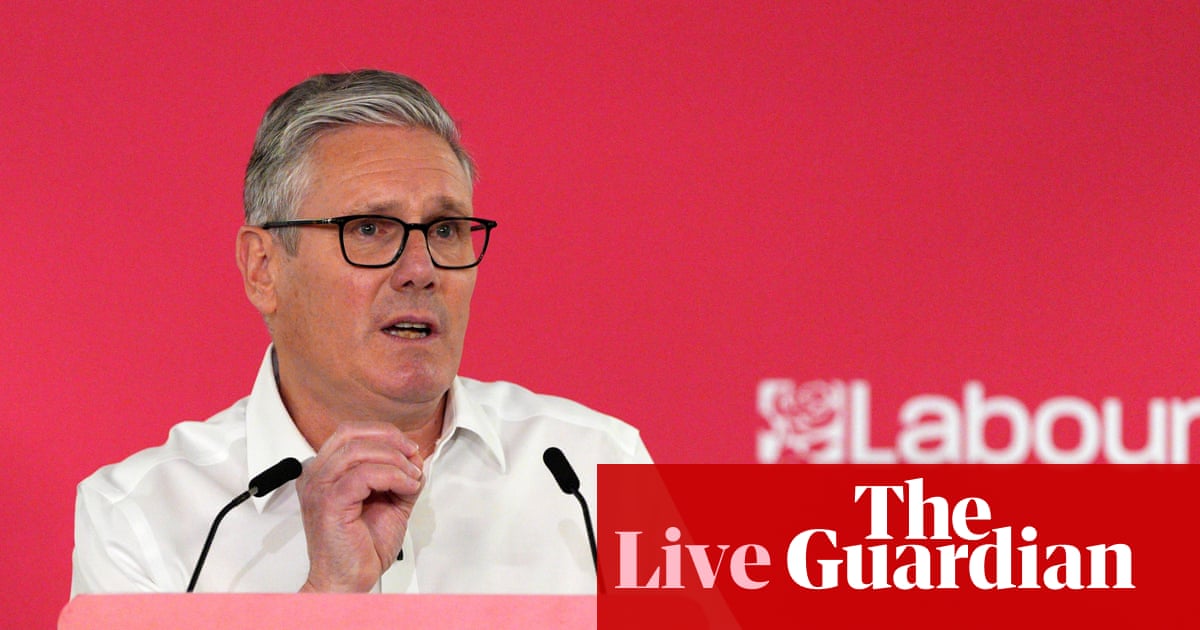
PC Andrew Harper’s killers will remain behind bars after Andy Burnham announced changes to the early release scheme aimed at easing prison overcrowding, saying he understood “how strongly people feel about this issue”.
The prime minister said anyone convicted of unlawful killing, including all forms of manslaughter, would be excluded from the scheme, which would have made two of the officer’s killers eligible for early release. It comes after Burnham previously ordered a review of plans for the early release of thousands of killers, rapists and sex offenders from prison in September.
“We will now not only be keeping offenders serving time for indecent assault locked up, but also those in prison for manslaughter and death by dangerous driving,” the prime minister said. “This means that the awful criminals responsible for the killing of PC Andrew Harper will not have their sentence shortened.”
Ministers have repeatedly warned that cells to hold newly arrested people could run out without the early prison release scheme, but Burnham said spaces would be made available by deporting foreign prisoners and releasing some inmates serving indefinite sentences.
It follows months of intense pressure on the government and campaigning from PC Harper’s family and former colleagues to block the release of his killers.
The police officer was 28 when he sustained fatal injuries while responding to a quad bike theft in Sulhamstead, Berkshire in August 2019. Jessie Cole and Albert Bowers, who were passengers in the vehicle and both 17 at the time, were sentenced to 13 years in custody for manslaughter but may be eligible for early release under the new Sentencing Act.
Speaking to the BBC, which first reported the government U-turn, Burnham said he had “heard” Harper’s family. “I heard, obviously, what Andrew Harper’s family were saying, I mean, who couldn’t? Nobody would want a position to arise where those guilty of killing a police officer are let out early from prison,” he said.
Debbie Adlam, Harper’s mother, said she was glad and grateful for the change in the new laws but she felt “a mixed bag of emotions” and campaigning for the change had been traumatic.
“On the one hand we are glad, but we’ve been [put] through the mill and we are only back at where we were to start with,” she told BBC Breakfast. “We’re not making any headway or anything, we are just literally fighting to get back to where we were.”
She said she worried for other families and victims facing the prospect of offenders being released early. “I think, realistically, the overall system has left some huge gaps still, and I just hope that what Andy Burnham says there [is true and] that they will be going into a further overhaul over the next few years. It really it needs to happen for our sake.”
Burnham admitted the change in the government’s controversial plans would mean “hundreds” more people stay in prison, meaning additional space will need to be found in a system that is more than 97% full in England and Wales.
“The truth is I wanted to go even further. But I’ve pushed the system to the very limits of what’s possible without risking the prison system collapsing within months, putting the public at enormous risk,” he said.
“To protect victims, we will be introducing the toughest ever supervision measures for offenders, which effectively mean that someone’s sentence will not end when they leave prison. This includes tagging offenders and, for the very first time ever, putting restriction zones in place to stop offenders getting anywhere near their victims.”
The prime minister said that in this parliament he would end detainment under imprisonment for public protection sentences, or IPPs, which were abolished more than a decade ago but still keep more than 2,000 people in England and Wales behind bars.
Campaigners have long argued the sentences – introduced between 2005 and 2012 for offenders deemed to pose a significant risk to the public – needed to be scrapped. People imprisoned under the sentences can only be released once the Parole Board is satisfied they no longer need to be confined for public safety, leaving many languishing in prisons.
Burnham said he had “longstanding concerns” about IPPs and had applied “common sense”.
“I was faced with a situation where people on those sentences, who have more than served their time, [are] not being released when others who’ve committed very serious crimes [are] being released early,” he told the BBC.
“The judgment I’ve made is the public, in my view, would prefer a situation where people who have served their time to be considered for release before those who haven’t.”
According to Ministry of Justice data, 2,271 people are serving IPP sentences as of June. Of those, 856 have not been released because the Parole Board thought it was not safe to do so.
Burnham told the BBC that of those offenders, there will be “individuals who will pose a risk to communities”, and said a cross-party oversight group would be established.
The government will table legislation to terminate the sentences by the “end of this parliament”, he added.