 3 months ago
80
3 months ago
80
Tuesday marked the fourth anniversary of Vladimir Putin’s full-scale invasion of Ukraine, and at this time of year it’s hard not to recall memories of the morning of 24 February 2022, when the fate of Ukraine and the history of Europe were irrevocably changed by the decision of the man in the Kremlin.
Around 9pm the evening before, I had received a message from a colleague at another news outlet. It was an unequivocal warning from an intelligence source that the war would start that night. We discussed it among the Guardian’s Ukraine reporting team and international editors. My colleague Emma Graham-Harrison, who was on an overnight train from Kyiv towards the frontline city of Mariupol, decided she would get off halfway, in the middle of the night, and beg a spot on the first train heading back to Kyiv. It turned out to be a wise move: Mariupol was soon under siege and the scene of much of the worst carnage of the war. Emma remained in Kyiv, part of our team covering the initial Russian attack on the capital.
Four years later, millions of Ukrainians have been forced to adapt to the grim reality of living in a war zone. They have been through the withdrawal of Russian forces from Kyiv and the atrocities they left in their wake, the euphoria of the liberation of Kherson and other cities, which soon settled into the kind of grinding attritional war we see today. On this fourth anniversary, many worry that Donald Trump’s negotiations will lead nowhere and the war will continue for months or years to come.
Back in those first days, war was a terrifying and unpredictable new world. My memories of the maelstrom at Kyiv’s train station, as thousands of people tried to flee amid fears the Russians would soon arrive, will stay with me forever. I also think back often to the apartment of a Kyiv taxi driver who ended up working with us for several weeks. I took shelter in his home south of Kyiv on the second night of the war along with his wife and three kids. When I returned there with him a few days later, the place was silent and empty: his family had fled to Poland, one of millions of Ukrainian families that would be split by the war.
Odder images stick with me, too: like the fancy supermarket we went to for supplies on the third day of the war, filled with mangos and dragon fruits sitting there absurdly in the new context, mementoes of a world that had been torn apart by Putin’s attack.
In the weeks before the invasion, I was among those who had been fairly sceptical of the idea of an assault on Kyiv – I thought Russian military action in eastern Ukraine was more likely. I assumed, however, that Putin’s intelligence services would give him enough information to conclude that even if an initial assault on Kyiv succeeded, holding on to Ukraine or imposing a pro-Russian leader on the country was never going to work. Volodymyr Zelenskyy had the same view: even as London and Washington made public statements that war was coming, most of my Ukrainian sources told me they thought it was all nonsense.
But once the invasion started, that prewar period faded into distant memories: Zelenskyy was now a heroic wartime leader, and Europe – at least initially – was more united than ever before on the need to stand up to the Russian threat. The Ukrainian resistance proved enough to repel the Russians from the outskirts of Kyiv, and although the prospects for peace are bleak, it’s a huge victory for Ukraine that the country still exists.
Behind-the-scenes intelligence games
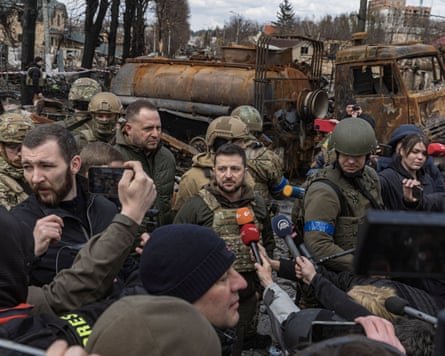
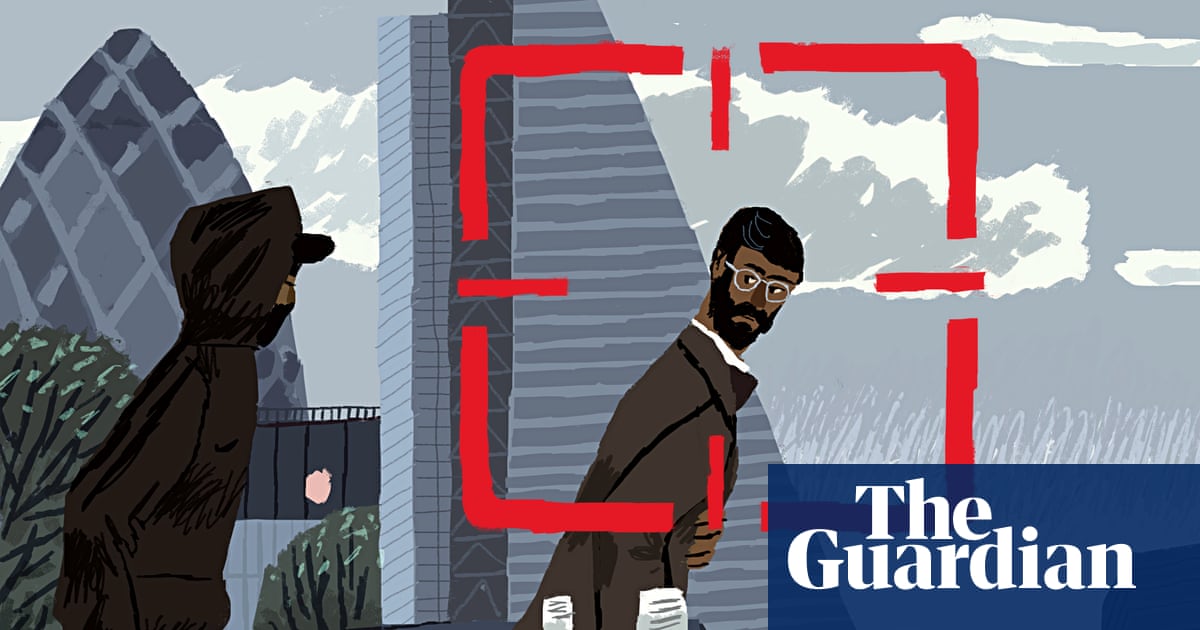
As the war went on, it was always in the back of my mind that I wanted to revisit those prewar moments to try to understand what happened behind the scenes. How had the US and UK been so sure of what was coming, and why did nobody else believe them? Why had Zelenskyy so adamantly dismissed the Americans? Why had the French and Germans also ignored the warnings, a situation that meant the head of Germany’s intelligence service, the BND, found himself stranded in Kyiv on the morning of the invasion? How was it that we knew enough about the invasion to pull Emma off the night train, but the Ukrainian defence minister apparently went to bed not expecting it?
Around a year ago, I started asking every official I could who had been in a high position then – whether in Ukraine, Europe or the US – and soon I realised there was an important story that had not yet come out, of the behind-the-scenes intelligence games of those months.
Piecing it together saw us take in more than 100 interviews in multiple countries, including with senior intelligence officials and most of the Ukrainian security elite from 2022. The resulting story is probably the most deeply researched article I’ve written in the 13 years I’ve been working for the Guardian. If you haven’t read it yet, please do take a look. Such journalism is very much in the public interest but requires time and is only possible because the Guardian is funded by readers, who give it editorial independence and freedom from commercial bias. If you are not already supporting us, please consider a one-time contribution or small monthly donation so we can do more of it.
Two totally different starting points
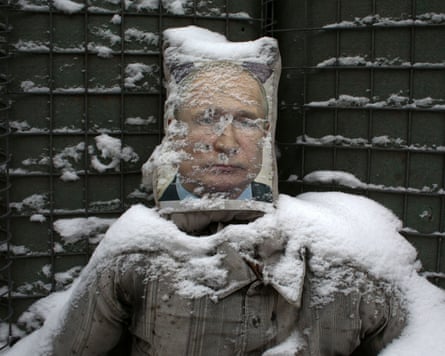
So why did France, Germany and other sceptical European governments doubt the US warnings about the invasion? It seems there were several reasons, but one was the legacy of the faulty US and UK intelligence over Iraq in 2003. “I’m old enough to remember 2003, and back then I was one of those who believed you,” one European foreign minister recalled telling US secretary of state Antony Blinken. Another reason was that they misread Putin, believing him to be a largely rational actor. “I think they took as a starting point: ‘Why would he?’ And we took as a starting point: ‘Why wouldn’t he?’ And that simple semantic difference can lead you to wildly different conclusions,” said a British defence intelligence official who had tried to persuade European colleagues to take notice.
For me, this research is not just a trip into history, it offers a number of lessons for the future, especially as our world seems to be ever more dangerous and unpredictable. Part of the reason Paris and Berlin didn’t believe in a full-scale war was simply that the very idea of one seemed so unlikely. As I conclude in the story: “For many, the key intelligence lesson from Ukraine was stark: do not rule things out, just because they might once have seemed impossible.”
To receive the complete version of This Is Europe in your inbox every Wednesday, please subscribe here.