 3 months ago
69
3 months ago
69
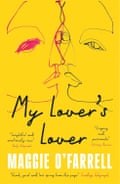
10 My Lover’s Lover (2002)
The ghost of a previous lover is always a challenge, particularly if you (mistakenly) believe that she’s actually dead. This is the unenviable situation for Lily, the protagonist of O’Farrell’s second novel, who is swept off her feet by dashing architect Marcus and in short order moves in with him. Lily takes his assurances that her predecessor Sinead is “no longer with us” to mark a more permanent absence; in fact, Sinead has simply been thrown over, and it is in the details of the collapse of her relationship with Marcus that the novel most engages. Hints of the gothic ghost story deepen one of the main takeaways, which is that Marcus consists almost entirely of red flags.
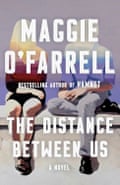
9 The Distance Between Us (2004)
Heritage and belonging drive much of O’Farrell’s fiction, and the gradual release of information to her readers often propels her narratives. She’s also interested in journeys both literal and figurative, and begins this novel in Hong Kong, where celebrations to mark the Chinese New Year are disrupted by sudden, dangerous mayhem. Meanwhile, a woman on a bridge in London glimpses a familiar face and takes this as her cue to leave the country. These dramatic events make little initial sense, but it’s the contrast between the immediate isolation of the characters and their complex and densely populated backgrounds that draws us in.
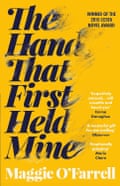
8 The Hand That First Held Mine (2010)
O’Farrell repeatedly returns to the territory of new motherhood, and to how it intersects with the trauma of previous generations, and here she sets up two mirroring storylines. At the novel’s start we are introduced to Elina, an artist in contemporary London, who is navigating the aftermath of the birth of her first child, and to Lexie, who arrives in the capital in the 1950s from small-town England and almost immediately finds herself capsized by a transgressive love affair. What links them will unfold, but it’s the portrait of life before and after giving birth – characterised by a reconfiguring of identity – that holds the reader’s attention.
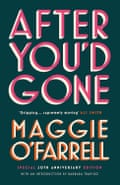
7 After You’d Gone (2000)
O’Farrell’s debut novel won a Betty Trask award, and it’s easy to see why the judges thought this was a writer with promise. Most striking is its ambition: the central character, Alice, lies in a coma, which the reader gathers follows an unnamed but cataclysmic event. Mysterious, too, is the sudden realisation that struck Alice in a public lavatory in a train station on the day after her accident – a strand of the narrative that takes us back into her childhood and the obscured life of her difficult, thwarted mother. Additional plotlines unfurl a love story imperilled by religious and cultural collisions, displaying O’Farrell’s interest in exploring taboos and their long effects.
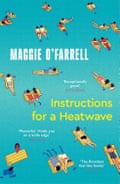
6 Instructions for a Heatwave (2013)
Those too young to remember the cracked riverbeds and communal water pumps of Britain’s 1976 heatwave will enjoy the period detail of O’Farrell’s sixth novel, which forms the backdrop of a compulsively readable missing person mystery. The absentee in question is Robert Riordan, a newly retired Irish Londoner who goes out for a newspaper one morning and fails to return. Summoned home to support their mother, Gretta, Robert’s three adult children find themselves uncomfortably cheek by jowl, and it’s watching the family dynamics play tensely out in this moment of apparent crisis that provides most of the novel’s deliciously depicted drama.
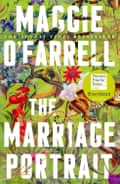
5 The Marriage Portrait (2022)
A chilling episode in Renaissance matrimonial history and a celebrated Victorian poem form the basis of O’Farrell’s most recent novel, which reimagines the fate of Lucrezia de’ Medici, child bride of the Duke of Ferrara. Lucrezia’s death in 1561, possibly by poisoning, inspired Robert Browning’s My Last Duchess, which leaves its readers in little doubt that her husband was an unrepentant murderer. O’Farrell’s purpose, in recreating the events at Ferrara’s court and their later representation, is to allow us to consider the ease with which women and girls were shuffled between dynastic families and opulent courts – and to wonder what might have happened had they ever been permitted a whisper of agency.
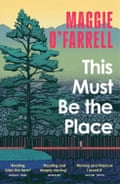
4 This Must Be the Place (2016)
There’s something of the jeu d’esprit about this story of the whereabouts of Claudette Wells, a mercurial film star who has called time on her career and hunkered down in the wilds of Donegal. That O’Farrell tells her story through multiple narrators, hopping between settings and time periods, increases the suspicion that the author was intent on creating a kaleidoscopic effect, in which the overall picture is constantly shattering and re-forming. But a central story still emerges, and it is Daniel, Claudette’s linguist husband, who is left to try and put all the pieces together – and to determine whether or not the couple’s marriage can endure.
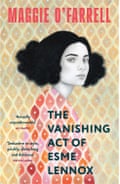
3 The Vanishing Act of Esme Lennox (2006)
Years before Hamnet, O’Farrell made a partial foray into historical fiction to captivating effect: this split time-frame novel of family secrets remains one of her most admired works. In the present day, Iris attempts to fathom the fate of her great-aunt Esme, who disappeared from record as a young woman in Edinburgh; she could ask her grandmother Kitty, Esme’s sister, if Kitty’s grasp on reality hadn’t been unmoored by Alzheimer’s disease. The picture that emerges from Iris’s stalwart research is a disturbing one: Esme hasn’t taken flight, but was in fact committed to a psychiatric unit 60 years previously for entirely dubious and non-psychiatric reasons.
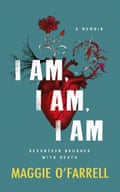
2 I Am, I Am, I Am: Seventeen Brushes With Death (2017)
Some of the encounters detailed in this gripping memoir may seem closer than others to bringing the author’s life to a premature end: the childhood contraction of encephalitis, which left her with permanent neurological issues, is more profoundly altering than the terror she felt as a guinea pig for a stage knife-thrower. But each of these experiences sharpened O’Farrell’s understanding of the precarity and strangeness of human mortality, and they are recounted with a kind of astonishment at her own survival. Most serious and moving of all is the book’s final essay, an account of her daughter’s daily battle with a life-threatening immunological condition, which transforms the world into a landscape of potentially catastrophic threats.
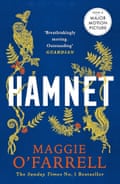
1 Hamnet (2020)
Even before Chloé Zhao, Jessie Buckley and Paul Mescal brought Hamnet to a screen near you, O’Farrell’s eighth novel was a huge success story, winning the Women’s prize for fiction and expanding her already significant readership. There was the premise, of course: fictionalising the death of William Shakespeare’s 11-year-old son Hamnet in 1596 was an eye-catchingly bold move, but O’Farrell then de-centred the playwright, focusing instead on his wife, Agnes, and setting the novel not in London but in Stratford-upon-Avon. It is there that her act of imaginative reclamation takes place, as we see Agnes – not, as she became, the sidelined Anne Hathaway of history – as a practised and skilful herbalist, and follow her into the agonising throes of grief.