1 month ago
40
1 month ago
40
A Labour minister was provided with intelligence files gathered on journalists investigating the thinktank that helped propel Keir Starmer to power, the Guardian has learned.
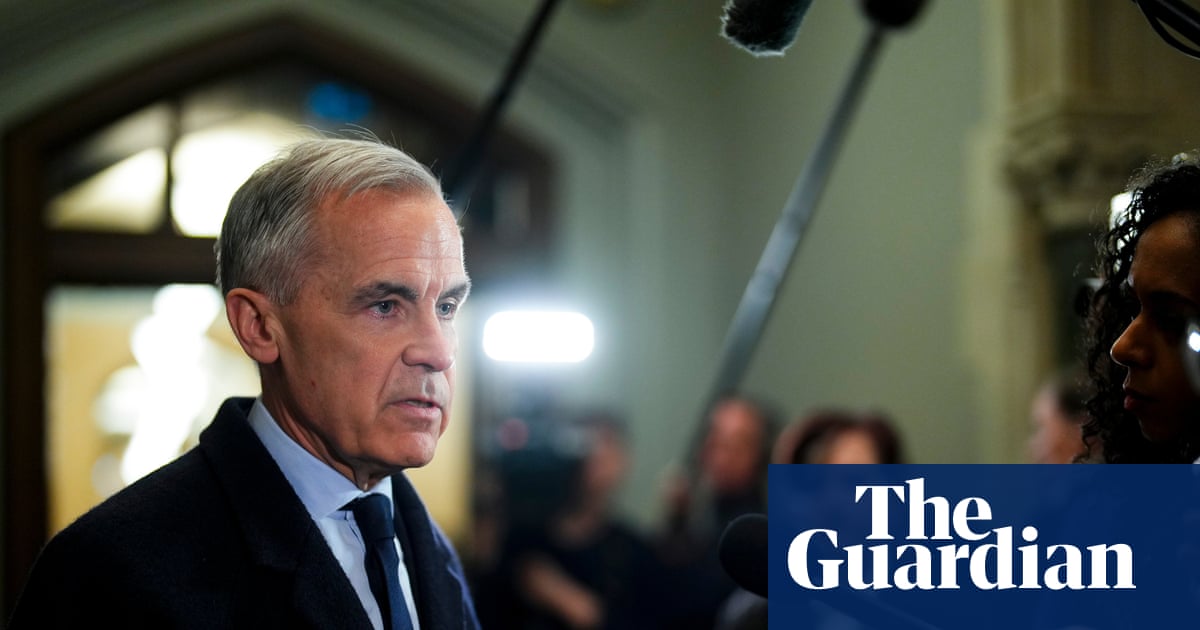
The documents were personally given to Josh Simons, now a minister in the Cabinet Office, when he was chair of Labour Together, according to sources.
Simons is close to the prime minister’s chief of staff, Morgan McSweeney, who had previously run Labour Together and whose own role in the operation to gather material on journalists is under scrutiny.
The files contained reports produced by the PR firm APCO Worldwide on journalists at outlets including the Guardian and the Sunday Times who had reported on irregularities in the thinktank’s funding. APCO also sought to identify the journalists’ sources.
Simons received a briefing from APCO on its final report, sources said, which included findings drawn from examination of the journalists who had investigated Labour Together.
The disclosures about Simons’ personal knowledge of the private investigation present another major challenge to Starmer and McSweeney, his most senior aide, after a week in which both have faced calls for their resignation over Peter Mandelson’s links to Jeffrey Epstein.
Under McSweeney, Labour Together played a key role in Starmer’s victory in the battle to succeed Jeremy Corbyn and remained closely allied to the Labour leader after Simons took charge.
APCO’s work to investigate the journalists was first reported by the Substack publication Democracy for Sale. Downing Street has refused to say whether McSweeney also knew about the hiring of APCO.
Two sources told the Guardian he was intimately involved with the strategy of the organisation even after leaving. One said: “There was never any distance between Labour Together and Morgan, even after he left.”
Earlier on Friday, there were calls from Labour MPs for an investigation and a “clearout” in Downing Street after news of the thinktank’s relationship with APCO emerged. The former shadow chancellor John McDonnell called the investigation into journalists “truly shocking” in a letter to Hollie Ridley, the Labour party’s general secretary.
McDonnell said: “If the reports of [Labour Together’s] activities in surveilling journalists are accurate it is clear that this organisation and its operators and controllers are bringing our party into disrepute.”
The Labour MP Kim Johnson said that “what’s been exposed shows McSweeney’s operation is rotten to the core”. She added: “We’re told the adults are in the room. If this is their idea of leadership, No 10 needs gutting from top to bottom.”
Questions over Labour Together’s funding first emerged in February 2021 after its interim leadership reported itself to the Electoral Commission for the late reporting of £740,000 in donations. The thinktank was later fined £14,250 in September 2021.
In November 2023, the Sunday Times published an investigation that alleged it was McSweeney who had failed to declare the donations between 2017 and 2020. The undeclared money is said to have paid for polling and campaigning that supported Starmer’s rise to the Labour leadership. McSweeney did not comment on the allegation.
McSweeney formally left Labour Together in April 2020 when he became Starmer’s chief of staff upon his election as party leader. Sources close to McSweeney said he had not taken the decision to hire APCO and it was a matter for Labour Together.
By the time of the Sunday Times investigation, Labour Together was being led by Simons. APCO was commissioned following concerns at the thinktank that the information published had been derived from a potential data breach, a source told the Guardian.
Internal reports prepared by APCO for Labour Together named the Sunday Times journalists Gabriel Pogrund and Harry Yorke, as well as the Guardian’s Henry Dyer, Declassified UK’s John McEvoy and journalists from other outlets as “significant persons of interest”. It sought to “identify the source of the information and to ascertain what additional information could be published” by journalists about Labour Together.
APCO’s research included an examination of stories and social media posts written by the journalists. The work was led at APCO by Tom Harper, a former journalist at the Sunday Times. Harper provided briefings to Simons, sources have told the Guardian.
Democracy for Sale has alleged Labour Together paid the PR firm at least £30,000 to identify the source of stories about its funding.
The briefings supplied to the thinktank by APCO claim that one possible source of the Sunday Times story was a Russian or Chinese hack of the Electoral Commission.
Simons’s receipt of APCO’s research – which focused on the work of journalists carrying out public interest investigations into the finances of the thinktank that he led – has raised questions about his role as a Cabinet Office minister.
Labour Together did not comment. One person who has previously worked with the group called the decision to hire investigators “bizarre”, adding: “I’ve never come across anything like it in my political life.” Another said it was “weird”.
One Labour MP said: “If the prime minister wants to regain the support of the parliamentary Labour party, he has got to get Morgan the hell out of the party. Otherwise he will end up bringing it into disrepute.”
Simons and Harper did not respond to a request for comment.
Contact us about this story
Show
The best public interest journalism relies on first-hand accounts from people in the know.
If you have something to share on this subject, you can contact us confidentially using the following methods.
Secure Messaging in the Guardian app
The Guardian app has a tool to send tips about stories. Messages are end to end encrypted and concealed within the routine activity that every Guardian mobile app performs. This prevents an observer from knowing that you are communicating with us at all, let alone what is being said.
If you don't already have the Guardian app, download it (iOS/Android) and go to the menu. Select ‘Secure Messaging’.
SecureDrop, instant messengers, email, telephone and post
If you can safely use the Tor network without being observed or monitored, you can send messages and documents to the Guardian via our SecureDrop platform.
Finally, our guide at theguardian.com/tips lists several ways to contact us securely, and discusses the pros and cons of each.
Illustration: Guardian Design / Rich Cousins