 3 hours ago
7
3 hours ago
7
The first time we see Martin and Leslie, the elderly couple at the centre of Lance Hammer’s wrenching new film, Queen at Sea, they are walking together up a set of stone steps: one of their regular outings, we assume, in days filled with pottering and quiet companionship. They have their backs to us, and we can’t see their destination beyond a bleached sky that fills the top half of the screen. Symbolically, it may be deemed a bit on the nose: two people near the end of their lives, moving gently towards the white light of oblivion. There’s a whiff of sentimentality about it.
But any doubts about this story’s willingness to confront difficult truths are blasted away by the next scene. Leslie’s daughter, Amanda, played by Juliette Binoche, pays a visit to the couple’s house in drizzly, middle-class north London, her teenage daughter in tow. Unable to find her mother and stepfather, she arrives at the bedroom door. Opening it, she finds Martin (Tom Courtenay) on top of Leslie (Anna Calder-Marshall), who lies impassively beneath him, the mask of dementia obvious on her face.
Mortified and angry – she’s told him before that their sexual relationship should stop – Amanda calls the police, unleashing a series of upheavals that make for often excruciating viewing. No one in their right mind would countenance the possibility of ongoing, nonconsensual sex. But neither would anyone look approvingly on the cold, hard edge of officialdom as it slices through the family’s status quo, leaving Leslie confused and frightened. As we see her disoriented by physical separation from her partner and learn more about their relationship, the audience is forced to hover between two contradictory perspectives. It’s a deeply uncomfortable experience.
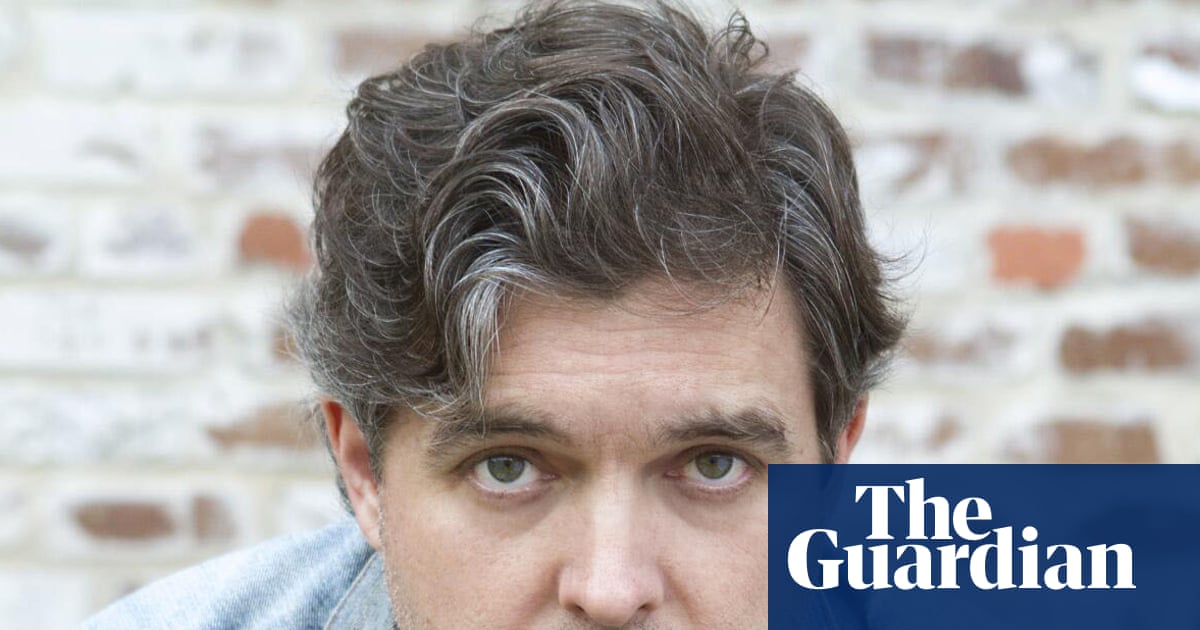
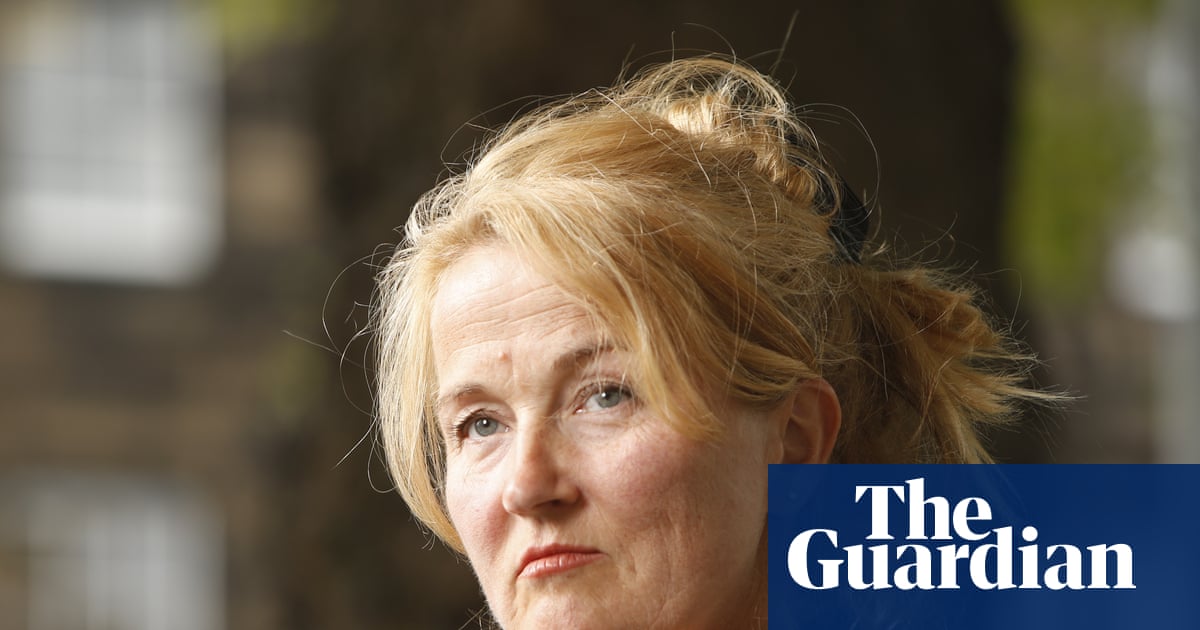
Ambiguity, however painful, is exactly what the film’s director was aiming for. “We weren’t trying to convey a moral position,” says Hammer. “We were trying to say that this is a story with a lot of confusing parts, and we want you to experience it and come to your own conclusions.” Hammer is briefly in London on his way to the Edinburgh International film festival, having landed from LA the night before, and we meet in the mercifully cool Curzon offices on one of the hottest days of the year. The 59-year-old, who trained as an architect and had a career as an art director on big-budget movies, is thoughtful and reserved (“it’s very alien to me”, he says of the process of promoting the film, his first in 18 years), but he’s adamant that the narrative shouldn’t come down clearly on either side. “I just don’t think that’s my role as an artist. My job is to question things, to present something that’s complicated and let the viewer consider it more deeply than they would have.”
He does, however, have strong personal feelings about the central dilemma: “I think Amanda’s absolutely right to bring in the institutions. But she doesn’t know what she’s getting into, because how can you?” Has Martin committed a crime, in his view? “Martin loves Leslie, and he’s a human being so maybe he’s living in denial, or he hasn’t been able to see the steps of erosion [of her mental capacity] because he’s so in it. You know, it’s like boiling a frog; he may not fully understand the peril she’s in, and what consent means any more. He’s just operating the way they always have their whole life, and they’ve loved each other deeply.”
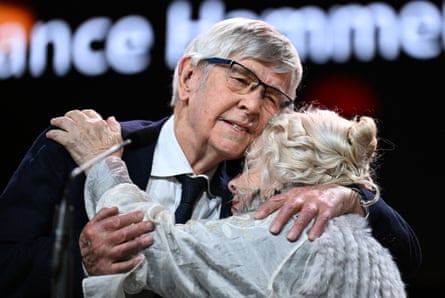
That love is powerfully expressed in Courtenay and Calder-Marshall’s remarkable performances, for which they joint-won a Silver Bear at this year’s Berlinale film festival: her portrayal of the particular bewilderment of dementia will be recognisable to anyone who has seen it in a loved one. Their own bond lends emotional depth to the dynamic – this is the first time they’ve worked with one another since playing Hamlet and Ophelia in 1968. Though they had fallen out of contact for decades, “their souls are entwined in some way”, Hammer says, and it seems real rather than mawkish. “When I was casting Annie, I had a list of people I didn’t know, so I asked Tom because he’s worked with everybody. When he got to Annie’s name, he said: ‘Annie! It has to be Annie. Cast her right now.’” Together, they convey an intimacy borne of a bone-deep understanding, which extends to even minute gestures and changes in expression.
The difficulty comes as that understanding begins to crumble, unevenly and unpredictably. “If there’s any chance at all that you could be putting her in danger and she can’t communicate it, then you just have to stop the action,” says Hammer. But as the fallout from Martin’s behaviour and Amanda’s call continues, the characters grapple with a cascade of problems: whether or not to place Leslie in a care home, how to protect her once she’s there, whether to sell houses, change jobs, upend their lives. These are choices many will recognise from first-hand experience, but not, strangely enough, Hammer. Neither of his parents have dementia. “This isn’t from my own life,” he said in an interview earlier this year. “It’s just a moral dilemma that riveted me.”
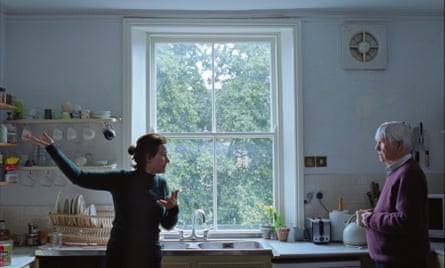
That’s not the case with Binoche. On the phone from Paris, where she’s shooting a film with Turkish director Berkun Oya, she tells me she has a parent with “a sort of dementia, not exactly Alzheimer’s”, and has herself been trapped in the classic pincer movement between the demands of one generation and another. “I remember one time I stood up in the middle of the night thinking: how am I going to deal with this?” she says. “One is going to the tomb, and the other one is [experiencing] all the teenage needs, feelings and emotions. I felt caught in a situation I had no control of.
“I admire people who stop everything and take care of their parents if they can. The thing is, usually we cannot because we’ve got to work, we have kids, we’ve got to run, and so we’re taken aback by the changing needs of older people. Suddenly, you realise you’ve got to submit yourself to a system that is not made for human beings.”
Binoche’s view of the sexual question at the heart of the film is also subtly different from Hammer’s. “I mean, Lance answers yes: it was wrong. You know, he’s very clear about that. Me personally, it’s very difficult because you feel they’re a couple, and also because she initiates those needs.” (Later in the film, we discover that Leslie often solicits sexual contact.) “I would say, like Lance, you have to protect somebody who’s not fully himself or herself. At the same time, you wonder [about it]. And that’s what the film is doing.”
So what does the law actually say? In England and Wales, the Sexual Offences Act of 2003 makes sexual activity illegal if someone is “unable to refuse because of or for a reason related to a mental disorder” – which includes dementia – and if the healthy partner could be expected to know this. The capacity to choose whether to agree to sex can ebb and flow in someone with dementia – a diagnosis doesn’t by itself mean they cannot consent, and guidance suggests that the consent doesn’t have to be verbal. According to Dementia UK: “If the person living with dementia responds positively and with obvious enjoyment when their partner makes sexual advances, there is every reason to believe they are consenting to sex. Alternatively, if their responsiveness, enjoyment or willingness diminishes, this could be an indication that they do not consent to sex, and this should be respected.”
All of which is easy enough to put down in writing, but seems impossibly difficult to adjudicate in practice. And while Alex Ruck Keene, a barrister specialising in mental capacity, agrees that dementia doesn’t automatically mean sex can’t be consensual, “if you simply don’t have the ability to understand what a sexual act is, then it’s completely irrelevant that you appear to be enjoying it”.
He continues: “For a long period of time it has been recognised that the law is really not satisfactory, because you’ve got two totally competing policy objectives. One is: consent must mean consent. I mean, we fought for that for years.” The other is to avoid interfering in lawful sexual expression. In the kind of case presented in the film, “if it doesn’t appear to be that the husband is taking advantage of the wife, if it appears to be mutually pleasurable with no power imbalance, it feels weird to then say: ‘Well, the husband’s doing something wrong.’” In practice, where there is a complaint by a family member, the police may find it impossible to gather reliable evidence of an offence, making prosecution difficult. A local authority may, however, determine that safeguards – for example, stopping unsupervised contact – need to be put in place.
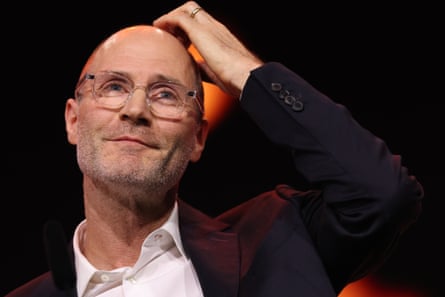
For Hammer, getting the procedural stuff right was vital, but the process was thrown into confusion when funding fell through, and a movie originally set in the US had to be reworked for Europe. “I researched it for a US scenario,” he says. “But when we got to the UK, the institutional response is different.” He leaned heavily on experts to help fine-tune the script – so much so that some ended up acting in the film. “They were brought on as consultants for research, and so I talked through the scenes with them. We’d sit down in the workshop space and say: ‘OK, here’s the way the scene’s written. Is this accurate?’ And they’d say: ‘No, it would be like this.’”
He was particularly keen to capture the officialese used by police, sexual assault referral centre staff and social workers, and which marks such a stark contrast with the family environment. “I wanted their language,” he says. “It’s a very specific idiom and so I needed that from them, because I can’t write it. I also knew I secretly wanted to cast them if they seemed like they could do it, and so I did.” Marie-Elle Vooijs plays a sexual assault clinician, her real job; likewise social worker Jean Pemberton. “It took a little persuading, but they all wanted to [play these roles] in the end.”
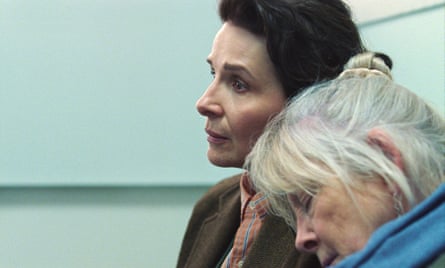
For Hammer, making Queen at Sea – for which he won the 2026 Berlinale’s Silver Bear jury prize – has been a long, slow process, but one he felt compelled to see through. This is his first film since 2008, when his debut, Ballast, won the directing award at Sundance. Why has there been such a huge gap between projects? (He tells me he’s supported himself in the meantime by making investments and doing the occasional architectural project.) “It was just hard to find films to make that I cared about, and that I can also make a living doing. I stopped because it was not possible.” Does he have any qualms about returning with such a painful story? “When this subject came up, I realised it was dark and bleak, but there’s meaning in it because a lot of people are experiencing this.”
It’s an understatement to say that the end of the film doesn’t offer audiences much in the way of solace. But Hammer is unapologetic. “When you make a choice to pursue a subject, you’re limited by it, and this is the subject. I didn’t want to make it sentimental and heartwarming because that’s not truthful, and with a lot of films about dementia that’s the tactic,” he says. “So then the question is: can I make the most truthful thing that’s possible, and with the most beauty, the beauty [coming from] true loving relationships and compassion for the characters? That’s the goal. If you can manage that, you can make a film that’s maybe worth watching.”