 8 hours ago
16
8 hours ago
16
Every spring, billions of flies commute thousands of miles in a huge web around the world. They may begin life in Iran and then spend the rest of it in the UK. They may hatch in India but undertake seasonal migrations to the fertile regions of Mongolia, China and Siberia.
Most of us assume that bees carry out pollination. But look closely at the creatures flitting around our gardens and parks, and you will see that many of those “bees” aren’t bees at all. They fly differently, sound different and, indeed, on closer inspection, look a bit different.
They are often bee-mimicking hoverflies, one of the 108 families of flies found in the British Isles. Now that we have at least some proper research, we’ve found that more than half of those families have pollinator species in them. Even the biting midges (Ceratopogonidae) have species that might get a bit more respect if only people knew they pollinated the plant from which their beloved chocolate is made.
The charismatic adult hoverflies may be some of our most important pollinators, but their larvae have jobs too. You might not see them, but they work away, camouflaged – some resemble bird droppings – busily recycling organic waste or predating species that eat our flowers and crops.
And therein lies the true ecological beauty of flies: the ways in which, throughout their life cycles, they interact deeply with the environment. I know most people think of the fly as a creature that loves faeces and filth, or that spreads terrible diseases. And I can’t lie: a very few species do. But do we tar all mammals with the same brush just because one mammal – humans – inflicts such damage to our world? Of course not. So maybe it’s time we gave the other species of flies a chance.
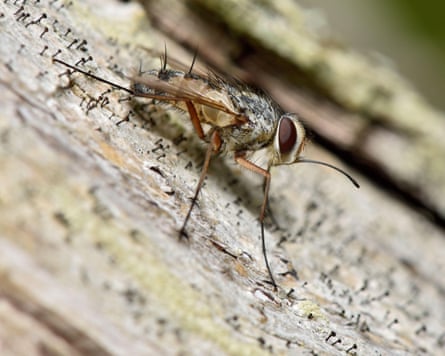
Take the punk flies (Tachinidae) – the name hints at their appearance – whose larvae eat lots of creatures that blight our landscape, such as the oak processionary moth (Thaumetopoea processionea). This species of moth only arrived in 2006, but its caterpillars rapidly started making a nuisance of themselves, stripping oaks of their leaves. Their needle-thin defensive hairs also easily snap off these marauding munching machines, floating on the wind and causing rashes, conjunctivitis and, in severe cases, anaphylaxis. Never fear, though, for the punk fly larvae love eating them.
after newsletter promotion
This isn’t the only example of its kind. In the US, fire ants, having hitched on a boat from South America, have flourished away from their natural predators, causing havoc among native populations – and their venom is toxic to humans. But one of their natural predators, a species of ant-decapitating Phoridae, has been shipped over and deployed to great effect. These flies are very species-specific, leaving all the native species alone. Incidentally, the Phoridae and punk fly families contain some fantastic-looking species – the former having some incredibly rotund, hairy species that look like small, flying hedgehogs, the latter including a species named after Arnold Schwarzenegger because of its bulging legs – if somewhat smaller than its namesake at a third of a millimetre in length.
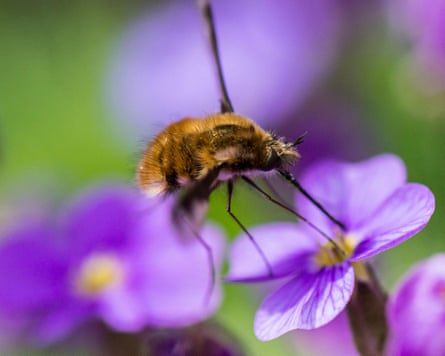
The same good looks apply to the bee flies (Bombyliidae). I have yet to meet someone who, when first discovering one of the more hirsute species, has not let out a small squeak of pleasure. Again, the adults will be playing their part in pollinating flowers, while the larvae feast on other immature insects. Before you condemn them as parasites, consider that they are a natural part of the food web, and their presence indicates a healthy host population and a balanced system.
Flies can look hairy, or metallic, have eyes on the end of stalks, or paddles on their legs, or even have no wings at all – but they are all something worthy of more consideration. The world would be a duller and smellier place without them.
-
It’s invertebrate of the year! Vote for your favourite invertebrate here