
 7 hours ago
18
7 hours ago
18
When Natalia Osipova started rehearsals for her first ever play, it didn’t go well. “I cry. I’m shaking. I’m stressed and completely lost on the first day,” she reports. “I think, ‘I’m a piece of shit!’ I want to take a taxi and run away.”
It’s the second week of rehearsals when we meet, and Osipova is still here. The Royal Ballet principal plays a Russian ballerina from a previous age: Lydia Lopokova, who danced with Diaghilev’s Ballets Russes, then in 1925 unexpectedly married British economist John Maynard Keynes, who is the protagonist of James Graham’s The Standard of Living – a play about, among other things, taking risks and imagining a brave new future.
Acting is central to ballet’s appeal for Osipova. “Maybe I’ll never be super perfect for classical ballet because I love stories so much,” she says. Even so, she demurred when former colleague Edward Watson suggested she audition. “You’re stupid!” was his retort. “You need to try because it’s amazing opportunity.”
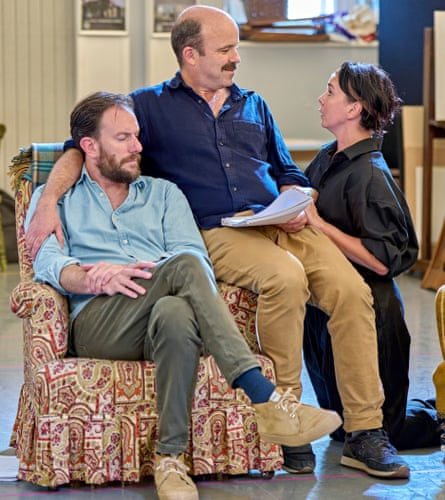
A delicate silver necklace shines beneath frank brown eyes. Osipova requested a translator in our previous interviews, but today speaks in an idiosyncratic gallop not unlike Lopokova’s own. Entering Nicholas Hytner’s rehearsal room, joining a classy cast led by Rory Kinnear, she felt like Lydia among Keynes’s sneery Bloomsbury friends. “I left rehearsal and cried,” she says, “because I feel, ‘Oh my god, I’m so bad.’ But you learn and listen and every day, step by step, I do better.”
Working with text for the first time, especially in her second language, is, she confirms, “a whole new world”. She drafted in her husband, dancer Jason Kittelberger, to run through lines at midnight. “Dance is my world,” she says. “I’ve danced since 17, I’m 40 now. It’s my life.” But gradually, she found that the fundamental goal in theatre was the same. “You’re learning your material, you try to understand what’s important. With your partner, you start to play. You listen, you reply, and this is like life.”
Graham is also in rehearsal, continually adjusting the script. His play is attentive to Lydia’s physicality: dance solos mark the scene changes, while a frequent stage direction for Lydia is “she stomps”. Osipova delights in making him laugh – they have just rehearsed Lydia’s first entrance, swearing fearsomely in Russian – and she feels kinship with her character.

Lopokova, says Osipova, “is not famous and popular in Russia” – her choreographer brother, Fedor Lopukhov, is better remembered. “She was two years in the Mariinsky, and after migrating with Diaghilev for his Russian season, she didn’t really come back.”
She was reportedly strong in drama, irresistible in comedy. “She had a beautiful, huge jump,” Osipova says. “That I have too!” Keynes was her second husband and, to everyone’s surprise, the real thing. Each altered key parts of their identities: Maynard as a man who slept with men (keeping meticulous records of his encounters), Lydia as a feted dancer. “She changed her life to be with him,” Osipova says.
She describes Keynes as “a man like a mountain, to hug her and give her everything. She for him and he for her.” Keynes’s Bloomsbury chums were less appreciative. “She was a clever woman with ambition,” Osipova argues, bridling at their jeers. In the play, she is called “that flat-footed, frivolous foghorn of a chorus girl!” Osipova grimaces. “I’m always upset when I hear somebody say that about dancers. It gives me pain because I feel dancers have such a special soul. It’s a different brain.”
She’d already researched Bloomsbury for her searing Virginia Woolf in Wayne McGregor’s Woolf Works earlier this year. When she was listening in the wings to Gillian Anderson’s voiceover, reading Woolf’s suicide note, “I started to have a huge panic attack”, Osipova says. “It’s emotional, the way she finally melts and dies. It’s more than dance, so much more.”
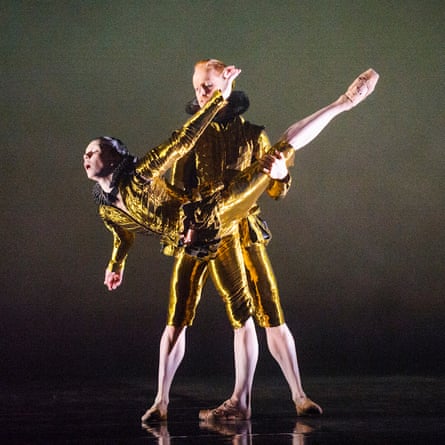
“Russian women are very open,” Osipova muses. “We’re not liars. We don’t try to be, ‘I’m cool, I’m nice.’” Lopokova’s Russian identity was crucial to her, yet she never saw her homeland after 1936. In our tumultuous times, can Osipova imagine a homecoming for herself? “I really want, but I don’t think so,” she says. “My husband is American and we have life there – but I want to visit [Russia] because it’s my home, my family, my theatre, my friends. It’s my everything.”
Osipova was originally due to duck out of the play to dance Kenneth MacMillan’s tragic heroine Manon, but now won’t do the ballet. She has already retreated from other signature roles, looking beyond Don Quixote and other bravura ballets which made her name – which she delightfully calls her “bravo repertoire”.
“I’m a person who is bored doing things again and again,” she says. “That was part of my life – I do it well and amazing, and I never want to come back to it.” Instead, her repertoire includes contemporary pieces and bespoke commissions – and now theatre. “If I don’t do something new, I feel like I’m dying,” she declares. “I can’t breathe. Why do you live if you’re not learning something new?”