 3 hours ago
11
3 hours ago
11
Earth is a single woman with a lot to give; Humanity is a charismatic bad boy who turns out to be an inveterate taker. Their toxic relationship is told in Hot Mess, a musical created by Jack Godfrey and Ellie Coote, which works both as an eccentric romcom with broad commercial appeal and a serious analogy for our abuse of the once fecund, now depleted planet. A hot ticket at the Edinburgh fringe last summer and now on in London, it is at the vanguard of a newly blooming genre of musicals about the environmental crisis.
The RSC’s The Boy Who Harnessed the Wind uses exuberant song and dance for the true story of a teenager who builds a wind turbine from an old bicycle in drought-ridden Malawi. Bryony Kimmings’ Bog Witch is a one-woman show with music and standup about the plight of the planet, while in New York the folk-pop musical Dear Everything was a response to climate emergency co-written by V (formerly Eve Ensler) and narrated by Jane Fonda. Meanwhile, in the West End hit Hadestown, hell is strewn with empty oil drums.
It is exciting that there are more writers tackling the topic, says Coote, who adds that concern about the climate “is so prevalent that it would be wild if artforms were not engaging with it, actually”.
Significantly, these shows chime with the post-pandemic yearning for feelgood stories about pulling through together and being more responsible in relationship to the Earth. If that sounds worthy, Coote and Godfrey went through a six-year process to make sure their musical swerved any clunky polemic or leadenness of tone. “We are both passionate about the climate crisis and we had been talking about wanting to write something about this issue,” says Godfrey. “But how do you do that in a way that is entertaining and can give people the full musical theatre experience without being too doom-and-gloom or lecturing?”
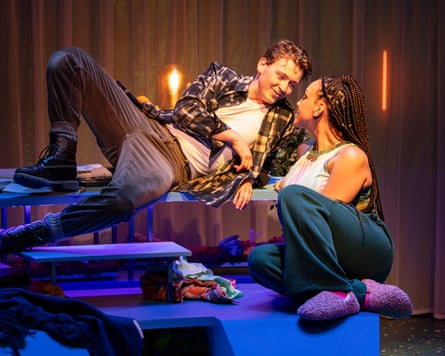
Initially, the show was much more tonally serious but that changed in its early development phase. “If off the bat you are putting into people’s minds that this is about the climate crisis, you get the sense of audiences not fully leaning in because you’re sitting in too much of a cerebral place. So when we came to write the version for the [Edinburgh] fringe, one of our big notes to ourselves was: ‘How can we disarm an audience such that they’re engaging with the story emotionally and comedically so that all of those themes can be discovered more organically?’” says Coote.
Finlay Carroll, who is the assistant producer of Hot Mess, has set up a production company, Pollinate, dedicated to staging climate musicals. He does not see any conflict between the potentially dark subject matter and the inherently uplifting energy of the form. “Entertainment and serious topics are not mutually exclusive … Musicals have always dealt with big and complex topics as well. There’s a huge amount of tragedy and trauma in Les Misérables.”
What’s key is emotional investment, says Godfrey, which in the case of this musical was combined with humour. As a lyricist, Godfrey liked the challenge of writing witty songs with double meanings that refer to environmental science as well as sex and love: “In order to get people to care about something, you don’t tell them: ‘You must care.’ You give them a reason to invest. For us, that’s often finding the humour in something and the relatability. Everyone’s been on a bad date or had the feeling that they’re never going to find The One.”
While plays about the climate often revolve around downbeat or dystopian scenarios, the musical as a form is hopeful, suggests Luke Howarth. He is co-writer and director of Acid’s Reign, a drag musical running at the Edinburgh fringe this summer.
Such plays are “often post-apocalyptic – the terrible thing has happened. I think there’s a resignation to that,” he says. “We’ve written the apocalypse many times but what we need to write instead is something that’s an alternative.”
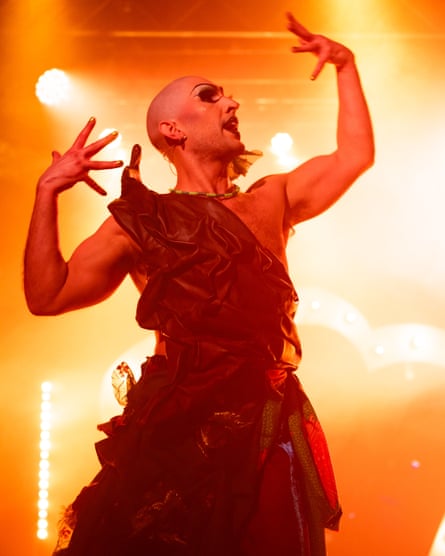
The musical form encourages the idea that change is possible, Carroll concurs. “So it’s a question of how to imagine new futures related to the climate that are thriving and that are abundant. Because ultimately we need to see those futures on stage before we can create them in our own lives.”
Acid’s Reign attempts to do that. A blend of song, glitter and queer energy, it is a cabaret starring Victoria Scone (from RuPaul’s Drag Race UK) and Gigi Zahir (a support act for Chappell Roan), with a plot revolving around a drag super-group that sings about the climate crisis but faces a moral dilemma when the prospect of commercial success requires a dilution of their message.
Historically, there has been a perception of climate activists and environmentalists wanting to call time on the party, says Howarth, but the aim for this musical was to create something radically joyful. “To my mind, cabaret and drag, in its DNA, is about irreverence and a playful interrogation of power structures. So lip-syncing is about bringing other voices into the space, reframing them, and allowing us to laugh at things that take themselves very seriously. I have, for a long time, been so passionate about comedy and especially cabaret’s ability to do that, to do something very serious, in a very fun way.”
Where these musicals might be charged with diluting the message, or making light of climate crisis, Howarth feels strongly that this is not the case. There is far greater inclusivity with a musical because of their popular reach, he thinks. “Often the very earnest, two-hour diatribe has an element of privilege. Audiences who are going to see them have to have the emotional capacity and willingness to sit through theatre as medicine.”
Is a call for climate action or activism built into such musicals? Lucy Stone is the founder and executive director of the collective Climate Spring, which this year launched an inaugural Climate theatre prize for plays (excluding musicals), created to inspire and support more playwrights to tackle the subject. Stone says there is interesting scientific research into audiences watching live shows together, which might encourage a sense of collective action. “The audience begins to sync, including heart rates, so there’s shared energy in the room … One play creating social change is a big ask, but what are they adding up to collectively? We’ve seen through history that our stories can shift social norms, so what is socially acceptable, what is collectively taboo, what is collectively seen as OK … We hope this will shift the way people feel and in turn lead to change.”
Carroll also believes that some shows will galvanise audiences. But just providing an emotional outlet may also be enough. Drawing on his own experience of watching Jonathan Larson’s musical Rent, about young New York artists living in the shadow of the HIV/Aids crisis, he reflects: “Listening to the soundtrack allowed me to place myself within that history. I didn’t go away and do anything differently, that I can pinpoint, but the knowledge, awareness and especially the ability to emotionally comprehend an issue can be transformative in itself.”