3 hours ago
1
3 hours ago
1
We often hear about the damaging impact of social media on pop, from toxic fan culture to the way online gossip reduces lyrics to a treasure hunt for details about artists’ private lives. But it’s also worth noting its positive effects: how TikTok users can make improbable tracks from pop history go viral; how social media can transform the fortunes of an artist who probably wouldn’t have got past a record company’s reception in our current, risk-averse era.
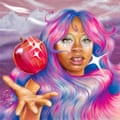
Which brings us to North Carolina’s Isimeme Udu, better known as Hemlocke Springs, who rose to fame posting homemade videos of her songs on TikTok. There’s always a chance that a label might have gone all in on a bespectacled 27-year-old former librarian fond of neon-coloured wigs, purveying “awkward Black girl anthems” via a lo-fi take on 80s-influenced synth pop, but you wouldn’t bet on it. Self-released, her tracks have racked up millions of streams and attracted the attention of Doja Cat and Chappell Roan, both of whom took her on tour: cue a video of Springs supporting Roan at New York’s Forest Hills stadium last autumn, performing Girlfriend while most of the 13,000-capacity audience sings along.
It’s a heartwarming success story – a DIY artist succeeding thanks to geeky, home-brewed originality and the maddening catchiness of her melodies – or at least it is up to a point. Online virality tends to be predicated on novelty, and it’s in the nature of novelty to wear off. The obvious question that hangs over Springs’ debut album is whether it can translate one form of success into another, more familiar and lasting. But The Apple Tree Under the Sea suggests that straightforward mainstream success isn’t what Hemlocke Springs wants.
Like her previous singles, the album is self-released (via label services company Awal). You can tell. Were a major label involved, one suspects they might have steered her towards something less idiosyncratic. Something closer in tone, perhaps, to the tracks that got her noticed, than this concept album about her upbringing as the child of devoutly Christian Nigerian parents, replete with songs decrying their homeland’s deeply rooted cultural practice of arranged marriage (“I would rather kill myself than look him in the eyes and say I want your love,” she sings on w-w-w-w-w), or which invoke God using the ancient Hebrew name El Shaddai. They would probably have ensured more familiar names appeared in the songwriting credits – the album is a collaboration between Springs and Burns, an English EDM producer best known for cowriting a handful of tracks on Lady Gaga’s Chromatica – and might well have done their best to smooth out the album’s sound into something more homogenous.
As it is, you lurch from brash electronics to pop-dance to 80s metal guitars to music that, with its massed staccato vocals, has something of the show tune about it; from a piano ballad and pizzicato strings to music that variously recalls Prince, Stevie Nicks and Britney Spears. All these variations take place in the space of three songs.
There are points where this fidgety, swipe-right eclecticism can get a bit exhausting, compounded by the apparently infinite malleability of Springs’ voice, which can go from raw and apparently untutored to mannered and carefully enunciated in the blink of an eye. But equally, there are points where it works to head-spinning effect, as on Sever the Blight – where a Kate Bush-evoking intro gives way to a burst of dramatic film-soundtrack synths, which are replaced by crisp electronic pop – or Moses, which shifts from a gospel-ish choir to an ominous bass tone to a fantastic pop chorus. The latter feels key: even at its most scattered, the music here is invariably tethered to precisely the kind of well-crafted earworms that marked out Springs’ online breakthrough. Meanwhile, the lyrics are never less than intriguing. “I wonder who’s walking around with fertiliser and amplifying all the tension in her head,” she sings on Head, Shoulders, Knees and Ankles, a line that she rhymes with “the tenebrous festered corners of your bed”.
The stuff that most resembles her breakthrough hits – such as a wonky take on something you could imagine the characters in Stranger Things jamming out to in their downtime – is all sequestered at the album’s end: in fairness, the whole thing is over in barely 30 minutes, but you still feel like you’ve travelled quite a long distance to get there. Again, a major label might have had something to say about structuring an album like that, and more fool them. Springs’ approach is appealingly assured: this is what I want to do, this is who I am, take it or leave it. It’s an approach that sometimes produces mainstream fame – you can see a similar intractability in Chappell Roan – but is more likely to result in cult success. And that, one suspects, is exactly the aim here, in which case: job done.
This week Alexis listened to
Sofia Kourtesis - Los Poemas No Siempre Riman
A perfect counterpart to the relentless grey misery of February: a house collaboration with Afro-Peruvian band Novalima that exudes warmth and joy without slipping into cliche.