 8 hours ago
17
8 hours ago
17
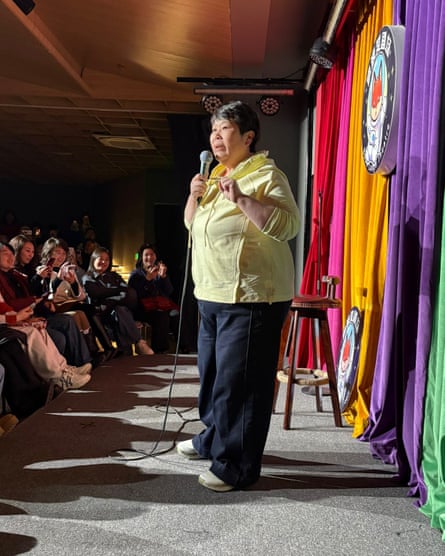
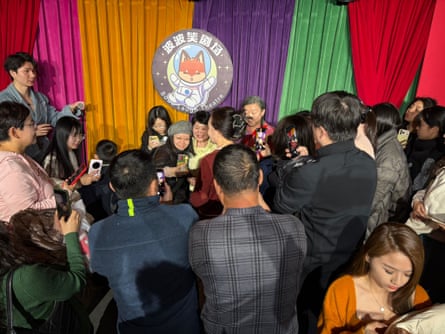
Packed into the upstairs theatre of a small performing arts space in east Beijing, more than 100 people, mostly women, are giddy with anticipation. “Who did you come to see?” asks the MC, fashionably dressed in a faded denim two-piece suit. The answer is bellowed in unison back to him: “Fang Zhuren!”
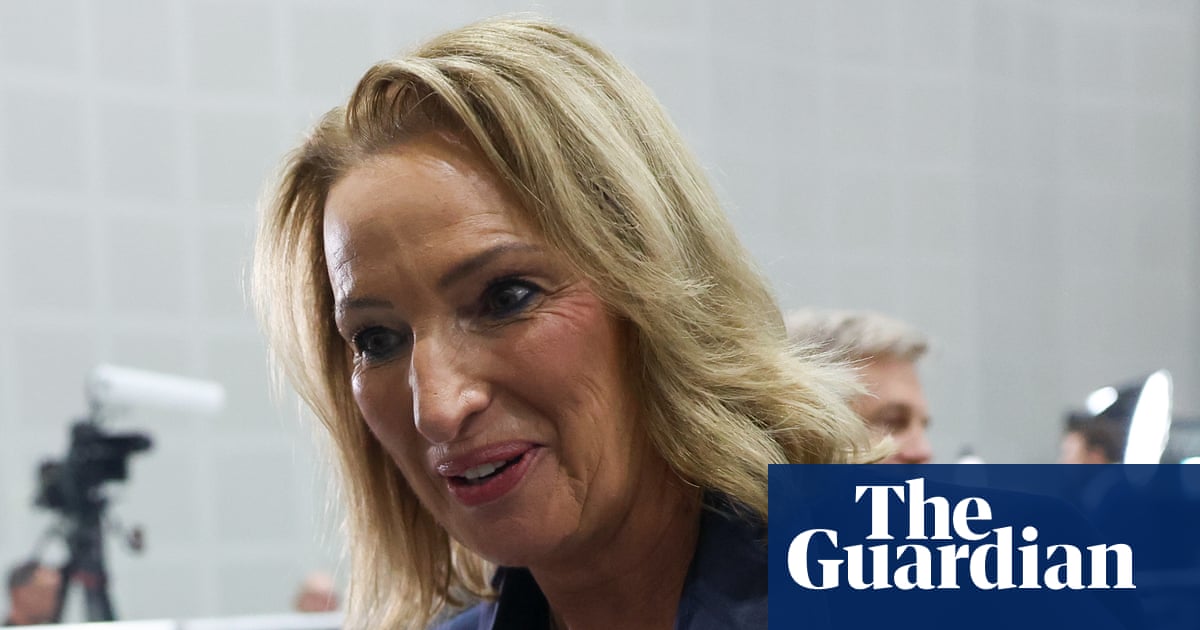
Fang Shaoli, AKA Director Fang (Fang Zhuren), has built a cult following in China in the past two years. Decidedly less fashionable than the evening’s host, Fang is dressed in a yellow hoodie and dark blue jeans. Her everywoman attire is part of the appeal. With a stout frame and short, sensible haircut, Fang, who was born in 1975, hails from rural part of east China’s Shandong province. Before discovering the art of standup comedy she worked in factories and on construction sites, but mainly lived as a housewife to a difficult husband. Her jokes riff on the deep sexism that permeates Chinese culture, particularly away from the big urban centres like Beijing and Shanghai.
Joking about her two daughters’ marriage prospects, Fang says: “If you don’t get married, then you won’t have to suffer the way I did.” Every joke prompts a ripple or a roar of appreciation from the crowd.
Fang’s success – she was a contestant on the hit reality television show The King of Comedy last year – comes as standup comedy as a genre has taken off in China. In the first half of 2025, the number of shows increased by more than 50% compared with 2024, while box office revenues increased by 135%.
There is a long history of comedy in China, from slapstick skits to cross-talk, a two-person performance based on rapid banter and wordplay. But the western style of observational wisecracks has only recently caught on in the mainstream. For women frustrated with everyday sexism, it has provided a useful release valve in a society where official censorship makes complaining openly fraught with difficulty.
“Women’s perspectives have long been overlooked, and now there’s finally space for them to really shine on stage,” says Su, 25, one of the throngs of people queueing to get a selfie with Fang after the show.
In a four-part series, the Guardian analysed the changing status of women across Chinese society. The series examines how women are responding to government restrictions and shifting social and economic conditions, in different aspects of their lives.
Navigating the minefield of political topics
Fang is one of several female comics to have emerged in recent years. There is also Wang Xiaoli, a 45-year-old woman from Chengdu who makes jokes about being single and childless.
Xi Ha, a former flight attendant, mocks the impractical dress codes for female flight attendants; some airlines have since abandoned the requirement for female staff to wear high heels.
Riffing on everyday observations about the hurdles faced by women, their jokes about daily life have resonated with millions of women across the country, from urban, educated millennials to frustrated rural housewives like Fang.
According to Rose Luqiu, a professor of journalism at Hong Kong Baptist University, standup comedy gives women a space to talk about certain topics that have become more sensitive in the past three years. “Nobody clearly talks about needing to be single, or not wanting to have a baby, but [female comedians] do have some narratives which echo the individualism or independence of women,” Luqiu says.
But although comedy can disguise social commentary as lighthearted jokes, sometimes the authorities have a sense of humour failure. Officials have warned comedians against stirring up discord between the genders “for the sake of being funny”.
In the run-up to International Women’s Day, amid a clean-up of online feminist content, a Uyghur standup comedian called Paziliyaer Paerhati, was banned from Weibo after posting a joke about having to cook for a fictional husband over lunar new year.
In 2024, the e-commerce giant JD.com dropped the popular female comedian Yang Li from an advertising campaign after a backlash from male customers who were outraged at one of her viral jokes about how men can “look so average, yet be so confident”.
And when it comes to explicitly political topics – or anything that criticises the state rather than social attitudes – comedians steer well clear.
Vickie Wang, a Taiwanese standup comedian who lived in Shanghai for nearly a decade, says that before she performed at her first open mic night in 2017, she was warned by the organisers not to joke about politics, LGBTQ+ issues or anything relating to Tibet, Taiwan or the 1989 Tiananmen Square massacre.
“There’s this understanding that you can’t talk politics, you can’t criticise the government. So instead of talking about systemic issues, you go very granular, you go very personal,” Wang says.
But the line of what is acceptable to censors shifts frequently. Wang, who left China in 2022, used to joke about dating. Now the government is sensitive about anything that might promote “gender antagonism”.
“In standup comedy in the west, the expectation is that you push the envelope”, Wang says. In China, it’s about telling jokes that resonate with your audience without attracting so much attention that the authorities scrutinise your jokes.
The need for Chinese performers to stay somewhat below the radar to avoid censorship limits the reach of their message. But in small theatres across the country, female comics are subtly expanding the boundaries of public speech.
For Fang, the unexpected success of her comedy career has even brought her an unlikely fan: her ex-husband, who she supports with the earnings from her newfound fame.
“I used to rant about the world and my ex-husband to anyone who’d listen,” Fang says. “Now when I get attacked online, he secretly jumps in to help me fight the haters”.
Additional research by Lillian Yang