 5 hours ago
19
5 hours ago
19
Johnny Knoxville has declared that the fifth Jackass movie, Best and Last, will mark the end of the franchise, and the trailer suggests a victory lap celebrating 25 years of broken bones, injured genitals and general stupidity you shouldn’t try at home. There are new stunts, and conversations with the cast about growing old gracelessly as they enter their 50s, but the most striking thing is how much archive footage there is. And the cast have not been hiding in interviews that it will be heavy on scenes from prior movies.
In other words, it’s the cinematic equivalent of a greatest hits album that has a couple of new songs tossed on to entice fans to part with their money. Or a clip show episode of a US sitcom which is based on flashbacks to older episodes, created so that overworked writers can reach their network-mandated episode count. But in the age of YouTube and streaming, when you can watch many a fan-edited Jackass compilation featuring the same footage, it is asking a lot of audiences to leave their homes and part with their money to see it.
Reviews by attendees of fan screenings on Letterboxd suggest a greater reliance on old footage than new, and with filming only beginning in February 2026 (a month after the film was announced), a cynic could say the bare minimum was slapped together to justify a theatrical release. In November 2025, Paramount announced it would be growing its 2026 release slate to a minimum of 15 movies, which meant it hastily needed to fast-track some productions to meet that goal. And since CEO David Ellison’s claim in May that its merger with Warner Bros could lead to an annual 30-film slate minimum, this may not be the last time we see a quickly produced film like this take flight.
This brand of compilation film isn’t a new Hollywood shortcut to increased productivity, however. Prior to the rise of VHS and Blockbuster, when thousands of titles became available to view at home, the only opportunities film fans had to see classic titles was to hope that they would be rerun on one of the few available TV stations, or that they’d have a theatrical rerelease. Hence the That’s Entertainment! compilation movies, in which stars of MGM’s famous musicals – from Gene Kelly and Fred Astaire to Frank Sinatra and Liza Minnelli – would introduce iconic scenes from the studio’s vault.
Reported as United Artists’ highest grossing film of 1974, That’s Entertainment! spawned sequels boasting lesser seen archival footage, as well as attempts by other studios to follow its formula with other genres. But a decade later, with video rentals and low-budget horror entering a boom period, a compilation such as 1984’s Terror in the Aisles felt immediately outdated. Even when presented by genre legends Donald Pleasence and Nancy Allen as an instruction manual on how to make an effective scary movie, this theatrical mixtape not only drained the tension out of every iconic moment it relitigated but felt unnecessary when a new tech boom was helping to make vintage titles more accessible anyway.
In 1994, a third That’s Entertainment! compilation was produced to mark MGM’s 70th anniversary although, by that point, the makers knew they couldn’t rely on the familiar contents of the archives, and relied instead on scrapped musical numbers, behind-the-scenes footage and outtakes. It’s a more rewarding curio for Old Hollywood fans because of this, with the critic Roger Ebert surprised that it didn’t “scrape the bottom of the barrel” and instead explored why many of these scenes were originally censored with some depth.
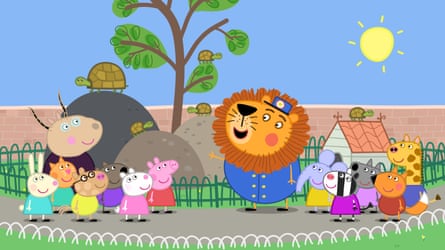
With large swathes of studios’ archives now available at the touch of a button, the compilation movie should be even less common now than those waning days, but they’re still sneaking into multiplexes without much attention. If you are the parent of a young child who wants to get them comfortable with trips to the cinema, then you have likely had an early morning trip to see several episodes of Bluey or Peppa Pig taped together on the big screen, seemingly designed to acclimatise kids to bladder-busting runtimes longer than an hour. It might take more than a couple of those screenings before they’re ready to sit through The Odyssey, though.
Older animation obsessives are often served by anime compilation films, which abridge key plot points from a TV series that may become relevant to the next instalment in a big-screen franchise for more casual fans. In between the record-breaking success of the Demon Slayer movies, for example, 2024 compilation To the Hashira Training served as a feature-length recap with a short preview of the next season’s first episode incorporated. Without anything in the way of mainstream critical attention, it still cruised to $50m worldwide; that may be little compared to the staggering $793m the following year’s feature-length franchise outing Infinity Castle made, but such a success for what was largely a repackaging of pre-existing material likely served to remind Hollywood of an easy way to make a quick buck from a devoted fanbase.

The movie fell 82% on its second weekend at the US box office, as word that it was a cash grab spread online – which is the only protection against the churning out of cheap franchise compilations in the future. Jackass, however, is a brand with higher name recognition across many different age groups, not just anime-loving gen Z. Its opening weekend box office may still be enough to ensure we get more titles in this vein going forward, regardless of whether it meets the same fate when it comes to word-of-mouth after those first couple of days.
Which isn’t to say that the Jackass crew themselves are cynical, quite the opposite – few entertainers have been as consistently willing to put their own lives (and genitals) on the line for our amusement. But after what seemed like a definitive bittersweet farewell with 2022’s Jackass Forever, the team’s second “final movie” in a row can’t avoid the overriding feeling that it’s been quickly thrown together to meet the studio’s release targets.